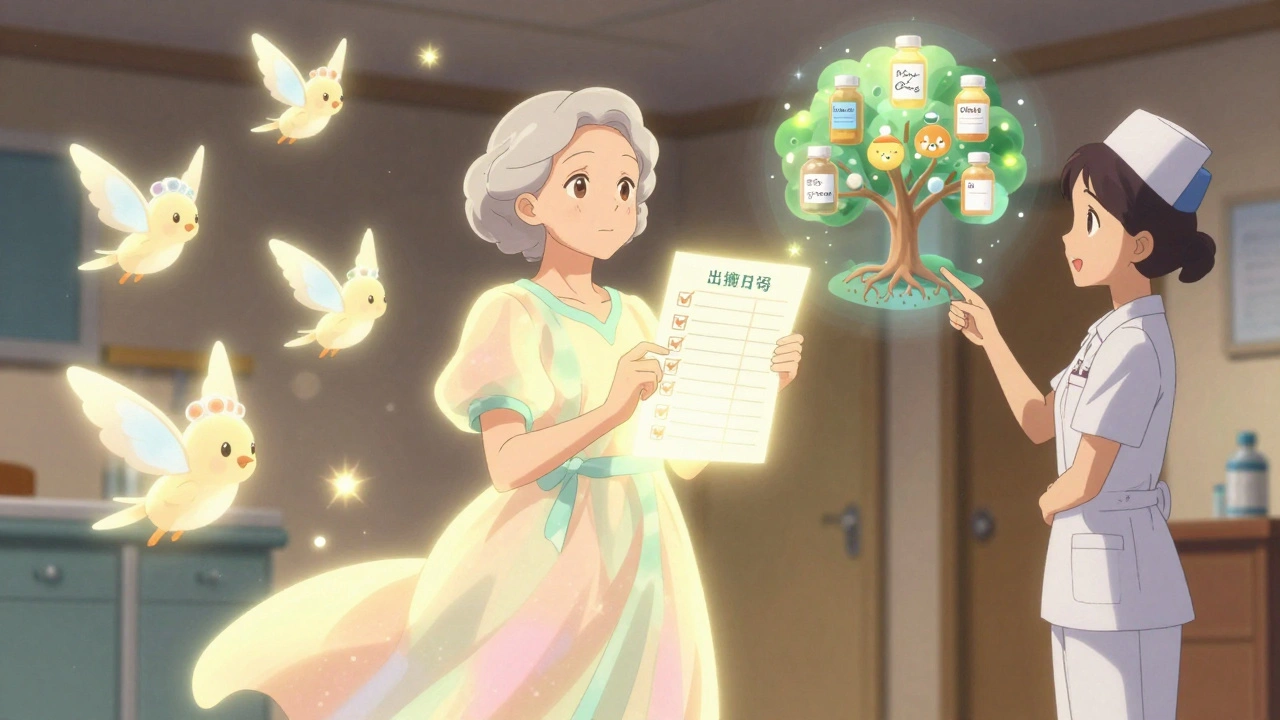
When a senior leaves the hospital after a stay, the biggest danger isn’t the illness they were treated for-it’s the medications they take home. Nearly 1 in 5 older adults experience a medication error within three weeks of discharge. These aren’t small mistakes. They’re wrong doses, forgotten pills, or drugs that clash dangerously with each other. And for seniors on five or more medications, the risk skyrockets. The good news? These errors are preventable. With the right steps, families and patients can make the shift from hospital to home safely-even without relying on luck or perfect memory.
Medication Reconciliation Is the Foundation
The single most important step in avoiding medication errors is medication reconciliation. This isn’t just a form hospitals fill out. It’s a process that compares every drug a patient was taking before admission, what they got in the hospital, and what they’re being sent home with. Without this, mistakes slip through easily.Here’s how it should work: when a patient is admitted, staff collect a full list of all medications-including over-the-counter painkillers, vitamins, herbal supplements, and even patches or inhalers. During the hospital stay, any changes are tracked. Then, before discharge, a pharmacist or nurse sits down with the patient and compares all three lists. If a medication was stopped in the hospital but the discharge papers still list it, that’s a red flag. Same if a new drug was added without explaining why.
Studies show that hospitals doing this right get 95% accuracy on discharge lists. Those that don’t? Only 60-70%. That gap is where errors happen. And it’s not just about getting the names right. Dosing matters too. A senior might have been switched from 5 mg of warfarin to 3 mg, but if the discharge summary says 5 mg, they could end up bleeding internally. Insulin doses, blood thinners, and opioids are especially risky. One wrong number can send someone back to the ER.
Teach-Back: Make Sure They Understand
Knowing the names of your meds isn’t enough. You need to know why you’re taking them, when, and what to watch for. That’s where the Teach-Back method comes in. Instead of handing over a printed list and saying, “Take this twice a day,” the nurse or pharmacist asks the patient to explain it back in their own words.“Can you tell me how you’ll take your blood thinner?”
“I take the blue pill every morning with breakfast.”
“And why?”
“To keep my blood from clotting after the stroke.”
If the patient can’t answer correctly, the explanation is repeated-until they get it. This isn’t about testing them. It’s about making sure they truly understand. Research shows this simple step improves adherence by 32% and cuts adverse events by nearly half. For seniors with memory issues or limited health literacy, this is non-negotiable.
Pharmacists Are Your Secret Weapon
Too many families assume the doctor handles everything. But pharmacists are the medication experts. They know how drugs interact, what side effects to watch for, and how to simplify complex regimens. In hospitals with pharmacist-led discharge programs, medication discrepancies drop by 67%. That’s not a small number-it’s life-saving.Ask: “Will a pharmacist review my loved one’s meds before they leave?” If the answer is no, push for it. Many hospitals now have pharmacists on discharge teams, especially for high-risk patients. If your hospital doesn’t, ask if you can schedule a follow-up appointment with a community pharmacist within 48 hours of getting home. Bring every pill bottle-prescription, OTC, supplements-with you. This is called a Brown Bag Medication Review. It’s free, fast, and often covered by insurance.
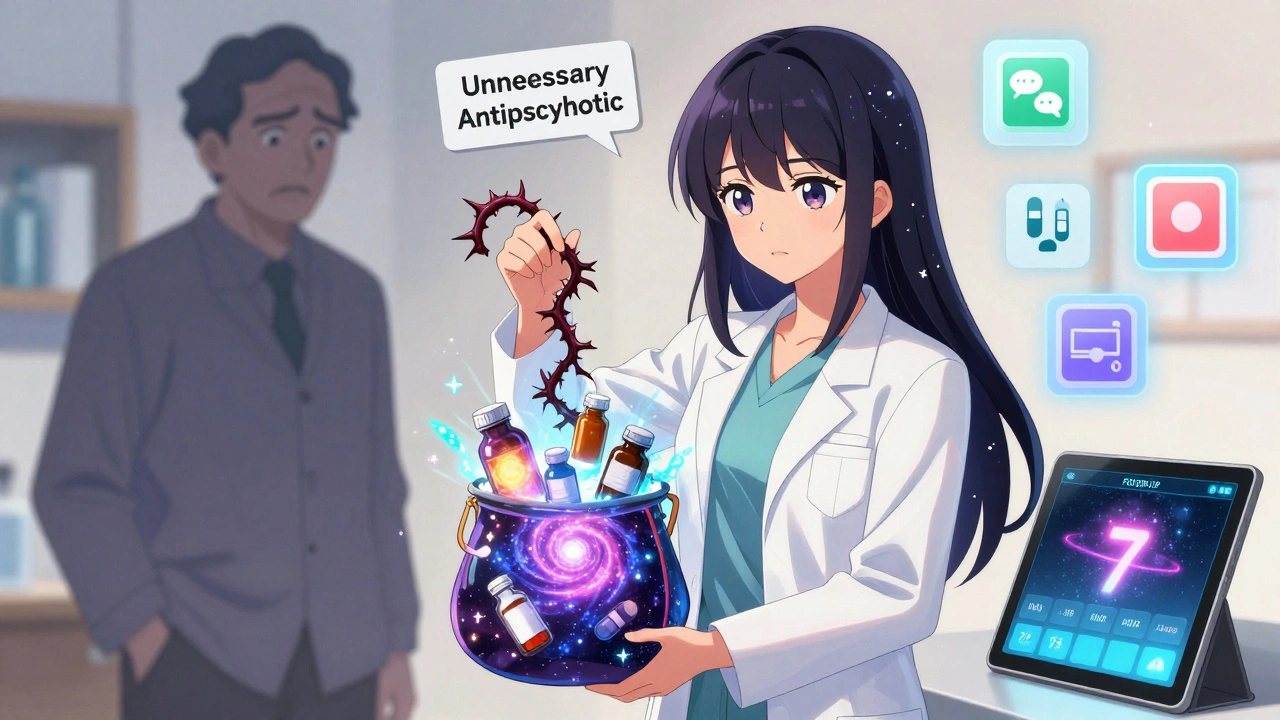
Pharmacists can also spot if a drug was prescribed unnecessarily. For example, an elderly patient might have been given an antipsychotic for agitation during hospitalization, but it’s not needed at home. Or they might be on two different drugs that do the same thing-double-dosing without knowing it. Pharmacists catch these things every day.

Follow-Up Within 7 Days Is Critical
Going home doesn’t mean the job is done. In fact, the first week after discharge is the most dangerous. That’s when patients are adjusting to new routines, forgetting pills, or reacting to changes in their body. Studies show that patients who see a provider within seven days of leaving the hospital are 47% less likely to have a medication error or be readmitted.Don’t wait for a scheduled appointment. Call the primary care doctor’s office the day after discharge and ask: “Can we schedule a check-in within the next week?” If the doctor is booked, ask for a nurse or a telehealth visit. Even a 15-minute phone call can catch problems early.
For seniors with heart failure, COPD, or kidney disease, follow-up is even more urgent. Some hospitals now use telehealth visits with video calls to check blood pressure, oxygen levels, or weight. These tools help spot warning signs before they become emergencies.
Use Tools to Keep Track
Memory fails. Especially when someone is recovering, tired, or dealing with pain. A simple paper list can get lost. A phone app can help. There are now free apps designed for seniors that show daily medication schedules with pictures, alarms, and even voice reminders.One 2023 study found that elderly patients using a visual medication app reduced errors by 41%. These apps let you upload photos of pill bottles, set daily alerts, and share the schedule with family members. Even something as basic as a pill organizer with days of the week and morning/afternoon/evening slots makes a huge difference.
Another low-tech trick: keep a small notebook next to the meds. Every time a pill is taken, put a checkmark. If a dose is missed, write why. That notebook becomes a record you can show a doctor or pharmacist during a follow-up visit.
What to Do If Something Feels Off
Sometimes, the signs aren’t obvious. A senior might seem a little more confused, unsteady, or sleepy than usual. They might stop eating or complain of nausea. These aren’t just “getting older.” They could be signs of a bad drug interaction or wrong dose.Here’s what to do immediately:
- Stop giving the suspected medication (if it’s safe to do so-don’t stop blood thinners or heart meds without calling someone first).
- Call the pharmacist or primary care provider. Don’t wait for an appointment.
- If symptoms are severe-trouble breathing, chest pain, extreme dizziness, confusion-go to the ER. Say: “I’m worried this is a medication reaction.”
Never assume it’s “just how they are now.” Medication changes can cause sudden, dangerous side effects. Trust your gut. If something feels wrong, it probably is.
Who’s Responsible?
This isn’t just the hospital’s job. It’s not just the family’s job. It’s a team effort.- Hospital staff must do full medication reconciliation and provide a clear, printed discharge list.
- Pharmacists should review the list and educate the patient or caregiver.
- Primary care doctors need to receive the updated list and follow up within 7 days.
- Families must bring all meds to appointments, use Teach-Back, and monitor for changes.
Too often, everyone assumes someone else is handling it. That’s how errors happen. Make sure every person on the team knows their role-and hold them accountable.
What’s Changing in 2025
Hospitals are under more pressure than ever to get this right. Medicare now penalizes hospitals with too many readmissions. And starting in 2025, all hospitals must use digital systems that automatically share medication lists with outpatient providers. That’s a big step forward.But until then, don’t wait for perfect systems. Use what works now: pharmacist reviews, Teach-Back, follow-ups, and visual tools. The technology is helpful, but the human steps are what save lives.
What’s the most common medication error after hospital discharge?
The most common error is a mismatch between the hospital’s discharge list and what the patient was actually taking before admission. For example, a senior might have stopped taking a blood pressure pill at home because it made them dizzy, but the hospital didn’t update the list. When they’re discharged, they’re sent home with that same pill-leading to dangerously low blood pressure. This happens in nearly 40% of cases when reconciliation isn’t done properly.
Should I bring all my medications to the hospital when I’m admitted?
Yes. Bring every pill, patch, inhaler, and supplement in their original bottles. This is called a Brown Bag Review. It’s the most accurate way for staff to know what you’re really taking. Don’t rely on memory or a list you wrote down. Bottles show exact names, strengths, and expiration dates. Hospitals that use this method reduce medication errors by up to 50%.
Can I refuse a medication the doctor wants to give me at discharge?
Absolutely. You have the right to ask why a medication is being prescribed, what it’s for, and what side effects to watch for. If you don’t understand the reason, say so. If you’ve had bad reactions before, tell them. Never feel pressured to take something you’re uncomfortable with. A good provider will listen and adjust the plan.
How do I know if a medication is still needed after hospitalization?
Ask the pharmacist or doctor: “Is this still necessary now that I’m home?” Many medications are started in the hospital for short-term reasons-like preventing infection after surgery-and aren’t needed long-term. For example, antibiotics for a UTI or a steroid for inflammation. If you’re still taking something you don’t understand, it’s worth questioning. Up to 25% of discharge medications are unnecessary or redundant.
What if my loved one can’t remember their meds?
Don’t assume they’re being dishonest. Memory loss is common in older adults, especially after illness or hospitalization. Use a pill organizer with alarms, a visual app, or a simple checklist taped to the fridge. Assign a family member to be the “medication checker”-someone who reviews the list weekly and calls the pharmacist with questions. The goal isn’t to control them-it’s to protect them.
Are there free resources to help with medication management at home?
Yes. Many community pharmacies offer free medication reviews. AARP has a free medication tracker tool online. Medicare Advantage plans often include free telehealth check-ins with pharmacists. Local Area Agencies on Aging may provide home visits from nurses or volunteers to help organize meds. Call 211 or visit your county’s senior services website to find local support.
 Pharmacology
Paul Dixon
December 11, 2025 AT 01:50Man, I wish my grandma’s hospital had done this right. She came home with 12 meds she didn’t need and forgot three she did. Two weeks later she was back in the ER. This post? Pure gold. Share it with every family you know.
Jean Claude de La Ronde
December 11, 2025 AT 16:47so like… we’re just supposed to trust the system? lol. hospitals are run by overworked interns and billing departments. if you want your meds right, you gotta be the damn pharmacist yourself. also ‘teach-back’ sounds like a cult ritual.
Katherine Liu-Bevan
December 12, 2025 AT 22:59One thing missing from this: always ask if a med is being continued for ‘maintenance’ or ‘symptom management.’ Many seniors get put on antidepressants or antipsychotics during hospitalization for agitation or sleep issues, then they’re never re-evaluated. Ask: ‘Is this still needed?’ every single time. It’s not rude-it’s essential.
Mia Kingsley
December 13, 2025 AT 02:29OMG I KNEW THIS WOULD HAPPEN. My uncle died because the hospital gave him a new blood thinner and didn’t tell him to stop his fish oil. I screamed at the nurse and they said ‘it’s not our fault he didn’t read the paper.’ PAPER? He’s 82 and blind in one eye. This system is a death sentence.
matthew dendle
December 13, 2025 AT 17:20so you wanna fix medication errors? stop letting old people live alone. problem solved. also why is everyone acting like this is news? we’ve been screaming about this since 2012
Sylvia Frenzel
December 14, 2025 AT 01:06This is why I hate American healthcare. We spend billions on fancy machines but can’t get a list of pills right. Meanwhile, Canada just has pharmacists do a full review before discharge. No drama. No paperwork. Just care.
Taylor Dressler
December 15, 2025 AT 08:07I’m a nurse and I’ve seen this over and over. The biggest win? The Brown Bag Review. Bring every bottle-even the expired ones. Pharmacists can spot duplicates, interactions, and unnecessary scripts in under 10 minutes. It’s free. Do it.
john damon
December 17, 2025 AT 07:14🔥 THIS NEEDS TO BE A TV SPECIAL. 🔥 My mom almost died because they gave her a new statin and didn’t tell her to stop the grapefruit juice. I had to Google it myself. We need a Medication Safety Netflix docu-series. Tag me when it drops.
Aidan Stacey
December 18, 2025 AT 19:59I cried reading this. My dad’s last week at home was pure chaos. We had 17 pill bottles, no schedule, and a nurse who said ‘just take what’s written.’ He died three weeks later from a drug interaction no one caught. If you’re reading this? Do the work. Don’t wait until it’s too late.
Courtney Blake
December 19, 2025 AT 08:23Why are we still talking about this? We have AI apps that scan pill bottles and sync with pharmacies. We have voice assistants that remind people to take meds. But no-nurses still hand out paper lists and hope for the best. This is lazy. And it’s killing people.
Vivian Amadi
December 20, 2025 AT 18:50STOP. Just stop. If your parent can’t remember their meds, they shouldn’t be living alone. Period. You think a pill organizer fixes dementia? It doesn’t. You need 24/7 care. Admit it. This post is just making you feel better while you ignore the real problem.
Jim Irish
December 21, 2025 AT 17:22Thank you for this. I’ve seen too many families overwhelmed by discharge paperwork. The key is consistency. One person assigned to manage meds. One calendar. One phone call to the pharmacist within 48 hours. Small steps. Big impact. No drama needed.