Drug-Induced Hemolytic Anemia Risk Assessment Tool
Assess Your Risk
When a medicine starts killing your own red blood cells, it’s not just a side effect-it’s a medical emergency. Drug-induced immune hemolytic anemia (DIIHA) happens when your immune system, tricked by a drug, turns against your red blood cells and destroys them. This isn’t a slow decline. It can drop your hemoglobin by 3 to 5 grams per deciliter in just two to three days. You might feel tired, short of breath, or notice your skin turning yellow. But because the symptoms look like flu or general fatigue, drug-induced hemolytic anemia is often missed-43% of cases are misdiagnosed at first.
How Medications Destroy Red Blood Cells
There are two main ways drugs cause red blood cells to break apart. The first is immune-mediated. Some medications, especially certain antibiotics, attach to the surface of red blood cells like a sticky label. Your body sees this as foreign and sends antibodies to attack. These antibodies mark the cells for destruction by your spleen. The result? Red blood cells get shredded before they’ve even lived out their 120-day life span. The top three drugs causing this immune reaction are cefotetan, ceftriaxone, and piperacillin. Together, cephalosporin antibiotics make up about 70% of all immune-mediated DIIHA cases. Other common culprits include penicillin, methyldopa, levodopa, and NSAIDs like ibuprofen or naproxen. Even though methyldopa is used less now, it’s still a classic example doctors learn about because it was one of the first drugs linked to this reaction. The second mechanism is oxidative hemolysis. This happens when drugs directly damage hemoglobin inside red blood cells. Normally, your body keeps iron in hemoglobin in its safe, ferrous (2+) form. But some drugs force it into ferric (3+) form, creating methemoglobin. This can’t carry oxygen properly. Worse, it causes hemoglobin to clump into toxic structures called Heinz bodies, which rip holes in the cell membrane. The cells then burst. This type of damage hits hardest in people with G6PD deficiency. This genetic condition, common in 10-14% of African American men and 4-15% of people of Mediterranean descent, means your red blood cells can’t repair oxidative damage. Even a single dose of dapsone, phenazopyridine (Pyridium), or primaquine can trigger severe hemolysis in these patients. But here’s the catch: you don’t need to have G6PD deficiency to be at risk. Drugs like ribavirin, amyl nitrate, and even topical benzocaine can cause oxidative hemolysis in anyone-even if their enzyme levels are normal.What You’ll Feel and What Doctors Look For
Symptoms show up fast. In most cases, fatigue hits first-reported in 92% of patients. Then comes weakness (87%), shortness of breath (76%), and a racing heart (68% have a pulse over 100 bpm). Pale skin and jaundice (yellow eyes or skin) follow in 73% and 81% of cases, respectively. These aren’t vague complaints. They’re signals your body is running out of oxygen-carrying cells. But here’s what makes DIIHA tricky: symptoms can be mild at first, or they can crash suddenly. Some people feel fine for a week on a new antibiotic, then wake up exhausted and jaundiced. Others crash within 24 hours after taking a painkiller. Doctors don’t rely on symptoms alone. They need lab tests. Three key markers confirm hemolysis:- Indirect bilirubin above 3 mg/dL (from broken-down hemoglobin)
- LDH over 250 U/L (released when cells rupture)
- Haptoglobin below 25 mg/dL (used up as it binds free hemoglobin)
Testing for G6PD Deficiency: The Timing Trap
If oxidative hemolysis is suspected, testing for G6PD deficiency seems obvious. But here’s the problem: during active hemolysis, your body is making new red blood cells fast. These young cells have normal G6PD levels. So if you test while you’re still sick, you might get a false negative-even if you have the deficiency. The solution? Wait. Test G6PD levels two to three months after the episode ends. By then, the old, damaged cells are gone, and the new ones reflect your true enzyme status. If you test too soon, you might be told you’re fine-and then take the same drug again, risking another life-threatening reaction.Stopping the Damage: Treatment That Works
The single most important step? Stop the drug immediately. That’s it. In 95% of cases, hemolysis stops within days of removing the trigger. Hemoglobin levels usually stabilize in 7-10 days and return to normal in 4-6 weeks. But sometimes, the damage is too severe. If hemoglobin drops below 7-8 g/dL, or if you’re dizzy, chest-painful, or struggling to breathe, you need a blood transfusion. Don’t wait. Every gram of hemoglobin lost puts extra strain on your heart. And here’s a hidden danger: DIIHA makes you hypercoagulable. Even though you’re losing blood cells, your blood thickens. A 2023 study found 34% of severe DIIHA patients developed blood clots-deep vein thrombosis or pulmonary embolism. So even if you’re anemic, you still need blood thinners like heparin to prevent clots. Corticosteroids like prednisone were once standard. But they don’t speed up recovery. Most patients get better just by stopping the drug. Steroids are only used if hemolysis keeps going after drug withdrawal, or if DAT stays positive without a clear trigger. For those rare cases where antibodies keep attacking even after the drug is gone, treatment gets stronger. Intravenous immunoglobulin (IVIG) at 1 gram per kilogram for two days can shut down the immune attack. If that doesn’t work, doctors turn to rituximab (given weekly for four weeks), azathioprine, or cyclosporine. About 78% of these stubborn cases respond within 3-6 weeks. If methemoglobinemia is severe (over 30%), you get methylene blue-1-2 mg/kg IV over five minutes. But if you have G6PD deficiency? Don’t give it. Methylene blue can trigger massive hemolysis in those patients. It’s a deadly mistake.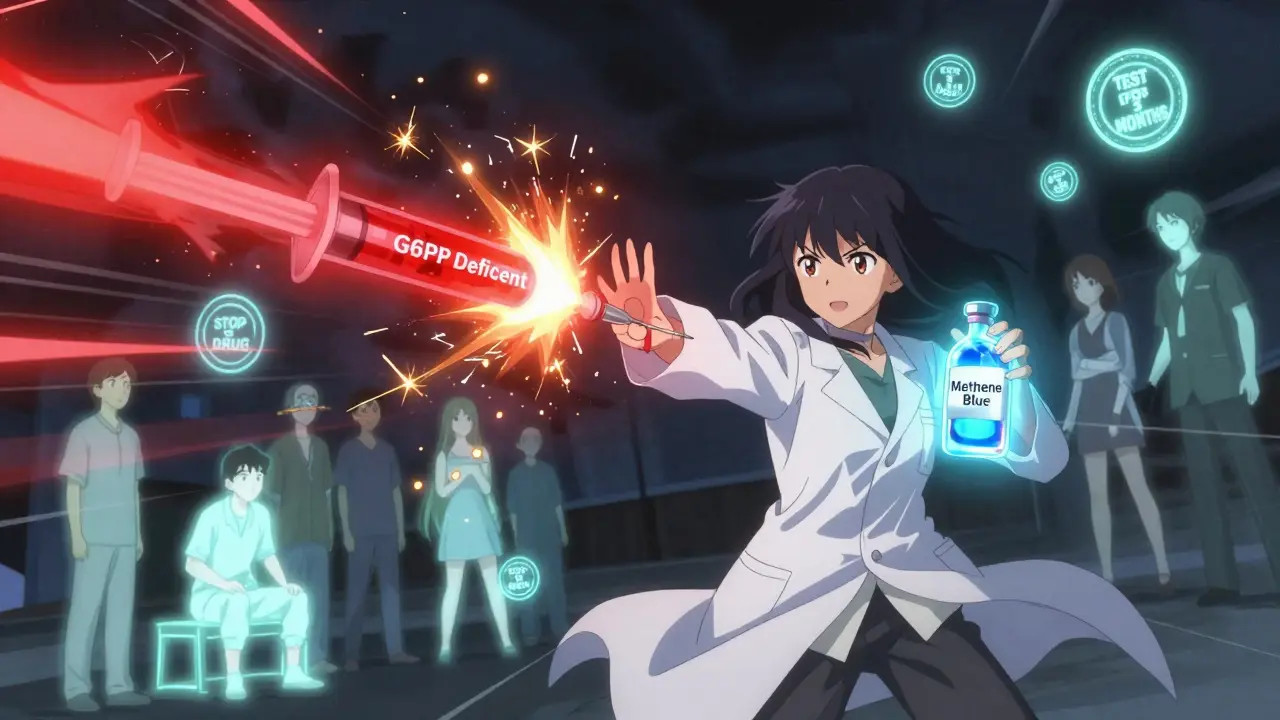
What’s New in Diagnosis and Prevention
New tools are emerging. Two 2024 clinical trials are testing drugs that could help in tough cases. Efgartigimod (NCT05678901), which blocks antibody recycling, showed a 67% response rate in 4 weeks. Complement inhibitors (NCT05812345) are being studied to block the final step of red blood cell destruction. Hospitals are also using tech to prevent DIIHA. Electronic health records now flag high-risk drugs for patients with known G6PD deficiency or a history of hemolytic reactions. One hospital system reported a 32% drop in severe cases after adding these alerts. The learning curve for doctors is steep. Internal medicine residents correctly identified DIIHA in only 58% of cases before targeted training. After learning the top 5 drug culprits and the lab patterns, their accuracy jumped to 89%. Awareness saves lives.What You Need to Remember
- If you start feeling unusually tired, short of breath, or yellowish after starting a new medication, speak up. Don’t wait. - Cephalosporins (especially cefotetan and ceftriaxone), dapsone, and phenazopyridine are the biggest offenders. - G6PD deficiency is silent until a drug triggers it. If you’re of African or Mediterranean descent, ask for testing before taking oxidizing drugs. - Never take methylene blue if you have G6PD deficiency-it can kill you. - The fastest cure? Stop the drug. No exception. - Recovery is almost guaranteed if caught early. Delayed treatment? That’s when heart failure, arrhythmias, or clots happen. Hemolytic anemia from drugs isn’t common. But when it happens, it’s fast, dangerous, and often misunderstood. Recognizing it isn’t about memorizing a long list of drugs. It’s about connecting the dots: new medicine + sudden fatigue + jaundice + abnormal blood tests = stop the drug now.Can any medication cause hemolytic anemia?
Yes, but not all. Over 100 drugs have been linked to hemolytic anemia, but only a few cause it regularly. The most common are cephalosporin antibiotics like cefotetan and ceftriaxone, followed by dapsone, phenazopyridine, and penicillin derivatives. NSAIDs, methyldopa, and some antivirals like ribavirin also appear on the list. The risk depends on the drug, your genetics, and how long you’ve been taking it.
How long after taking a drug does hemolytic anemia start?
It depends on the mechanism. Immune-mediated DIIHA usually takes 7-10 days after starting the drug, because your body needs time to make antibodies. Oxidative hemolysis, especially in G6PD-deficient people, can happen within 24-72 hours. In rare cases, if you’ve taken the drug before and developed antibodies, it can strike within hours of re-exposure.
Is DIIHA more dangerous in children?
It’s rare in children, but when it happens, it’s often more severe. A 2023 pediatric study found children with DIIHA had an average hemoglobin of 5.2 g/dL-lower than the adult average of 6.8 g/dL. Their bodies have less reserve, so symptoms like rapid heartbeat and breathing trouble show up faster. Immediate drug removal and transfusion are critical.
Can I take the same drug again if I had DIIHA once?
Never. Even if you recovered fully, your immune system remembers the drug. Re-exposure can trigger an even faster, more severe reaction-sometimes within minutes. Always inform every doctor and pharmacist about your history of drug-induced hemolytic anemia. Keep a medical alert card or note in your phone.
What should I do if I suspect I have drug-induced hemolytic anemia?
Stop the medication immediately and go to urgent care or the ER. Don’t wait for symptoms to worsen. Bring a list of all recent medications, including over-the-counter drugs and supplements. Request a complete blood count, reticulocyte count, bilirubin, LDH, haptoglobin, and direct antiglobulin test. If you’re jaundiced or have chest pain, mention it-those are red flags for heart strain.
Can G6PD deficiency be cured?
No, G6PD deficiency is a genetic condition and cannot be cured. But it can be managed. The key is avoiding oxidizing drugs and substances like naphthalene (mothballs) and fava beans. Once you know you have it, you can live a normal life by being cautious with medications. Always check with a pharmacist before taking anything new.
 Pharmacology
Amanda Eichstaedt
January 14, 2026 AT 05:54Just had my cousin hospitalized last month after a routine ceftriaxone shot. They thought it was the flu. Turned out her hemoglobin dropped from 14 to 6.8 in 48 hours. No one asked about meds. This post saved her life. Doctors need to stop treating fatigue like it's just burnout.
Alice Elanora Shepherd
January 15, 2026 AT 19:15Thank you for this. I’ve seen this happen twice in my practice. The DAT-negative cases are the most dangerous-clinicians assume it’s not immune-mediated, so they don’t stop the drug. And then the patient crashes. Always check LDH and haptoglobin-even if the smear looks normal. And always ask: ‘What’s new?’
Christina Widodo
January 17, 2026 AT 16:21I’m a med student and this is the most terrifying thing I’ve read this semester. I had no idea ibuprofen could do this. My roommate took naproxen for her period last week and now she’s pale and tired. Should I tell her to get tested? I’m scared to say anything but I don’t want her to die.
Prachi Chauhan
January 18, 2026 AT 01:07My uncle died from this. He was on dapsone for a skin condition. They told him it was ‘just anemia.’ He didn’t know about G6PD. He was Indian. They never tested him. Now I tell everyone in my family: if you’re from South Asia, ask before taking any new medicine. No exceptions.
Katherine Carlock
January 19, 2026 AT 15:19I’m so glad this was posted. My sister had this after a tooth extraction-benzocaine spray. She was fine until the next morning. Yellow eyes. Couldn’t walk. ER thought it was hepatitis. Took three days to get the right tests. I’m telling everyone I know. This needs to be on every med bottle.
Jennifer Phelps
January 20, 2026 AT 17:58Why is methylene blue still used if it kills G6PD people I mean like why is this even a thing
beth cordell
January 21, 2026 AT 07:27😭 this is why I never take antibiotics unless I have to. My cousin had to get 3 transfusions. I now have a note in my phone under ‘MEDS TO AVOID’ and I screenshot every prescription before I take it. I’m not taking chances.
Rinky Tandon
January 22, 2026 AT 07:07Of course this happens. Western medicine is reckless. You give people chemicals like candy and then act shocked when their body rebels. No one cares about natural healing. You think your body needs a pill to fix everything? This is what happens when you ignore nature. Your blood cells are not toys.
Ben Kono
January 23, 2026 AT 04:23My dad had this after penicillin. They didn’t catch it for a week. He was in ICU. Now I carry a card in my wallet that says G6PD DEFICIENT. Every doctor sees it. Every pharmacist. No excuses. You don’t get a second chance.
Cassie Widders
January 24, 2026 AT 14:55Interesting. I’ve seen a few cases like this in the NHS. The real issue isn’t the drugs-it’s the lack of follow-up. Patients get discharged, told to rest, and no one checks back. By the time they return, it’s too late. A simple phone call a few days after discharge could save lives.
Konika Choudhury
January 24, 2026 AT 19:02Why do Western doctors always blame medicine when the real problem is poor diet and weak immunity? In India we use turmeric and neem for infections. No need for antibiotics that destroy your blood. This is the cost of blindly trusting Big Pharma
Darryl Perry
January 26, 2026 AT 13:36Authoritative source required. This is anecdotal. Where is the peer-reviewed data supporting the 43% misdiagnosis rate? The 34% clot incidence? The 67% efgartigimod response? Cite the journals. Otherwise this is alarmist speculation.