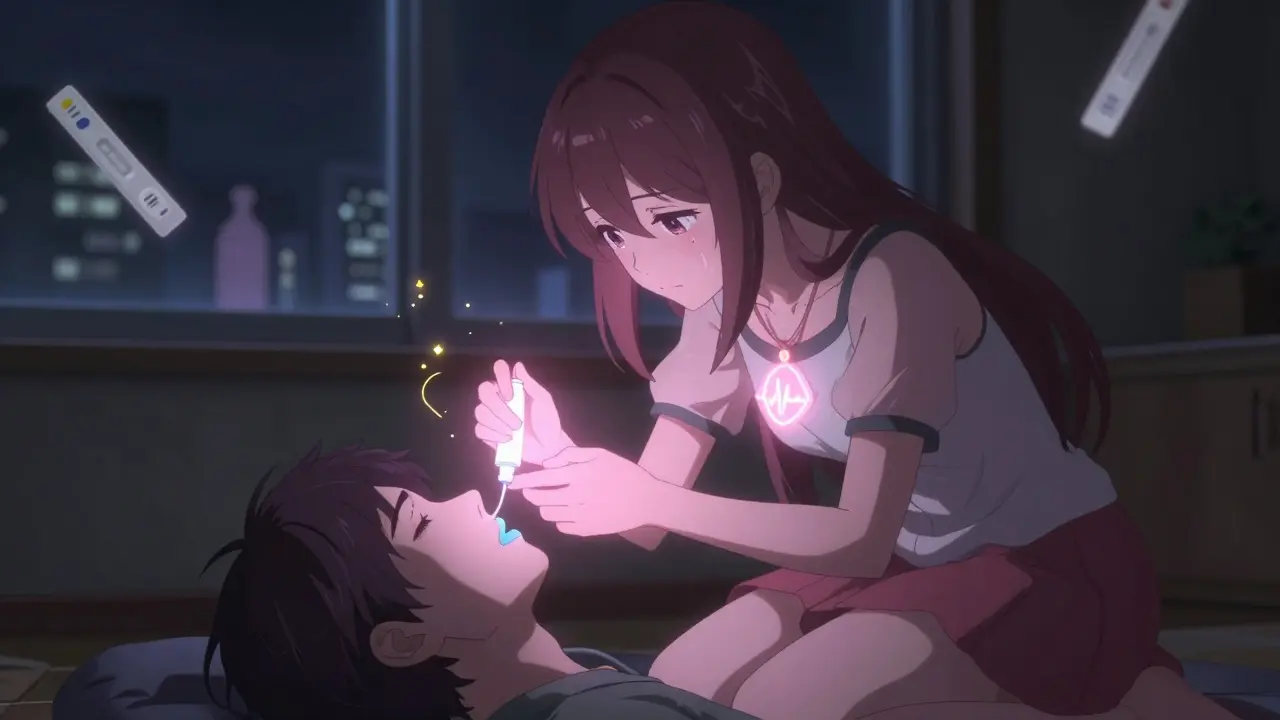
Every year, more than 100,000 people in the U.S. die from drug overdoses. Many of these deaths happen because no one recognized the signs in time. You don’t need to be a doctor to save a life-you just need to know what to look for. Medication overdoses aren’t always obvious. Someone might seem sleepy, vomit quietly, or breathe oddly. But those small signs can mean they’re minutes away from stopping breathing forever.
What Does an Overdose Actually Look Like?
An overdose isn’t always a dramatic scene with people collapsing on the floor. More often, it’s subtle. Someone might be unresponsive but not fully unconscious. Their lips could be blue. Their breathing might be slow, shallow, or irregular-like they’re gasping for air between long pauses. You might hear a gurgling sound, like they’re drowning in their own saliva. These aren’t just side effects. They’re emergency signals. The body doesn’t handle too much of a drug the same way it handles too much food. When you take too much of something like opioids, stimulants, or depressants, your brain and organs start shutting down. Opioids, for example, don’t just make you feel high-they slow the part of your brain that tells you to breathe. If breathing stops for more than a few minutes, brain damage begins. And without oxygen, death follows quickly.Common Signs Across All Types of Overdose
No matter what drug is involved, there are warning signs that show up again and again:- Unresponsiveness-you shake them, call their name, pinch their shoulder-they don’t react.
- Slow, shallow, or stopped breathing-less than 12 breaths per minute, or gaps of 10 seconds or more between breaths.
- Blue or gray lips and fingernails-this means their blood isn’t getting enough oxygen.
- Pale, clammy skin-their body is going into shock.
- Vomiting while unconscious-this is extremely dangerous because they can choke.
- Seizures-especially with stimulants like cocaine or meth.
Opioid Overdose: The Silent Killer
Opioids-including prescription painkillers like oxycodone, heroin, and synthetic drugs like fentanyl-are the leading cause of overdose deaths. In 2022, synthetic opioids like fentanyl were involved in over 80% of all overdose fatalities in the U.S. The classic signs of an opioid overdose are called the "opioid triad":- Pinpoint pupils-their pupils shrink to the size of a pinhead, even in dim light.
- Unconsciousness-they can’t be woken up, no matter how hard you try.
- Slow or stopped breathing-this is what kills.
Stimulant Overdose: When Your Body Overheats
Stimulants like cocaine, methamphetamine, or even prescription ADHD meds like Adderall can cause a different kind of crisis. Instead of slowing you down, they push your body into overdrive. Signs of a stimulant overdose include:- Extreme agitation or paranoia-they might be yelling, pacing, or acting terrified.
- High body temperature-over 104°F (40°C). Skin feels hot and dry.
- Fast, irregular heartbeat-pulse over 120 beats per minute.
- High blood pressure-systolic pressure above 180 mmHg.
- Seizures-about 1 in 3 cocaine overdoses involve seizures.
Depressant Overdose: Alcohol and Benzodiazepines
Alcohol, Xanax, Valium, and barbiturates are depressants. They slow everything down-your heart, your breathing, your brain. Mixing them with opioids is deadly. But even alone, they can cause a fatal overdose. Signs of a depressant overdose:- Slurred speech-like they’re drunk, but worse.
- Loss of coordination-they can’t walk straight, drop things, or stand up.
- Deep, irregular breathing-like they’re snoring, but not sleeping.
- Vomiting while unconscious-this is the most common cause of death in alcohol overdoses. People choke on their own vomit.
Polysubstance Overdoses: The Hidden Danger
Most overdoses today aren’t caused by one drug. They’re caused by combinations-fentanyl mixed with cocaine, alcohol mixed with Xanax, meth mixed with benzodiazepines. These are called polysubstance overdoses. In 2022, they accounted for more than half of all overdose deaths. The problem? Symptoms overlap and confuse. Someone might have pinpoint pupils (opioid sign) but also be shaking and sweating (stimulant sign). Their breathing might be slow, but their heart is racing. This makes it harder for emergency responders to know what to treat first. If you suspect a polysubstance overdose, don’t try to guess what they took. Just act. Call 911. Give naloxone if you have it. Keep them on their side. Every second counts.What to Do Right Now: A Clear Action Plan
If you think someone is overdosing:- Call 911 immediately. Don’t wait. Don’t text. Don’t call a friend first. Emergency services are trained for this.
- Check if they’re breathing. If they’re not breathing or breathing very slowly, start rescue breathing if you know how.
- Give naloxone if you have it. Naloxone (Narcan) is a nasal spray that reverses opioid overdoses. It’s safe-even if they didn’t take opioids, it won’t hurt them. One spray goes in each nostril. Wait 2-3 minutes. If they don’t wake up, give a second dose.
- Put them on their side. This prevents choking if they vomit. It’s called the recovery position.
- Stay with them until help arrives. Even if they wake up, they can crash again. Don’t let them "sleep it off."
What NOT to Do
There are a lot of myths about overdoses. Don’t fall for them:- Don’t let them "sleep it off." 29% of fatal overdoses happen because someone waited too long.
- Don’t give them coffee, cold showers, or saltwater. These don’t help. They can make things worse.
- Don’t leave them alone. Even if they seem fine, their condition can change in minutes.
- Don’t try to drive them to the hospital yourself. Emergency responders can start treatment on the way. You can’t.
Prevention: How to Reduce the Risk
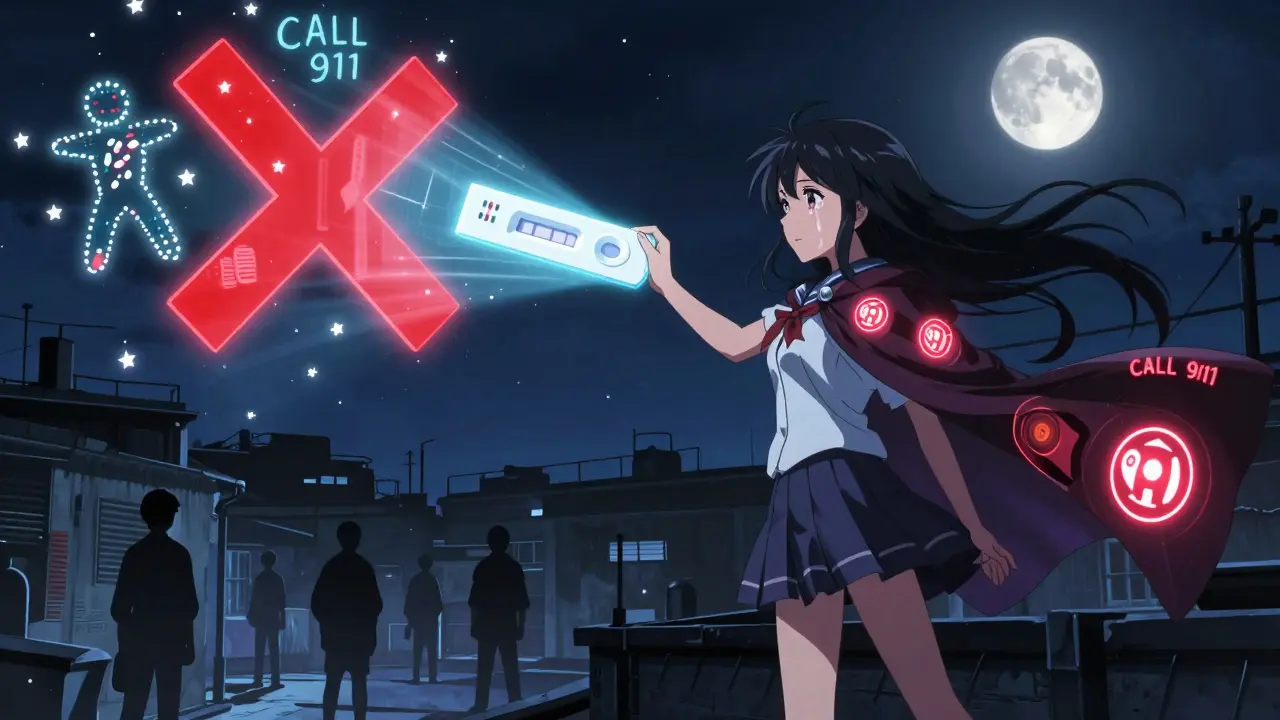
The best way to stop an overdose is to prevent it before it starts. Here’s what works:- Use fentanyl test strips. These cheap, easy-to-use strips can tell you if a drug contains fentanyl. They’re 97% accurate. If it tests positive, don’t use it.
- Carry naloxone. It’s now available over the counter at pharmacies for $40-$50. Keep one in your bag, your car, your home. You never know when you’ll need it.
- Don’t use alone. If you or someone you know uses drugs, always have someone nearby. That person can call for help if something goes wrong.
- Know your tolerance. If you’ve been away from a drug-even for a few days-your tolerance drops. Using the same amount you used before can kill you.
- Don’t mix drugs. Alcohol + opioids = deadly. Stimulants + depressants = unpredictable and dangerous.
Legal Protection for Bystanders
Many people don’t call 911 because they’re afraid of getting in trouble. But in 47 U.S. states, including Canada, there are "Good Samaritan" laws that protect people who call for help during an overdose. These laws shield you from arrest for drug possession if you’re seeking help for someone else. In Minnesota, this law is called "Steve’s Law." After it passed, 911 calls for overdoses increased by 27%. People started speaking up. Lives were saved. You don’t have to be a hero. You just have to call.Where to Get Help
If you or someone you know is struggling with substance use, help is available:- SAMHSA National Helpline: 1-800-662-4357-free, confidential, 24/7. They help you find treatment centers.
- Naloxone Saves app-find nearby locations that give out free naloxone kits.
- Local pharmacies-you can buy naloxone without a prescription in most places.
Final Thought: You Can Save a Life
Overdose isn’t a distant problem. It’s happening in your neighborhood, your workplace, your family. You don’t need to be an expert. You just need to know the signs. And you need to act. If you see someone who looks wrong-unresponsive, blue, breathing strangely-don’t hesitate. Call 911. Give naloxone if you have it. Put them on their side. Stay with them. That’s all it takes. One quick decision. One call. One moment of courage. It could be the difference between life and death.What are the first signs of an opioid overdose?
The first signs of an opioid overdose are slow or shallow breathing, unresponsiveness, and pinpoint pupils. The person may appear very sleepy, nod off, or not wake up when shaken. Their lips or fingernails may turn blue. These signs can appear within minutes after taking too much of an opioid like fentanyl, heroin, or oxycodone.
Can naloxone reverse any type of overdose?
No, naloxone only works on opioid overdoses. It won’t help with overdoses from stimulants like cocaine or meth, depressants like alcohol or Xanax, or other drugs. But it’s safe to use even if you’re unsure-naloxone won’t harm someone who didn’t take opioids. If you suspect an opioid overdose, give naloxone right away while calling 911.
Is it safe to give someone naloxone if they’re not breathing?
Yes. Naloxone is safe and non-addictive. Even if the person isn’t breathing, giving naloxone can still help reverse the opioid effect. But you must also call 911 and start rescue breathing if you’re trained. Naloxone alone won’t restore breathing if the person has been without oxygen for too long. It’s a tool to buy time, not a replacement for emergency care.
Why do people die from overdoses even after being revived?
Naloxone wears off in 30 to 90 minutes, but many opioids-especially fentanyl-last much longer. That means the person can stop breathing again after naloxone wears off. That’s why it’s critical to stay with them and get them to a hospital, even if they wake up. They need medical monitoring for several hours to make sure the overdose doesn’t return.
Can you overdose on over-the-counter medications?
Yes. Common OTC drugs like acetaminophen (Tylenol), ibuprofen (Advil), or diphenhydramine (Benadryl) can be deadly in large doses. Acetaminophen overdose, for example, can cause liver failure without obvious symptoms at first. Always follow dosage instructions and never mix medications without checking with a pharmacist.
What should I do if I find someone who overdosed and I don’t have naloxone?
Call 911 immediately. If they’re not breathing, start rescue breathing-pinch their nose, seal your mouth over theirs, and give one breath every 5 seconds. Place them on their side to prevent choking if they vomit. Stay with them until help arrives. You don’t need naloxone to save a life. Your quick action can keep them alive until emergency responders get there.
Are fentanyl test strips legal and easy to use?
Yes. Fentanyl test strips are legal in most U.S. states and Canadian provinces. They’re simple to use: dissolve a small amount of the drug in water, dip the strip in for 15 seconds, and wait a minute. One line means no fentanyl was detected. Two lines means fentanyl is present. They cost less than $2 each and are available online or through harm reduction programs.
Can xylazine ("tranq") cause an overdose?
Yes. Xylazine, an animal tranquilizer, is increasingly found mixed with fentanyl in street drugs. It doesn’t respond to naloxone and can cause extreme sedation, slow breathing, and severe skin wounds. Overdoses involving xylazine are harder to treat and require hospital care. If someone is unresponsive and has open sores on their skin, xylazine may be involved.
 Pharmacology
Joanne Smith
December 27, 2025 AT 08:39So let me get this straight-we’ve turned saving lives into a checklist, but people still think ‘sleeping it off’ is a valid strategy? 🙄 I’ve seen folks with blue lips get scolded for ‘making a scene’ while their friend ‘just needs rest.’ The real tragedy isn’t the overdose-it’s that we’ve normalized waiting for someone to die before we act.
And don’t even get me started on the ‘coffee and cold showers’ myth. That’s like trying to fix a broken engine by yelling at it. Naloxone isn’t magic-it’s a pause button. But we treat it like a get-out-of-jail-free card. We need more than awareness. We need urgency.
Also, fentanyl test strips? If you’re not carrying them, you’re playing Russian roulette with a loaded gun and a blindfold. And yes, I said ‘loaded gun.’ This isn’t ‘oops, I took too much’-it’s ‘oops, I took a grain of salt that’s 100x stronger than morphine.’
People still think overdoses only happen to ‘those people.’ Newsflash: your cousin who took a pill for back pain? Could be dead in 12 minutes. You don’t need to be a doctor. You just need to stop being a coward.
And if you’re reading this and thinking ‘I’d never let that happen’-you already have. You’ve looked away. You’ve stayed silent. You’ve assumed someone else would act. Well, guess what? That someone was you.
So next time you see someone nodding off at a party? Don’t laugh. Don’t take a selfie. Call 911. Put them on their side. Stay with them. That’s not heroism. That’s basic human decency.
And if you’re still waiting for someone to ‘wake up’? You’re not helping. You’re just delaying the obituary.
Prasanthi Kontemukkala
December 27, 2025 AT 10:39This is so important, and I’m so glad someone took the time to lay it out like this. I’ve seen friends struggle with addiction, and the silence around it breaks my heart. No one talks about how scary it is to watch someone slip away-and how easy it is to misread the signs.
I remember once, my neighbor’s son passed out after a party. Everyone thought he was just drunk. I didn’t know what to do, but I called 911 anyway. He survived. I didn’t know about naloxone back then, but I learned later. Now I keep one in my purse. I wish more people knew how simple it is to carry hope like that.
It’s not about judgment. It’s about showing up. Even if you’re scared. Even if you’re not sure. Even if you think ‘it’s not my place.’ It’s always your place.
Thank you for writing this. I’m sharing it with everyone I know.
Alex Ragen
December 29, 2025 AT 03:28Let us not conflate the empirical reality of pharmacological toxicity with the sentimentalized rhetoric of ‘you can save a life’-a phrase that, while emotionally resonant, is epistemologically impoverished. The notion that laypersons can ‘reverse’ overdoses via nasal spray is a dangerous illusion of agency, predicated upon the commodification of emergency intervention as a consumer good.
Moreover, the implicit moral imperative-‘call 911!’-ignores the structural violence of a healthcare system that criminalizes substance use while profiting from its treatment. Naloxone is not salvation; it is a palliative for a broken paradigm.
And yet… one must admit: the opioid triad is a phenomenologically distinct constellation. Pinpoint pupils, unconsciousness, respiratory depression-these are not metaphors. They are physiological signatures. But to reduce the crisis to a checklist is to sanitize the suffering.
True intervention requires dismantling the stigma, not just stocking pharmacies with Narcan.
-A. Ragen, M.A. in Existential Pharmacology, Columbia
Lori Anne Franklin
December 30, 2025 AT 22:42omg this is so needed!! i had no idea fentanyl was in so many fake pills 😭 i thought i was being careful but now i’m scared to even take tylenol lol
my cousin died last year and we didn’t even know he was using anything. he just… stopped breathing. we thought he was sleeping. i still feel so guilty.
i just got my naloxone from the pharmacy today. it was only $45 and they didn’t even ask me a single question. i’m keeping it in my car. if i see someone looking weird, i’m not waiting. i’m acting. even if i’m scared. even if i’m not sure.
thank you for writing this. i’m sharing it with my whole family.
Bryan Woods
January 1, 2026 AT 20:29This is a well-structured and comprehensive overview of overdose recognition and response. The distinction between opioid, stimulant, and depressant presentations is clinically accurate and accessible to lay audiences.
The inclusion of polysubstance interactions is particularly valuable, as these cases are underrepresented in public education materials. The emphasis on the recovery position and immediate emergency response aligns with current guidelines from the CDC and WHO.
One minor point: while naloxone is safe for non-opioid overdoses, it should not be considered a substitute for airway management or ventilation in cases of prolonged respiratory arrest. Rescue breathing remains the most critical immediate intervention when no reversal agent is available.
Well done.
Ryan Cheng
January 3, 2026 AT 00:51Everyone needs to read this. Seriously. I used to think overdoses were something that happened to other people-until my brother almost died last year. He took what he thought was Adderall. It was fentanyl. He was gone for 90 seconds. We didn’t have naloxone. We did CPR. We screamed for help. He woke up. But he’s not the same.
Now I carry two naloxone kits. One in my backpack. One in my glovebox. I gave one to my roommate. I told my mom. I told my boss. I told my dumbass friends who still think ‘just don’t do drugs’ is a solution.
It’s not. It’s about harm reduction. It’s about being ready. It’s about not waiting for a tragedy to learn how to act.
If you’re reading this and you’re not doing anything-start today. Download the Naloxone Saves app. Buy the spray. Learn the signs. You don’t need to be brave. You just need to be there.
Jeanette Jeffrey
January 3, 2026 AT 15:46Oh great. Another feel-good PSA that makes people feel like heroes for carrying a spray while the real problem-poverty, trauma, lack of mental healthcare-gets ignored. You think naloxone fixes anything? Nah. It just lets the system keep running like nothing’s wrong.
People don’t overdose because they didn’t know the signs. They overdose because they’re lonely, broke, traumatized, and nobody gave a damn until they were blue.
So yeah, carry the spray. Call 911. Put them on their side. But don’t pretend you’re saving the world. You’re just cleaning up the mess after the system failed them for decades.
And if you’re still blaming the user? You’re part of the problem.
Shreyash Gupta
January 4, 2026 AT 12:27bro i just saw a video on tiktok where some guy used a test strip on his coke and it lit up like a christmas tree 😱 i thought it was a joke but then i looked it up and it’s real??
can u really just dip a little paper in water and it tells you if fentanyl is there???
also can i buy it on amazon? or do i need to be a scientist? 🤔
and why is xylazine even in drugs?? who thought that was a good idea?? 🤡
Ellie Stretshberry
January 4, 2026 AT 17:27i never knew about the blue lips thing. i thought if someone was passed out they were just drunk. i feel so bad now. my friend did that last year and we just left him on the couch. we thought he’d wake up.
i’m gonna learn the recovery position tonight. i’m gonna buy naloxone. i’m gonna tell my friends. i’m not gonna wait again.
thank you for saying this. it’s scary but i’m ready.
Dan Alatepe
January 6, 2026 AT 00:16YOOOOO THIS IS REAL LIFE STUFF 😭😭😭
I had a cousin who died from a fake Xanax. He was 22. He thought he was getting high. He got a death sentence.
Now my whole family talks about this. My mom keeps naloxone in the kitchen. My sister has it in her purse. We don’t joke about it anymore.
And if you think it won’t happen to you? It already did. You just didn’t know.
Don’t be the person who says ‘I didn’t know.’ Be the person who says ‘I acted.’
❤️🙏
christian ebongue
January 6, 2026 AT 05:40Naloxone works on opioids. Not on anything else. But it’s safe to use anyway. So if you’re unsure? Use it. Then call 911. Then stay. That’s it. No drama. No hero complex. Just action.
Test strips cost $2. Carry them. Use them. Don’t be the guy who says ‘I didn’t know.’
jesse chen
January 8, 2026 AT 05:30This is the most important thing I’ve read all year. I’ve been working in ER for 12 years. I’ve seen too many parents lose kids because they waited. Too many friends who didn’t know what to do.
Every time I see someone say ‘I didn’t know’-I want to scream. You didn’t know? Now you do.
Carry naloxone. Learn the signs. Don’t wait. Don’t assume. Don’t be silent.
One call. One moment. One life.
It’s not complicated. It’s just hard. And it’s worth it.
wendy parrales fong
January 9, 2026 AT 08:54It’s crazy how something so simple-knowing the signs, calling 911, putting someone on their side-can mean the difference between life and death.
I used to think overdoses were only for ‘addicts.’ Now I know they happen to students, nurses, grandmas, veterans.
I’m not scared anymore. I’m ready. I’m carrying naloxone. I’m telling people. I’m not waiting for someone else to act.
Because if not me? Then who?
Zina Constantin
January 9, 2026 AT 20:49As someone who grew up in a community where addiction was whispered about, not talked about-this is revolutionary. We didn’t have access to naloxone. We didn’t have test strips. We didn’t have education.
Now? I’m teaching my students. I’m giving out strips at the community center. I’m sharing this post in three languages.
Because knowledge isn’t power. Action is.
And action starts here.
Angela Spagnolo
January 10, 2026 AT 13:47I’m not sure I’ll ever forget the day I found my brother like this. Blue lips. No breathing. I didn’t know what to do. I screamed. I cried. I called 911. I did CPR until the ambulance came.
He survived. But I didn’t know about naloxone. I didn’t know about the recovery position. I didn’t know about test strips.
Now I do. And I’m not going to let anyone else go through that without knowing.
Thank you for writing this. I’m printing it out. I’m putting it on my fridge.
And I’m never silent again.