Most people don’t think twice about picking up a prescription. But if you’ve ever been handed a pill that looked different from what you’ve taken before-maybe smaller, maybe a different color, definitely cheaper-you’ve probably felt a flicker of doubt. Generic medications work the same as brand-name drugs. They contain the exact same active ingredients, meet the same safety standards, and are approved by the FDA. Yet, millions of people still believe they’re inferior. And that belief isn’t random. It’s shaped by when you were born.
Why Older Generations Stick to Brand Names
Baby Boomers (born 1946-1964) grew up in an era when drug ads were rare, and doctors were the ultimate authority. If your doctor prescribed a brand-name drug, you took it. No questions. That trust stuck. Many Boomers remember when generics were first introduced in the 1980s. Back then, some generics were poorly made. Packaging was shoddy. Pills looked cheap. Even though regulations tightened by the 1990s, the memory lingers. For many, the brand name isn’t just a label-it’s a promise of reliability. A 2022 survey of U.S. adults over 65 found that nearly 45% still preferred brand-name drugs, even when told generics were identical. Why? Because they’ve been on medication longer. They’ve tried multiple drugs over decades. They’ve seen side effects. They’ve built mental associations: “This blue pill made me feel better.” So when a new, unfamiliar pill shows up, their brain defaults to: “If it looks different, it must be different.” It’s not ignorance. It’s experience. And experience doesn’t always align with science.Gen X and the Skeptical Middle Ground
Generation X (born 1965-1980) sits in the middle. They’ve seen both worlds. They remember when brand-name drugs cost $200 a month. They also remember when generics dropped to $10. They’ve switched back and forth. Many Gen Xers are the ones who actually pay the bills for aging parents and kids on medication. They care about cost-but they also care about safety. Studies show Gen Xers are more likely than Boomers to try generics-but only if they’re told the generic is made by the same company that makes the brand. That’s right. If you tell a Gen Xer, “This is the same pill, just without the fancy packaging,” they’ll often say yes. But if you say, “It’s made by a different company,” hesitation kicks in. This isn’t about being stubborn. It’s about control. Gen Xers grew up in a time when corporate trust was crumbling. They’ve seen recalls. They’ve read about counterfeit drugs. They know the system isn’t perfect. So they look for signals: Who made this? Is it FDA-approved? Is it from a known manufacturer? They don’t trust the label-they trust the backstory.Millennials and Gen Z: More Trust in Science, Less Loyalty to Brands
Millennials (born 1981-1996) and Gen Z (born 1997-2012) didn’t grow up with TV ads for Lipitor or Nexium. They grew up with Google. They’ve seen YouTube explainers, TikTok pharmacists, and Reddit threads comparing side effects. They’re more likely to look up drug info before taking anything. And they’re more comfortable with data than with branding. A 2023 study in Canadian pharmacies found that 68% of patients under 35 had no preference between brand and generic-so long as the price was lower. They didn’t need reassurance that generics “work the same.” They already knew. They’d read the FDA guidelines. They’d checked the bioequivalence data. They didn’t care who made the pill. They cared about the cost and the outcome. For them, brand loyalty is a relic. They don’t buy Coke because it’s Coke. They buy what’s on sale. Same with meds. If a generic saves them $50 a month on a chronic condition? They’ll switch without a second thought.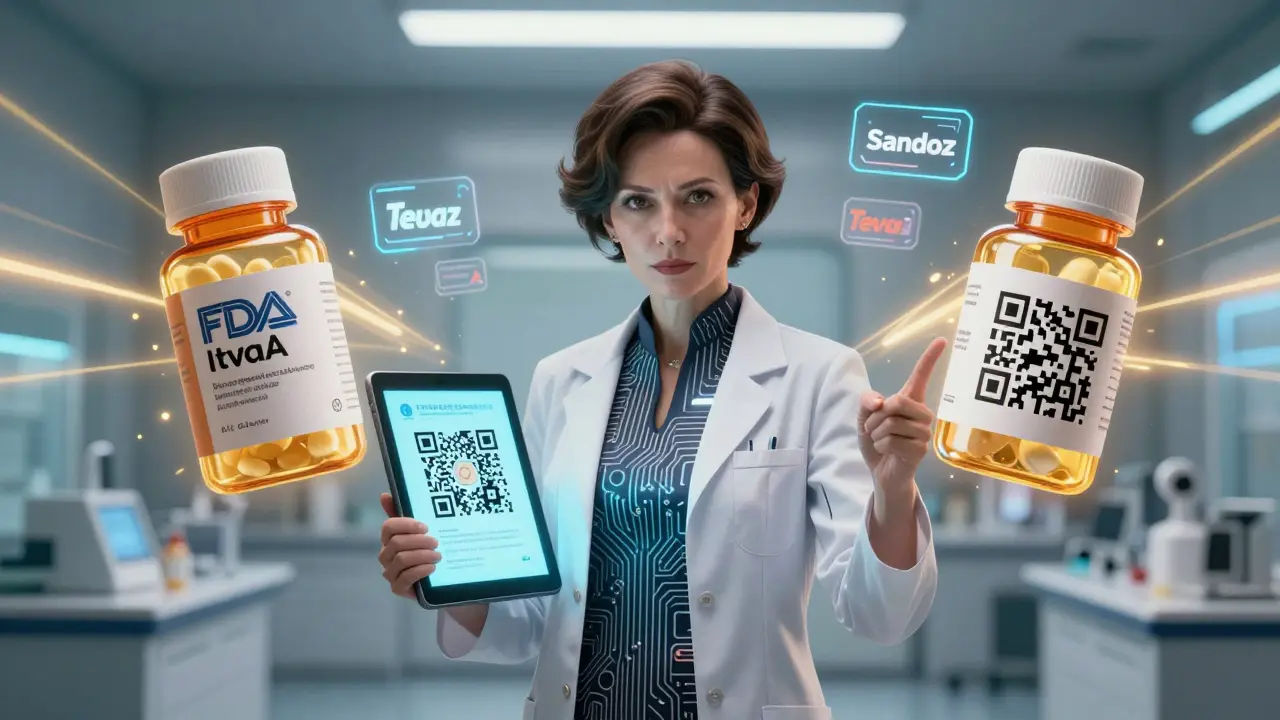
The Real Problem Isn’t Science-It’s Communication
Here’s the thing: every generation gets the same message from doctors: “Generics are just as good.” But that message doesn’t land the same way. For Boomers, saying “it’s the same” feels dismissive. They’ve lived through changes in medicine. They’ve seen things that were once “the same” turn out not to be. They need context: “This generic is made by the same company that made the brand.” Or, “This batch passed the same tests as the original.” For Gen X, it’s about transparency. “Who manufactures this?” “Is it FDA-approved?” “Has it been recalled?” They want to see the paperwork, not just hear a reassurance. For younger people, it’s about speed and clarity. A QR code on the bottle linking to the FDA’s bioequivalence report? A quick one-sentence explanation on the pharmacy label? That’s enough. They don’t need a lecture. They need a fact. The real failure isn’t in the drugs. It’s in the way we talk about them.Why This Matters Beyond the Pharmacy
The U.S. spends over $130 billion a year on generic drugs. They make up 90% of all prescriptions filled-but only 23% of total drug spending. That’s a massive savings. For patients, it means choosing between insulin and groceries. For the system, it means keeping healthcare affordable. But if half the population still doubts generics, those savings vanish. People skip doses. They pay more. They end up in the ER because they couldn’t afford their meds. And then the cycle continues: higher costs → more fear → less use → more reliance on expensive brands. This isn’t just a health issue. It’s a psychological one. It’s about trust, memory, and how we interpret change.
What Works: Real Strategies That Actually Change Behavior
Here’s what’s working in clinics and pharmacies right now:- Pharmacists saying, “This is the exact same pill as your old one, just cheaper.” Not “It’s a generic.” Just say it’s the same. Simple.
- Labeling with the manufacturer’s name. If it’s made by Teva, Sandoz, or Mylan-say it. People recognize those names. They’re not faceless companies.
- Showing the FDA bioequivalence report. A printed one-page summary in the waiting room. No jargon. Just: “Same active ingredient. Same dose. Same results.”
- Offering a free trial. If you’re switching someone from a brand to a generic, offer to let them try it for a week with no extra cost. Let them feel the difference-or lack of it.
The Future: Generations Will Keep Shifting
As younger generations age, attitudes will change. Gen Z won’t grow up fearing generics. They’ll grow up expecting them. The stigma will fade-not because of laws, but because of exposure. But right now, we’re stuck with a patchwork of beliefs. One generation trusts the brand. Another trusts the price. A third trusts the data. And none of them are wrong. The job isn’t to convince everyone they’re wrong. It’s to meet them where they are-with facts that make sense to their experience, not just their education. The science is clear. The savings are real. The only thing left to fix is the story we tell.Are generic medications really as effective as brand-name drugs?
Yes. By law, generic medications must contain the same active ingredients, in the same strength, and work the same way in the body as their brand-name counterparts. The FDA requires them to meet strict bioequivalence standards-meaning they produce the same clinical effect in most patients. The only differences are in inactive ingredients (like color or filler), packaging, and price. Studies show no meaningful difference in effectiveness or safety between generics and brand-name drugs.
Why do some people still think generics are inferior?
It’s mostly about perception, not science. Older generations often associate brand names with quality because that’s what they were taught decades ago. Many remember when early generics were poorly made. Even today, misleading advertising, lack of exposure, and the psychological comfort of familiar packaging reinforce the idea that “more expensive = better.” It’s not ignorance-it’s a learned belief that’s hard to undo without direct, personal experience.
Do doctors prefer brand-name drugs over generics?
It varies. Younger doctors and pharmacists are more likely to prescribe generics because they’re trained on current evidence and see the cost savings firsthand. Older physicians, especially those who trained before generics became common, may still default to brand names out of habit or caution. But studies show that when doctors are given clear data on bioequivalence and patient outcomes, their prescribing habits shift-regardless of age.
Can I trust generics made overseas?
Yes. The FDA inspects all manufacturing facilities-domestic and foreign-that produce drugs sold in the U.S. Over 50% of generic drugs sold in the U.S. are made overseas, mostly in India and China. These facilities must meet the same standards as U.S. plants. If a generic drug is approved by the FDA, it’s safe to use. The country of origin doesn’t determine quality-the regulatory oversight does.
Why don’t pharmacies always offer generics?
Sometimes they do-but not if the prescription says “dispense as written” or “no substitutions.” Some doctors still write prescriptions this way out of habit or concern. Patients can always ask the pharmacist: “Is there a generic version?” or request a substitution. In most cases, the pharmacy is legally allowed to switch unless the doctor specifically says not to.
Will switching to a generic cause new side effects?
Rarely. The active ingredient is identical, so the main side effects should be the same. Sometimes, people notice differences because the inactive ingredients (like dyes or fillers) vary. These can cause minor issues like stomach upset in sensitive individuals, but they don’t affect how the drug works. If you feel different after switching, talk to your doctor or pharmacist-it’s not the generic being less effective, it’s your body adjusting to a new formulation.
How can I convince my parent to try a generic drug?
Don’t argue about science. Show them the facts in a way they trust. Ask the pharmacist to print out the FDA bioequivalence sheet. Point out that the same company that makes the brand might make the generic. Offer to try it together. Say, “Let’s see if it works the same for you.” Let them experience the change themselves. Often, once they realize they feel the same-and save money-they’ll never go back.
 Pharmacology
Jessica Knuteson
January 27, 2026 AT 21:31Generics work. The FDA doesn't lie. But people aren't rational actors. They're emotional pattern-recognition machines with a side of trauma from bad pharmaceutical experiences in the 80s. We're not debating science here. We're debating memory.
rasna saha
January 29, 2026 AT 02:31So true 😊 I've seen my mom refuse generics for years - until her pharmacist showed her the exact same tablet from the same factory, just without the logo. She cried. Not because she was scared - because she felt heard. Small things matter.
Ashley Porter
January 30, 2026 AT 07:36Let’s be real - the bioequivalence thresholds are set at 80-125% AUC and Cmax. That’s a 45% swing. It’s statistically equivalent, sure, but clinically? For some patients on narrow-therapeutic-index drugs like warfarin or levothyroxine? That variance can trigger a cascade. Not saying generics are unsafe - just that the narrative is oversimplified.
Geoff Miskinis
January 31, 2026 AT 20:01How quaint. The boomer generation clings to brand names like a security blanket while the rest of us have moved on to evidence-based decision-making. Meanwhile, the pharmaceutical industry profits from cognitive dissonance. Pathetic.
Sally Dalton
February 1, 2026 AT 17:38OMG YES I JUST HAD THIS EXACT THING HAPPEN LAST WEEK!! My dad was freaking out because his new pills were white instead of blue and he swore they didn’t work… then we called the pharmacy and they showed him the FDA sheet and he was like ‘ohhhh so it’s the same company??’ and he just… calmed down. Like, instantly. We need more of this, not less. ❤️
Ashley Karanja
February 3, 2026 AT 06:59There’s a neurocognitive component here that’s rarely discussed - the placebo effect isn’t just about expectation, it’s about identity. For older adults, the brand name becomes a proxy for self-efficacy: ‘I’m the kind of person who takes the good stuff.’ Switching to a generic feels like surrendering status, not saving money. The real barrier isn’t pharmacokinetics - it’s existential security. We need to reframe the conversation from ‘is it effective?’ to ‘does this still make you feel like you’re in control?’
Karen Droege
February 3, 2026 AT 13:21Listen. I’ve worked in pharmacy for 22 years. I’ve seen people skip insulin because they couldn’t afford the brand. I’ve seen grandmas split pills because they thought generics were ‘fake.’ This isn’t about education. It’s about dignity. If you hand someone a generic and say ‘it’s the same’ - you’re dismissing their lived experience. But if you hand them the FDA report, show them the manufacturer, and say ‘your doctor chose this because it’s safe AND it lets you eat this week’ - now you’re speaking their language. Stop talking at people. Start talking with them.