Antihistamine Overdose Risk Calculator
Determine Overdose Risk
Calculate if the antihistamine dose is dangerous based on weight, amount, and medication type
Results
When a child grabs a bottle of Benadryl and swallows a handful, or an adult accidentally takes four pills thinking they’re still sleepy, the consequences can be serious-sometimes deadly. Antihistamine overdose isn’t rare. In fact, it’s one of the most common poisoning cases in kids under six. But here’s the good news: if you act fast, survival rates are nearly 100%. The key isn’t waiting for symptoms. It’s knowing what to do right now.
What Happens in an Antihistamine Overdose?
Not all antihistamines are the same. First-generation ones like diphenhydramine (Benadryl), chlorpheniramine, and promethazine are the big troublemakers. They cross the blood-brain barrier and mess with your nervous system. Too much? You get dry mouth, blurred vision, flushed skin, racing heart, trouble peeing, and extreme drowsiness. But worse? They block sodium channels in your heart. That can widen your QRS complex on an EKG-meaning your heart’s electrical system is scrambling. At doses over 300 mg in adults or 7.5 mg per kg in kids, this can lead to seizures, low blood pressure, irregular heart rhythms, or even cardiac arrest.
Second-generation antihistamines like loratadine (Claritin), cetirizine (Zyrtec), and fexofenadine (Allegra) are much safer. They’re designed not to cross into the brain, so they rarely cause serious toxicity-even in large doses. But don’t assume they’re harmless. A 2020 study of over 9,000 pediatric cases found that while only 0.2% of second-gen overdoses led to serious outcomes, first-gen cases had an 1.8% rate. Diphenhydramine alone caused 83% of those serious cases.
Immediate First Aid: What to Do Right Away
If you suspect someone overdosed, don’t panic. Don’t try to make them throw up. That’s a myth. Vomiting increases the risk of choking, especially if they’re drowsy or unconscious. Instead:
- Remove any leftover pills or liquid from their mouth.
- If the overdose came from liquid on the skin, rinse the area for 15-20 minutes with cool water.
- If it got in the eyes, flush them with water for 20 minutes.
- Find the medication bottle. Write down the name, dose, and how much was taken. Emergency responders need this.
Then, call poison control immediately. In the U.S., dial 1-800-222-1222. This line is staffed 24/7 by toxicology experts. They’ll ask for age, weight, time of ingestion, and medication details. Based on that, they’ll tell you whether to go to the ER or stay home.
Don’t wait for symptoms. Many people think, “They’re fine now, so it’s okay.” But the most dangerous window is the first 4-6 hours after ingestion. That’s when heart rhythm problems peak. A 2021 interview with Dr. Robert Hoffman of the New York City Poison Control Center confirmed: “The clock starts ticking the moment they swallow it.”
When to Go to the Emergency Room
You need to go to the ER if:
- More than 7.5 mg per kg was taken (for children under 6)
- More than 300 mg was taken (for adults)
- There’s any sign of confusion, seizures, rapid heartbeat (over 120 bpm), or trouble breathing
- The person is unconscious or unresponsive
Even if they seem okay, if the dose was over the safety threshold, go anyway. A 2023 review in StatPearls showed that 99.9% of patients who got proper medical care survived. But those who waited or tried to “sleep it off” didn’t.
One parent on Reddit shared how her 2-year-old swallowed 50 mg of diphenhydramine-ten times the normal dose. She called poison control, who said to go to the ER. The child had no symptoms at home, but the hospital found a widened QRS complex on EKG. They gave activated charcoal and monitored her overnight. She went home fine. Without that EKG, the danger might’ve been missed.
What Happens in the Hospital
Once at the ER, treatment is based on the type and amount ingested. Here’s what you can expect:
- Activated charcoal: Given within 1-2 hours of ingestion. For adults, it’s 25-100 grams. For kids, it’s 0.5-1 gram per kg. It traps the drug in the gut before it gets absorbed.
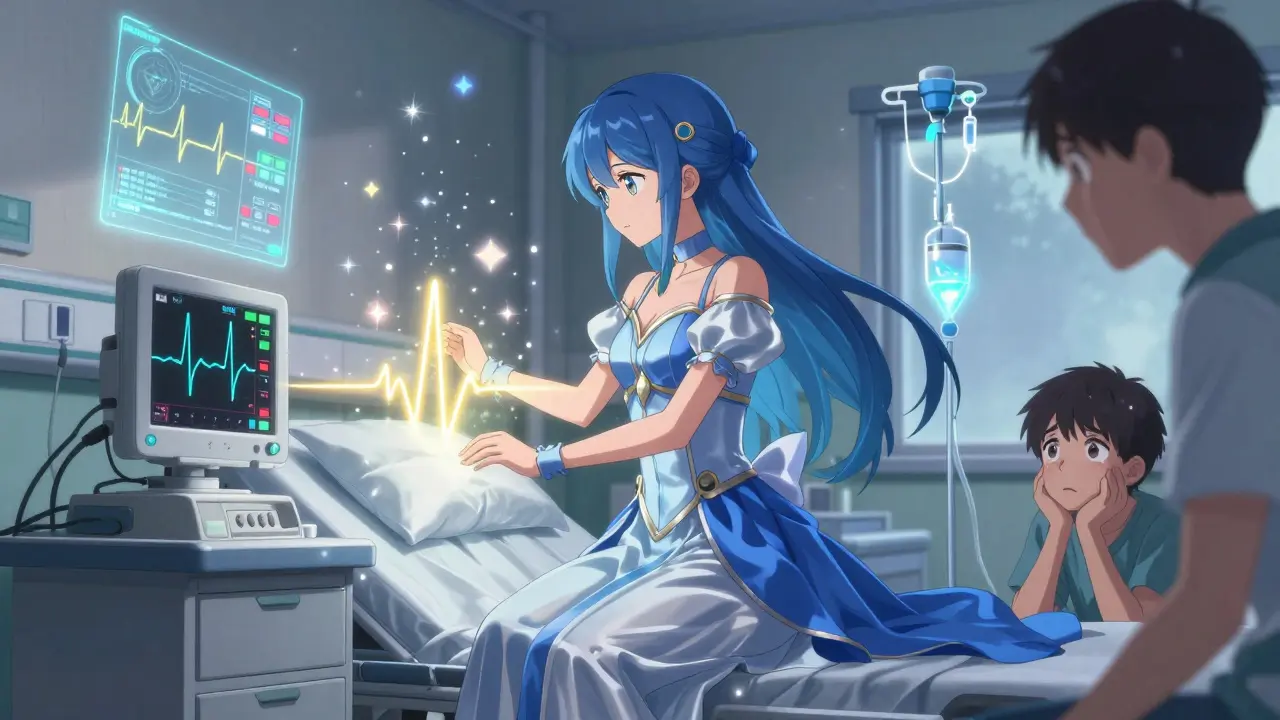
- Continuous EKG monitoring: Required for anyone who took over 300 mg. Doctors watch for QRS widening beyond 100 milliseconds-a red flag for heart blockage.
- Sodium bicarbonate: If the QRS is over 120 ms and heart rate is above 120 bpm, IV sodium bicarbonate may be given. A 2022 study in the New England Journal of Medicine showed it can shrink the widened QRS back to normal.
- Benzodiazepines: Used for agitation or seizures. The American College of Medical Toxicology updated its 2023 guidelines to make these the first-line treatment. They’re safer than older drugs like physostigmine, which can trigger dangerous heart rhythms.
- IV fluids: To support blood pressure and help flush the system.
Don’t expect dialysis or “detox” treatments. Antihistamines are 70-95% bound to proteins in the blood and spread widely through body tissues. Your kidneys can’t filter them out. The body has to metabolize them naturally-so time and monitoring are the real treatments.
Why This Matters More Than You Think
Over 70 million Americans use antihistamines every year. The global market is worth $5.8 billion. But here’s the scary part: 79% of overdoses are accidental. A 2022 AAPCC report found that 42% of pediatric cases happened because parents misread dosing cups. Liquid formulations are especially risky-they look like juice, and the measuring tools are confusing.
Also, many OTC products combine antihistamines with other drugs. NyQuil, Excedrin PM, ZzzQuil-they all contain diphenhydramine. People don’t realize they’re doubling up. One man on Drugs.com took 400 mg thinking he was just taking “sleep aid,” but he was also taking allergy pills. He ended up in the ER with a heart rate of 130 bpm and couldn’t urinate for hours.
The FDA updated labels in June 2023 to require clearer overdose warnings and better child-resistant packaging. But awareness is still low. A 2021 University of Pittsburgh survey found only 38% of parents knew when to seek emergency help.
Prevention: How to Keep It From Happening Again
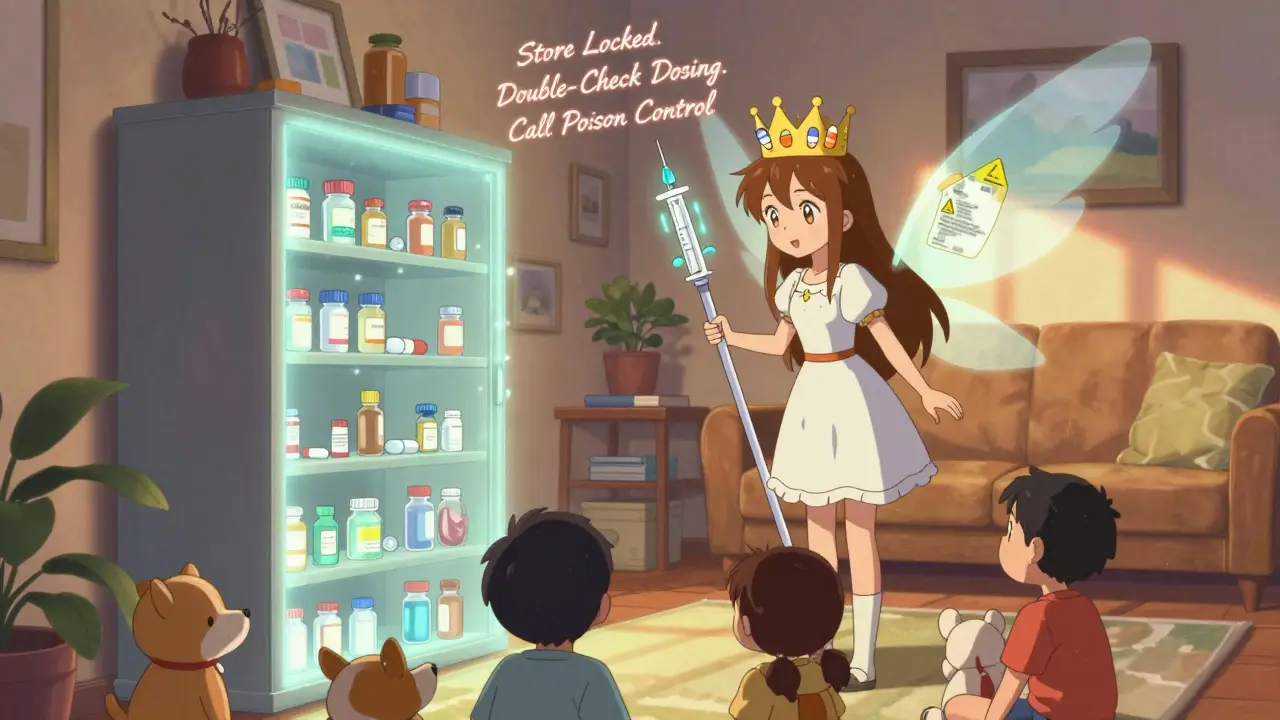
- Store all meds in locked cabinets-not on counters or nightstands.
- Use original packaging with child-resistant caps. Don’t transfer liquids to unmarked containers.
- Double-check dosing. Liquid forms often have different concentrations (e.g., 12.5 mg/5 mL vs. 12.5 mg/1 tsp). Use the syringe that came with it, not a spoon.
- Teach kids that medicine isn’t candy. Even if it tastes sweet.
- Keep poison control’s number saved in your phone: 1-800-222-1222.
Most overdoses are preventable. But when they happen, speed and knowledge save lives. Don’t guess. Don’t wait. Call poison control. They’ve seen it all-and they’ll tell you exactly what to do next.
Can you die from an antihistamine overdose?
Yes, but it’s rare if treated. Death from antihistamine overdose usually happens when treatment is delayed. The main dangers are cardiac arrhythmias, respiratory failure, and seizures. According to the NCBI StatPearls review, 99.9% of patients who receive timely medical care survive. Most deaths occur in cases where people wait hours before seeking help or don’t recognize the symptoms.
Is it safe to give activated charcoal at home?
No. Activated charcoal should only be given under medical supervision. It can cause vomiting, aspiration, or bowel blockages if used incorrectly. Even if you have it at home, don’t give it unless poison control or an ER provider tells you to. The timing and dosage matter-too much or too late can be harmful.
What’s the difference between Benadryl and Zyrtec in an overdose?
Benadryl (diphenhydramine) is a first-generation antihistamine and much more dangerous in overdose. It causes severe anticholinergic effects: dry mouth, blurred vision, fast heart rate, urinary retention, and heart rhythm problems. Zyrtec (cetirizine) is second-generation. Even large doses rarely cause serious symptoms. A 2020 study showed serious outcomes in 1.8% of diphenhydramine cases versus 0.2% for cetirizine. If someone overdoses on Zyrtec, they’re likely to feel tired or dizzy-but not in life-threatening danger.
How long should someone be monitored after an overdose?
At least 4-6 hours for mild cases. For moderate to severe overdoses, especially with cardiac symptoms, monitoring lasts 24-48 hours. The median hospital stay for admitted patients is about 22.7 hours, according to a 2022 Journal of Medical Toxicology study. Even if symptoms disappear, heart rhythm issues can appear hours later. That’s why continuous EKG monitoring is standard.
Can you flush antihistamines out of your system faster?
No. Antihistamines bind tightly to proteins in the blood and spread into fatty tissues. This means they’re not filtered well by the kidneys, and drinking water or taking diuretics won’t help. Attempts to speed up elimination-like IV fluids to increase urine output-are ineffective. The body must metabolize the drug naturally. That’s why time and supportive care are the only real treatments.
 Pharmacology