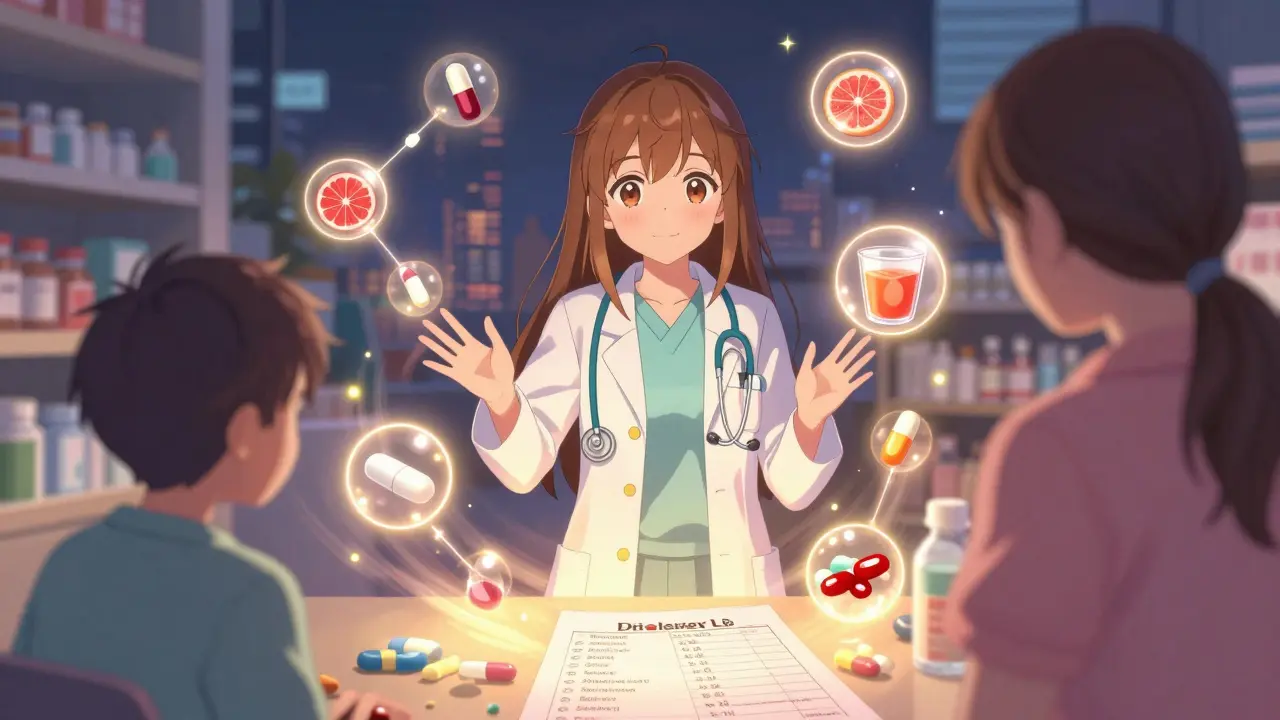
Every year, over 1.3 million people in the U.S. end up in the emergency room because of dangerous drug interactions. Many of these cases are preventable - and the person who can help you the most isn’t your doctor, it’s your pharmacist. Pharmacists aren’t just the ones who hand you your pills. They’re trained to spot hidden dangers between your medications, supplements, food, and even your health conditions. But you have to ask the right questions.
What exactly is a drug interaction?
A drug interaction happens when something changes how a medication works in your body. It could make it stronger, weaker, or cause unexpected side effects. There are three main types:- Drug-drug interactions: When two or more medicines react with each other. For example, mixing blood thinners like warfarin with certain antibiotics can increase your risk of bleeding.
- Drug-food/beverage interactions: Certain foods or drinks can interfere with how your body absorbs or breaks down a drug. Grapefruit juice, for instance, can dangerously raise levels of some cholesterol and blood pressure meds.
- Drug-condition interactions: Your existing health problems can make a drug unsafe. Taking decongestants if you have high blood pressure? That can spike your pressure to dangerous levels.
These aren’t rare. In 2022, over 112,000 adverse events linked to drug interactions were reported to the FDA. The most common culprits? Blood thinners, diabetes drugs, and heart medications.
What should you ask your pharmacist before starting a new medication?
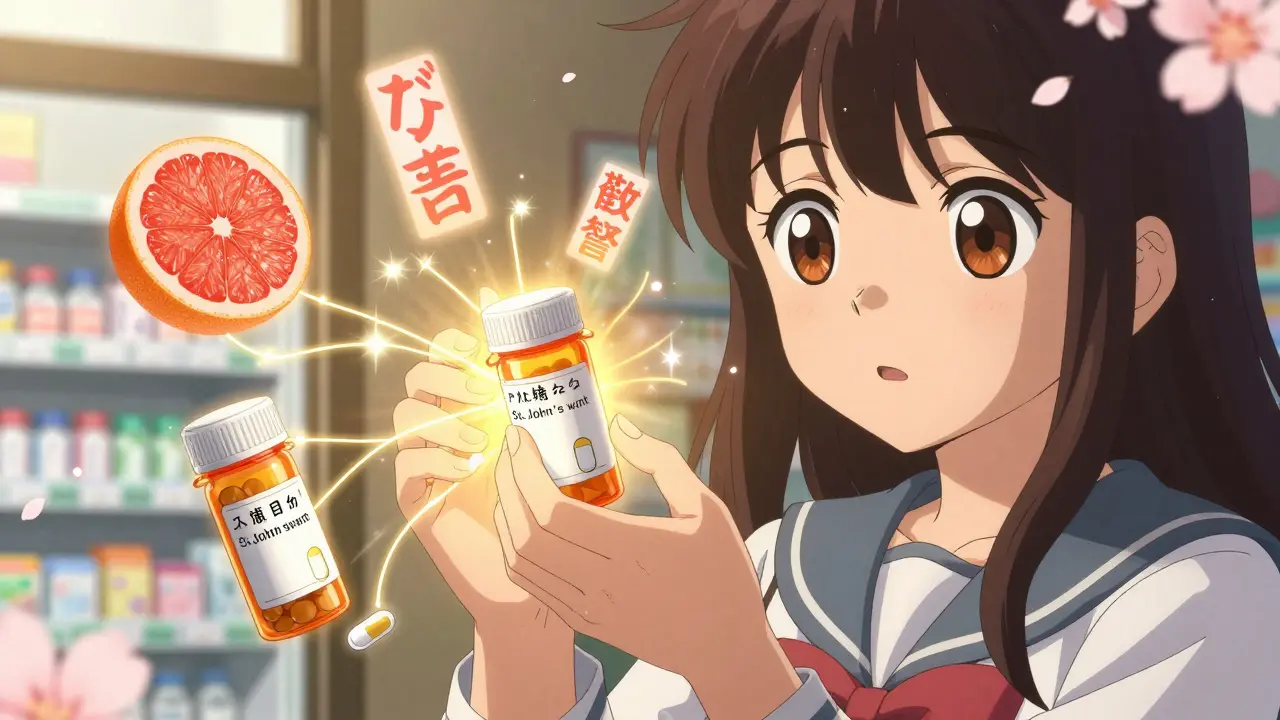
Don’t wait until you feel weird. Ask these questions the first time you pick up a prescription - or even before you take it.- Can this medicine interact with anything else I’m taking? This includes every prescription, over-the-counter pill, vitamin, herb, or supplement. People often forget about things like St. John’s wort, magnesium, or even fish oil. St. John’s wort can make birth control, antidepressants, and even some cancer drugs stop working.
- Should I avoid any foods, drinks, or alcohol? Grapefruit juice isn’t the only offender. Alcohol can make sedatives, painkillers, and antidepressants more dangerous. Aged cheeses and cured meats can trigger dangerous blood pressure spikes if you’re on an MAO inhibitor like phenelzine. Even a glass of wine might be risky.
- How will this affect my existing health conditions? If you have kidney disease, liver problems, heart failure, or high blood pressure, some meds can make it worse. For example, NSAIDs like ibuprofen can hurt kidney function in people with chronic kidney disease. Your pharmacist needs to know your full medical history.
- When should I take this - with food or on an empty stomach? Timing matters. Some drugs need food to be absorbed properly. Others must be taken on an empty stomach, or they won’t work. Taking a pill with a high-fat meal might make it too strong. Taking another with coffee might make it useless.
- What are the warning signs of a bad interaction? Know what to watch for: unusual dizziness, rapid heartbeat, severe nausea, unexplained bruising or bleeding, confusion, or sudden swelling. These aren’t just side effects - they could be your body reacting to a dangerous mix.
- Is there a safer alternative? If your current drug has a long list of interaction warnings, ask if another option exists. Sometimes a different brand, dosage form, or class of drug works just as well with fewer risks.
What information should you bring to the pharmacy?
You can’t expect your pharmacist to guess what you’re taking. Bring a complete list - every single thing. Include:- All prescription medications, including doses and how often you take them
- All over-the-counter drugs (pain relievers, sleep aids, antacids)
- All vitamins, minerals, and supplements (even if you think they’re "natural" and harmless)
- Herbal products like turmeric, ginseng, echinacea, or CBD
- Any recreational substances - including nicotine and alcohol habits
Write it down. Don’t rely on memory. A 2022 JAMA Internal Medicine study found that nearly 18% of serious drug interactions were missed because patients didn’t tell pharmacists about all their meds - especially supplements. One woman took melatonin for sleep and didn’t think it mattered. It turned out to be interacting with her blood thinner, causing dangerous bleeding.
Why supplements are the silent risk
Seventy-seven percent of American adults take at least one supplement. Most think they’re safe because they’re "natural." But that’s a myth.St. John’s wort can cancel out antidepressants and birth control. Vitamin K can undo the effects of warfarin. Garlic and ginkgo can thin your blood - and when mixed with aspirin or clopidogrel, that can lead to internal bleeding. Even calcium supplements can block the absorption of thyroid meds if taken at the same time.
Pharmacists at Cedars-Sinai and other major hospitals now routinely ask patients: "What are you taking that isn’t a prescription?" If you don’t mention it, they can’t protect you.
How often should you review your meds?
Don’t wait for a crisis. Review your entire medication list with your pharmacist at least every three months. Or better yet - every time you get a new prescription.Studies show that the most recent drug added is often the one causing the problem. Maybe you started a new painkiller after back surgery. Then you began taking a new heart med. Suddenly you’re dizzy and nauseous. The interaction? Hidden. But your pharmacist can spot it in seconds if you give them the full picture.
Pharmacists use tools that check for interactions based on your age, kidney and liver function, allergies, and exact dosages. But those tools only work if the data is complete.
What about those "interaction alerts" at the pharmacy?
Yes, your pharmacy’s computer will flash warnings. But here’s the truth: those systems still miss about 18% of dangerous interactions. Why? Because they don’t know about everything you’re taking - especially if you bought something online, got it from a friend, or didn’t tell your doctor.Technology helps, but it doesn’t replace conversation. Your pharmacist is the only person who can ask you: "Did you take that herbal tea last week?" or "Are you still drinking grapefruit juice?"
What if you’re taking five or more medications?
If you’re on five or more drugs - which 44% of men and 57% of women over 65 are - you’re at much higher risk. Each additional medication increases your chance of an interaction. This isn’t just about old age. More people under 65 are now taking multiple prescriptions due to chronic conditions like diabetes, heart disease, and depression.Pharmacists call this "polypharmacy." It’s not bad by itself - but it’s dangerous without proper oversight. That’s why medication therapy management (MTM) programs exist. These are free services offered by many pharmacies. In one 2023 study, pharmacist-led MTM reduced drug interaction incidents by over 23% in Medicare patients.
Ask if your pharmacy offers MTM. It’s a 30-minute session where a pharmacist reviews every pill, patch, and capsule you take - and tells you exactly what’s safe and what’s risky.
What’s changing in drug safety?
The FDA now requires drugmakers to test for interactions during development. New labels include clearer warnings. Some hospitals are starting to use genetic testing to predict how your body will react to certain drugs - like warfarin. But these tools aren’t everywhere yet.The biggest shift? More focus on patient communication. The American Pharmacists Association now trains pharmacists to ask open-ended questions: "What else are you taking?" instead of "Do you take any supplements?"
And the trend is clear: as more people take more drugs, your role in speaking up becomes more important than ever.
Can I take my supplements with my prescription drugs?
Not always. Many supplements - like St. John’s wort, ginkgo, garlic, and even high-dose vitamin E - can interfere with prescription drugs. They might make your blood thinner, raise your blood pressure, or block absorption. Always tell your pharmacist exactly what supplements you take, even if you think they’re harmless.
Does grapefruit juice really interact with medications?
Yes. Grapefruit juice can block enzymes in your liver that break down certain drugs. This causes too much of the drug to build up in your blood. It can happen with statins, blood pressure meds, anti-anxiety drugs, and some cancer treatments. Even one glass a day can be risky. If your drug label says "avoid grapefruit," skip it completely.
What if I forget to tell my pharmacist about a new medicine?
Call them as soon as you remember. Most pharmacies have a 24-hour hotline. You can also bring your list to your next visit and ask for a quick review. Don’t wait for symptoms. The sooner you correct the record, the safer you are.
Are over-the-counter drugs really dangerous with prescriptions?
Absolutely. Painkillers like ibuprofen can increase bleeding risk if you’re on blood thinners. Antacids can block absorption of thyroid or antibiotic meds. Cold medicines with decongestants can spike blood pressure if you have heart disease. Never assume OTC means safe.
How do I know if a drug interaction is happening to me?
Watch for sudden changes: unusual dizziness, confusion, rapid heartbeat, nausea, unexplained bruising, swelling, or extreme fatigue. If you notice these after starting a new drug or supplement, contact your pharmacist or doctor right away. Don’t wait to see if it gets better.
Final tip: Be the expert on your own body
No one knows your routine better than you. You know when you take your pills, what you eat, and how you feel. Your pharmacist has the tools - you have the details. Together, you can prevent a dangerous interaction before it happens.Don’t wait for a crisis. Bring your list. Ask your questions. Speak up. That simple step could save your life.
 Pharmacology
Robert Way
January 15, 2026 AT 04:02so i took my blood thinner and then had a grapefruit smoothie like 3 times a week and nothing happened?? maybe the whole thing is hype?? my pharmacist just laughed when i asked and said "youre lucky"
Vicky Zhang
January 16, 2026 AT 17:55OH MY GOODNESS I JUST REALIZED I’VE BEEN TAKING ST. JOHN’S WORT WITH MY ANTIDEPRESSANTS FOR OVER A YEAR AND I DIDN’T EVEN KNOW IT COULD BE DANGEROUS 😭 I’M SO GRATEFUL FOR THIS POST. I JUST RAN TO THE PHARMACY AND THEY TOOK ONE LOOK AT MY LIST AND SAID "OH HONEY WE NEED TO TALK RIGHT NOW." I’M SO GLAD I READ THIS BEFORE SOMETHING TERRIBLE HAPPENED. THANK YOU THANK YOU THANK YOU
TooAfraid ToSay
January 18, 2026 AT 07:54pharmacists arent magic. they’re just employees who read from a database. the real issue is that doctors prescribe like they’re playing whack-a-mole with symptoms. i’ve had 3 different pharmacists tell me the same thing about grapefruit juice but my doctor still prescribes statins like they’re candy. this whole system is broken.
Henry Sy
January 18, 2026 AT 08:12man i used to be one of those guys who thought "natural" meant "safe" until i started taking turmeric with my blood pressure med and woke up with a headache that felt like my skull was cracking open. turns out it’s a blood thinner too. my pharmacist looked at me like i’d just admitted to feeding my cat cocaine. now i keep a little notebook in my wallet with everything i take. even the dumb stuff. like that gummy vitamin i chew at night. yeah. that one.
Jason Yan
January 20, 2026 AT 07:46it’s funny how we treat doctors like oracles but ignore the people who actually understand the chemistry of what we’re putting in our bodies. pharmacists are the unsung heroes of modern healthcare. they don’t get medals or TV specials, but they’re the ones catching the mistakes before they become emergencies. i started bringing my full list every time i go in-even if i’ve been there last week. it’s not about being paranoid, it’s about being responsible. and honestly? the pharmacists i’ve met are genuinely invested. they’ll ask about your sleep, your diet, your stress levels. they care more than most doctors do.
shiv singh
January 21, 2026 AT 03:35people are so lazy they think a pill is a magic bullet. you take your meds like you’re following a recipe from a meme. you don’t read the label, you don’t ask questions, you just swallow and hope. and then you blame the system when you get sick. stop being a victim. educate yourself. your life isn’t a Netflix documentary. it’s your body. take ownership.
Allison Deming
January 21, 2026 AT 11:23While the article presents a compelling case for increased patient-pharmacist communication, it is worth noting that the systemic underfunding of community pharmacy services in the United States renders many of these recommendations impractical for the average patient. Pharmacists are often overburdened with administrative duties and lack the time to conduct comprehensive medication reviews. Furthermore, the absence of universal electronic health record interoperability continues to hinder accurate interaction detection. Therefore, while individual responsibility is important, structural reform is paramount.
Susie Deer
January 21, 2026 AT 18:09why are we letting foreigners tell us how to take our medicine. we got our own doctors. why do we need to listen to some pharmacist who barely speaks english. this country used to be strong. now we’re letting algorithms and supplements ruin everything
Alvin Bregman
January 22, 2026 AT 14:58i used to think supplements were just vitamins but then i started taking melatonin and fish oil together and my gums started bleeding for no reason. i told my pharmacist and he just nodded like he’d seen it a hundred times. now i write everything down on a napkin and hand it to him. no emojis no fancy apps just paper and pen. he says its the most reliable thing he sees all day
Sarah Triphahn
January 23, 2026 AT 02:37the real problem isn’t the interactions. it’s that people treat their meds like candy. you think a pill is harmless because it’s over the counter or "natural"? that’s not how biology works. you’re not a superhero. you’re a chemical reaction waiting to go wrong. if you’re taking more than three things you’re already playing russian roulette. and no your pharmacist isn’t going to save you if you don’t tell them everything. you’re just delaying the inevitable.