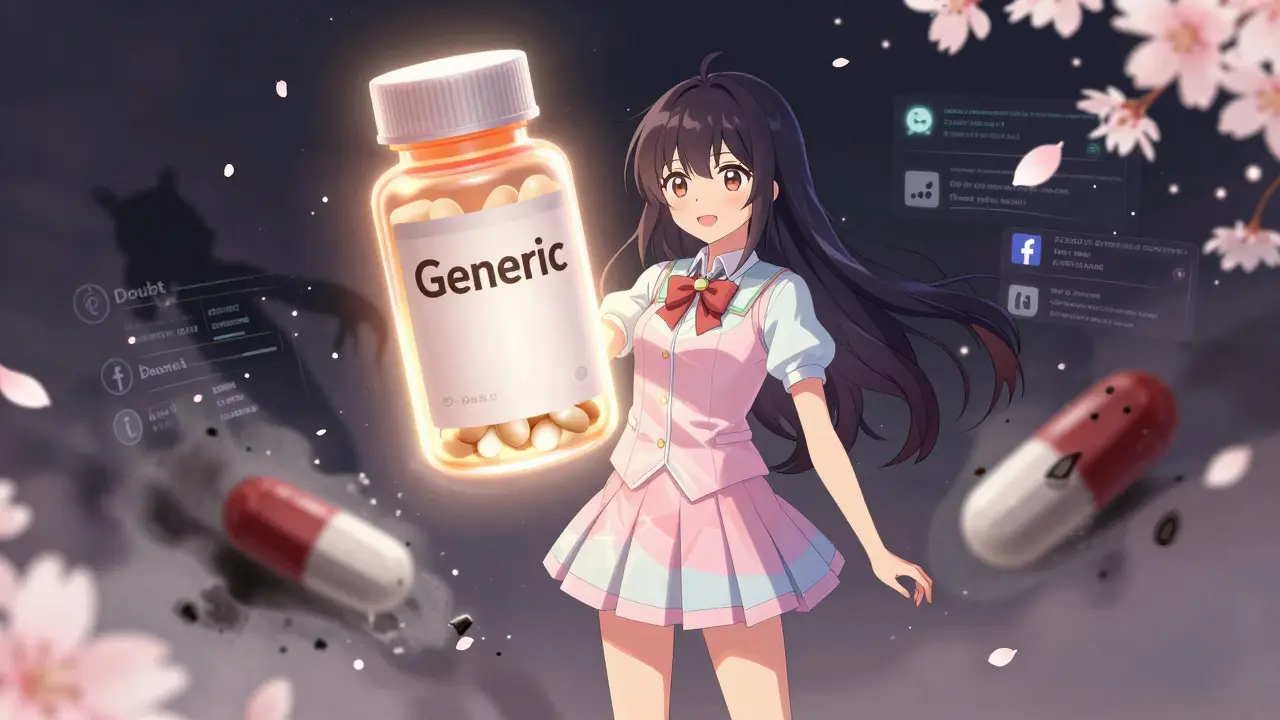
When you pick up a prescription, you might not think twice about whether it’s the brand name or the generic version. But for millions of people, that choice isn’t just about price-it’s about trust. And that trust is being shaped less by FDA guidelines and more by what strangers say on Reddit, PatientsLikeMe, and Facebook groups.
Why People Doubt Generics-Even When Science Says They’re the Same
Generic drugs are required by the FDA to contain the exact same active ingredient as their brand-name counterparts. They must meet the same bioequivalence standards: their absorption rate in the body must fall within 80% to 125% of the brand drug. That’s not a guess. It’s a hard scientific benchmark. Yet, 35.6% of patients still believe generics are less effective. Only 23.6% of pharmacists think that way. So why the gap? It’s not about chemistry. It’s about psychology. A 2018 study in the European Journal of Public Health gave patients identical tramadol pills-but one group got them in brand-name packaging, the other in plain generic labeling. The generic group was 22.7% more likely to stop taking the medication early. They reported more pain. They bought more over-the-counter painkillers. Their bodies reacted as if the drug didn’t work-because they believed it didn’t. This isn’t placebo. It’s the nocebo effect: negative expectations causing real physical symptoms.What Patients Are Saying Online
Scrape through thousands of posts on r/pharmacy and PatientsLikeMe from 2020 to 2023, and patterns jump out. Nearly half (47.3%) of comments about generics mention “different side effects.” Over a third (32.9%) say the drug “just isn’t working like it used to.” One Reddit user, u/ChronicPainWarrior, wrote in March 2023: “My doctor switched me to generic Lyrica and within two weeks my nerve pain returned-I’m convinced the generics aren’t made to the same standards.” That story sticks. It spreads. It feels real. But here’s the flip side: 23.7% of posts celebrate generics. u/BudgetSavvyPatient posted in September 2022: “After 3 years on generic sertraline, I’ve saved $2,180 with zero difference in effectiveness.” That’s a powerful testimonial too-but it doesn’t get the same traction. Negative experiences are more emotionally charged. They’re more likely to be shared. And online, emotion drives visibility.Doctors and Pharmacists: The Missing Link
The biggest predictor of whether a patient accepts a generic? What their doctor or pharmacist says. A 2024 study in Frontiers found that 69.8% of patients were open to generics when their provider recommended them. Only 30.2% stuck with brand-name drugs because they believed they were “better quality.” But here’s the problem: most doctors have less than two minutes to discuss medication during a visit. Pharmacists, who have the most time and training on this topic, are often left out of the conversation until the pill is handed over. Dr. Judith A. Stafford of the American Pharmacists Association says it plainly: “When pharmacists take the time to explain the FDA approval process for generics, patient acceptance increases by about 40%.” That’s not magic. It’s clarity. A 90-second conversation explaining that the same FDA inspectors check both brand and generic factories? That changes minds.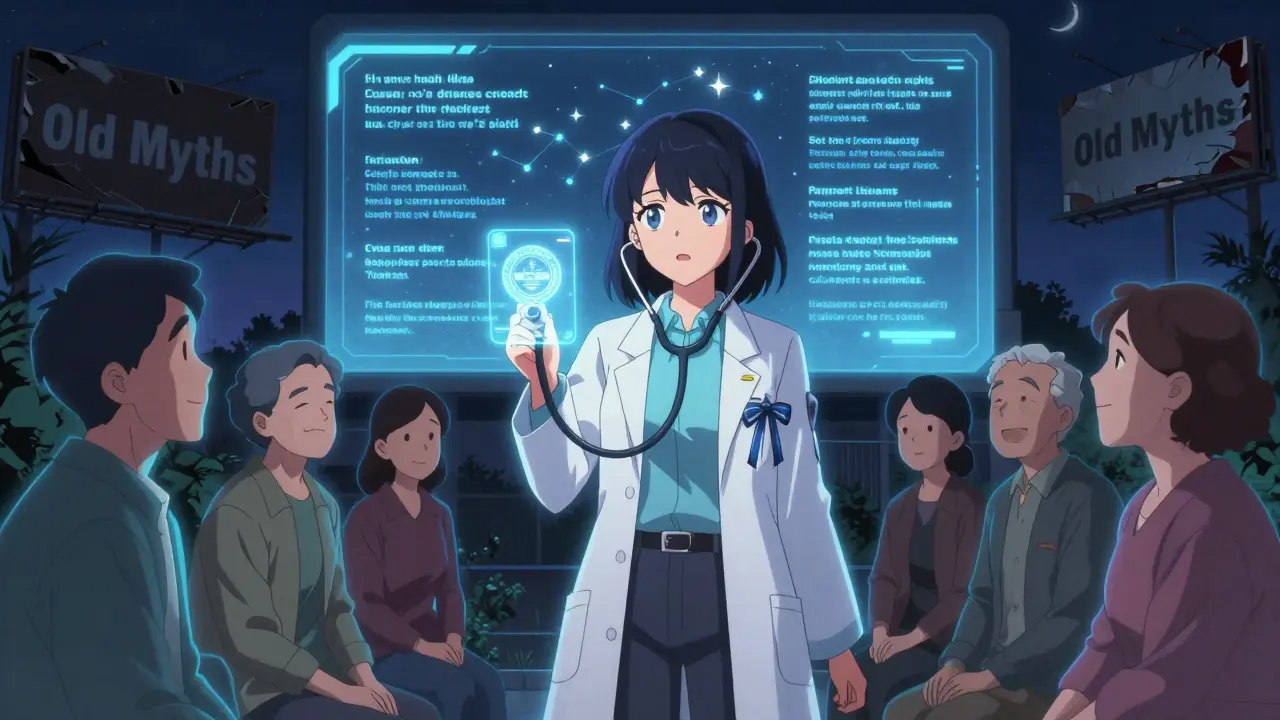
The Cost of Mistrust
The U.S. spends $14.3 billion a year because people don’t trust generics. That money goes to unnecessary brand-name prescriptions, ER visits from non-adherence, and complications from stopped medications. Generics make up 90% of prescriptions filled-but only 27.3% of patients say they’re fully confident in their effectiveness. That’s a massive disconnect. And it’s worse for older adults. Patients over 65 are only 41.7% likely to trust generics, compared to 68.2% of those under 35. Why? Older patients often take multiple medications. A change-even a tiny one in pill color or shape-can trigger anxiety. They remember when generics were less reliable. They don’t know the rules changed in the 1980s.What’s Working: Real Solutions
Kaiser Permanente didn’t just hope people would change their minds. They made a handout. Simple. One page. Called “Generic Medication Facts.” It explained: same active ingredient, same FDA standards, same safety checks. No jargon. Just facts. Within six months, patient questions about generics dropped by 52.3%. Adherence went up 18.6%. Pharmacies that trained staff to spend just 90 seconds explaining equivalence saw a 38.7% boost in patient acceptance. That’s not a lot of time. But it’s enough to break the cycle of fear. Some companies are even using “authorized generics”-the brand-name maker selling the exact same pill without the logo. These are growing 37.6% year-over-year. Why? Because they feel safer to patients. Same formula. Same factory. Just no fancy packaging.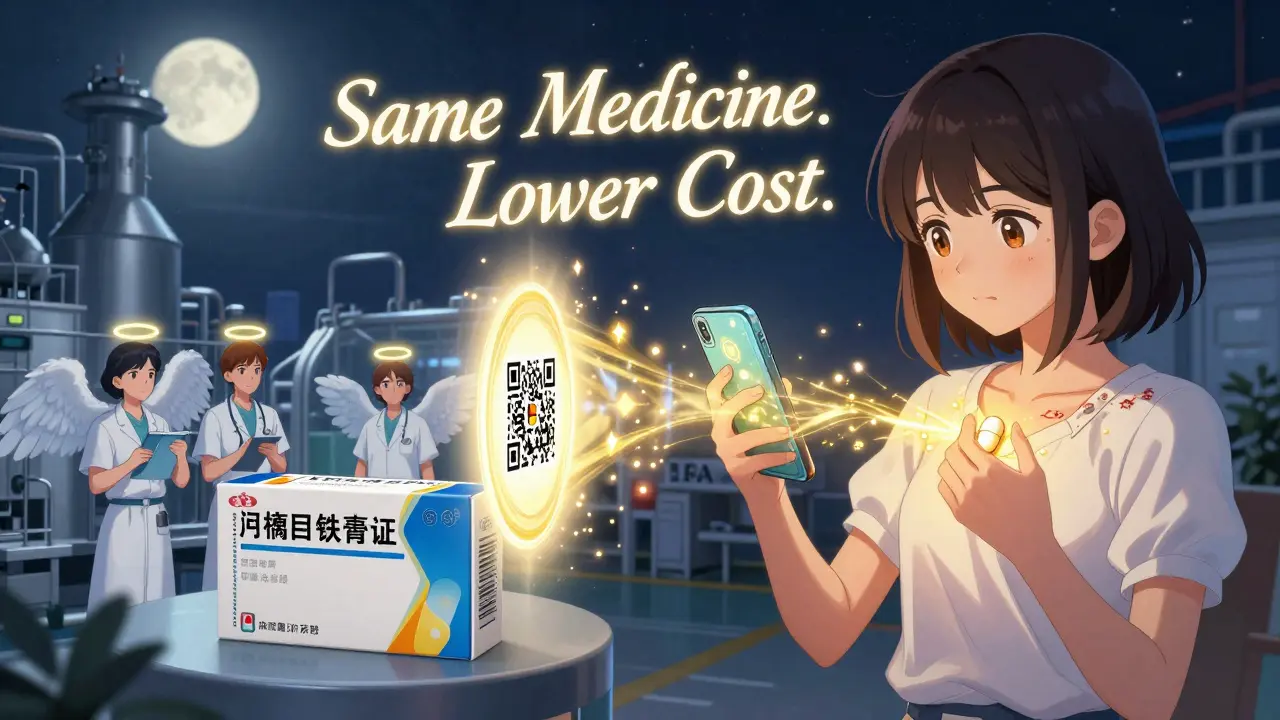
What Comes Next
The FDA just launched a $15.7 million education campaign: “Generics: Same Medicine, Lower Cost.” Early results show a 22.4% improvement in consumer confidence after six months. That’s progress. Machine learning tools are now predicting which patients are most likely to reject generics based on age, income, and past behavior. That lets clinics target outreach before the prescription is even filled. And blockchain tech? Pilot programs are testing ways to verify a generic drug’s origin from factory to pharmacy. If you can scan a code and see exactly where your pills came from-factory, batch, inspection report-that builds trust in a way no brochure ever could.It’s Not About the Pill. It’s About the Story.
The science is clear. Generics work. They’re safe. They save billions. But belief doesn’t come from data sheets. It comes from stories. From a pharmacist who takes the time to say, “I’ve prescribed this same generic for 12 years. My mom takes it too.” From a patient review that says, “I saved $200 a month and still feel fine.” From a doctor who says, “This is the same drug. I wouldn’t hesitate to give it to my own family.” Online reviews aren’t just noise. They’re the new pharmacy counter. And if we want people to trust generics, we need to fill that space with truth-not just science, but human experience.It’s not about convincing people that generics are equal. It’s about helping them feel it.
 Pharmacology
steve rumsford
January 6, 2026 AT 12:32generic pills look different so of course people think theyre weaker. my cousin took a blue one instead of the white one and swore it made her dizzy. turned out she just panicked.
Paul Mason
January 7, 2026 AT 23:51lets be real here. if you cant tell the difference between a brand and generic ibuprofen you probably also think the moon landing was faked. the science is settled. its the same damn molecule. stop letting fear sell you overpriced junk.
Mina Murray
January 8, 2026 AT 08:43you think the fda is telling the truth? theyre owned by big pharma. the bioequivalence range is a joke. 80% to 125% means a generic could be half as strong or 25% stronger. thats not the same. thats a lottery.
Ayodeji Williams
January 9, 2026 AT 17:18bro i switched to generic adderall and my brain turned to mush 😭 i had to go back to the brand or i couldnt even tie my shoes. the system is rigged. they dont want us to feel good. 🤡
Rachel Steward
January 10, 2026 AT 13:11the real tragedy isnt the mistrust of generics-it’s that society has outsourced medical authority to reddit threads and facebook groups. we’ve replaced clinical expertise with performative suffering. people dont want to be healed-they want to be validated. and so we get viral anecdotes masquerading as evidence. the nocebo effect is real, but so is the erosion of scientific literacy. we’re not just losing money-we’re losing the ability to trust facts.
Emma Addison Thomas
January 10, 2026 AT 14:11in the uk, we’ve had generics for decades. people don’t panic over pill color here. maybe it’s because we trust our pharmacists more. they sit down, explain it, and treat you like a person-not a sales target.
Christine Joy Chicano
January 10, 2026 AT 14:39my grandma takes generic metformin and swears it gives her more energy than the brand. she’s 78, diabetic, and sharper than half the doctors i know. she says the only thing that changed was the price tag-and the peace of mind that came with it.
Aparna karwande
January 11, 2026 AT 11:36indians have been using generics for 50 years. we dont cry over pill shape. we dont pay 10x for a logo. america is sick-not because of medicine, but because of capitalism dressed as healthcare. your fear is a product. sold to you by the same companies that made you believe you need a branded pill to live.
Jonathan Larson
January 11, 2026 AT 13:08the data is unequivocal: generics are therapeutically equivalent. the psychological barrier is not a failure of science, but a failure of communication. healthcare professionals must move beyond transactional interactions and embrace educational stewardship. a 90-second explanation, delivered with empathy and clarity, is not a luxury-it is a moral imperative.
Alex Danner
January 12, 2026 AT 03:40i work in a pharmacy. i’ve seen people cry because they thought their generic antidepressant didn’t work. i hand them the fda fact sheet, show them the batch records, and say, ‘this is the same drug your doctor prescribed-just without the marketing budget.’ 9 out of 10 come back a week later saying they feel better. not because the drug changed. because their mind did.
Kamlesh Chauhan
January 14, 2026 AT 02:01generic lyrica made me feel like i was drowning in slow motion. i told my doctor and he just shrugged. now i pay extra because my life matters more than some spreadsheet
Vince Nairn
January 14, 2026 AT 11:22so you’re telling me the guy who wrote that reddit post about lyrica was wrong? cool. so was the guy who said he lost his job because his generic blood pressure med made him pass out. funny how the internet remembers the bad stuff and forgets the 1000 quiet success stories. we’re all just guessing anyway.
Anastasia Novak
January 15, 2026 AT 23:53the real villain here isn’t the generic pill-it’s the system that makes people choose between medicine and rent. of course you’re going to distrust a drug you can barely afford. the brand name is a placebo for financial security. the pill doesn’t cure you. the fact that you can pay for it does.
Kyle King
January 17, 2026 AT 16:53did you know the fda lets generic manufacturers use different fillers? some have talc. some have asbestos. they dont even test for that. your generic could be a death trap. the brand name? no fillers. pure medicine. theyre hiding it from you.