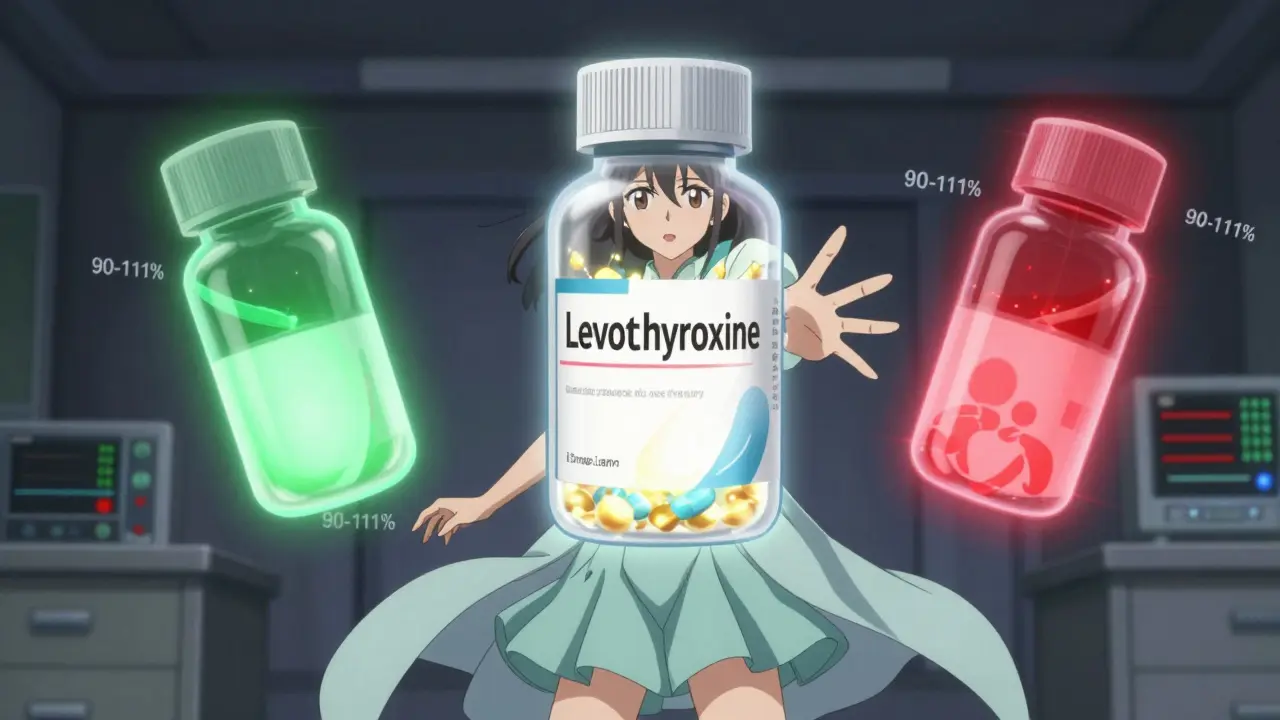
When you take a medication like levothyroxine or warfarin, you might not think twice about switching from one generic version to another. But for drugs with a narrow therapeutic index (NTI), that switch could mean the difference between staying healthy and ending up in the hospital. These aren’t your typical pills. Even tiny changes in how much of the drug gets into your bloodstream can cause serious harm.
What Makes a Drug an NTI Drug?
NTI drugs have a razor-thin line between working and causing harm. Too little, and the treatment fails. Too much, and you risk toxicity. There’s no room for error. The U.S. Food and Drug Administration (FDA) defines NTI drugs as those requiring specialized monitoring because small changes in dose can lead to serious side effects or treatment failure. Examples include levothyroxine (for thyroid conditions), warfarin (a blood thinner), carbamazepine (for seizures), lithium (for bipolar disorder), and tacrolimus (used after organ transplants).
Unlike regular generics, where a 10% variation in absorption is considered acceptable, NTI drugs must meet much tighter standards. The FDA requires bioequivalence testing to stay within 90-111% of the brand-name drug’s performance-compared to the usual 80-125% for most drugs. That means if the brand delivers 100 units of the active ingredient, the generic must deliver between 90 and 111 units. For non-NTI drugs, the range is wider: 80 to 125 units. This tighter window exists because even a 5% difference can be dangerous.
Why Switching Between Generic Manufacturers Matters
Here’s the catch: not all generics are made the same-even if they contain the exact same active ingredient. Different manufacturers use different fillers, coatings, and manufacturing processes. For most drugs, that doesn’t matter. For NTI drugs, it can.
A 2019 study looking at tacrolimus generics found that different brands varied in active ingredient content by as much as 17%. One version delivered 93% of the expected dose, while another delivered 110%. While these differences weren’t statistically significant in large trials, real patients don’t live in clinical trials. One transplant patient might react badly to a switch from Mylan to Sandoz, even if the average patient doesn’t.
Same thing with cyclosporine. A 2015 study of kidney transplant patients showed a 15.3% higher rate of acute rejection when switching between two different generic versions. That’s not a small number. It’s the difference between keeping a transplanted organ and losing it.
Even levothyroxine, which has been studied more than almost any other NTI drug, shows subtle shifts. A 2021 FDA analysis found that switching between brand and generic versions didn’t change average TSH levels-but some patients saw their levels fluctuate by 15-20%. That’s enough to make someone feel tired, gain weight, or worse, trigger heart rhythm problems.

The FDA’s Official Stance vs. Real-World Experience
The FDA says: “Generic NTI drugs are therapeutically equivalent.” They approve them based on rigorous testing. And for most people, that’s true. A 2021 study of over 10,000 patients switching from brand-name Synthroid to generic levothyroxine showed 98.7% maintained stable thyroid levels. That sounds reassuring.
But here’s what happens in real life: pharmacists report that 63% have received complaints from patients or doctors after switching between generic manufacturers. People say things like: “I’ve been on the same dose for years. Now I’m dizzy. My heart is racing.” Or: “I’ve had no seizures for 8 years. Since we switched generics, I had three in two weeks.”
These aren’t just anecdotes. A 2019 study in the Journal of Thrombosis and Haemostasis found that switching between different generic warfarin brands increased INR variability by 0.32 points-enough to push someone from a safe range into a dangerous one. Even if it didn’t lead to more bleeding events over six months, it added stress, more doctor visits, and more blood tests.
Doctors and Pharmacists Are Divided
Surveys show a gap between what experts say and what practitioners do. In 2019, 87% of pharmacists believed generic NTI drugs were as effective as brand-name versions. But 82% said they almost always substituted generics for initial prescriptions. Meanwhile, 63% reported receiving complaints about switches.
Some doctors refuse to allow switches. Neurologists, for example, often follow guidelines from the American Academy of Neurology that recommend against automatic substitution of antiepileptic drugs-even if the FDA says they’re equivalent. The Epilepsy Foundation has collected hundreds of reports from patients who had breakthrough seizures after switching generics.
On the other side, the American Medical Association pointed out in 2007 that brand-name manufacturers change their own formulations too-sometimes without telling anyone. So if switching from brand to generic is risky, why isn’t switching from one brand to another? The answer: because you know what brand you’re on. You don’t know what generic you’ll get next month.

State Laws and What You Can Do
Not all states allow pharmacists to switch NTI drugs without the prescriber’s permission. As of 2022, 27 states had laws restricting substitution for certain NTI drugs. In those states, pharmacists must get the doctor’s okay before switching. In others, substitution is automatic unless the doctor writes “dispense as written” on the prescription.
If you’re on an NTI drug, here’s what you can do:
- Ask your doctor to write “dispense as written” or “no substitution” on your prescription.
- Check the name of the generic you get each time. If it changes, tell your doctor.
- Ask for a blood test (like TSH for levothyroxine, INR for warfarin) after any switch.
- Keep a log of symptoms: fatigue, headaches, mood changes, seizures, bruising, heart palpitations.
- Don’t assume “same drug = same effect.” Even small differences matter.
The Bigger Picture: Cost vs. Safety
Generics save billions. They make healthcare affordable. That’s good. But for NTI drugs, the savings can come at a cost-sometimes literally. A single hospitalization from a drug reaction can cost over $20,000. More blood tests, more doctor visits, more anxiety-those add up too.
The FDA’s data says NTI generics are safe. And for most people, they are. But safety isn’t just about averages. It’s about the person sitting in the doctor’s office. If you’re one of the 5% who reacts badly to a switch, you don’t care about the 95% who didn’t.
There’s no perfect answer. But there is a clear need: more research into real-world outcomes, better tracking of which generic you’re on, and more transparency from manufacturers. Until then, patients need to be their own advocates.
If you’re on an NTI drug, know what you’re taking. Ask questions. Don’t let a switch go unnoticed. Your body might be the only thing that tells you something’s off.
Are all generic NTI drugs the same?
No. While all generics must contain the same active ingredient and meet FDA standards, different manufacturers use different inactive ingredients and manufacturing methods. For NTI drugs, even small differences in how the drug is absorbed can affect how well it works or whether it causes side effects. Studies have shown variability in active ingredient content between generic versions of drugs like tacrolimus and levothyroxine.
Can I switch between generic brands of levothyroxine safely?
Many patients switch without issues. A 2021 FDA analysis found that 98.7% of patients maintained stable TSH levels after switching between brand and generic levothyroxine. However, some individuals experience changes in thyroid hormone levels or symptoms like fatigue, weight gain, or heart palpitations. If you switch, ask your doctor to check your TSH level 6-8 weeks later.
Why do some doctors refuse to allow generic switches for NTI drugs?
Some doctors, especially neurologists and transplant specialists, have seen patients experience seizures, organ rejection, or toxic reactions after switching generics. While population studies show no major safety issues, individual patients can be sensitive to small changes in drug absorption. These doctors prioritize consistency over cost savings, especially when the consequences of failure are severe.
How do I know if I’m on an NTI drug?
Common NTI drugs include levothyroxine, warfarin, lithium, phenytoin, carbamazepine, digoxin, tacrolimus, and cyclosporine. If you’re taking any of these, your doctor or pharmacist should warn you. You can also check your prescription label-if the drug is listed as having a narrow therapeutic index, or if your provider asks for frequent blood tests, you’re likely on an NTI drug.
Should I ask my pharmacist to keep me on the same generic?
Yes. If you’re stable on a specific generic brand, ask your pharmacist to keep you on it. You can also ask your doctor to write “dispense as written” on your prescription. This legally prevents substitution unless the pharmacist contacts the prescriber. It’s your right to request consistency, especially for NTI drugs.
 Pharmacology
Susan Kwan
February 8, 2026 AT 14:52Now I have my doctor write 'dispense as written' on every script. And I check the label like it's a bomb. If it changes? I call my pharmacy. And if they give me crap? I call the FDA. This isn't about money. It's about not dying.