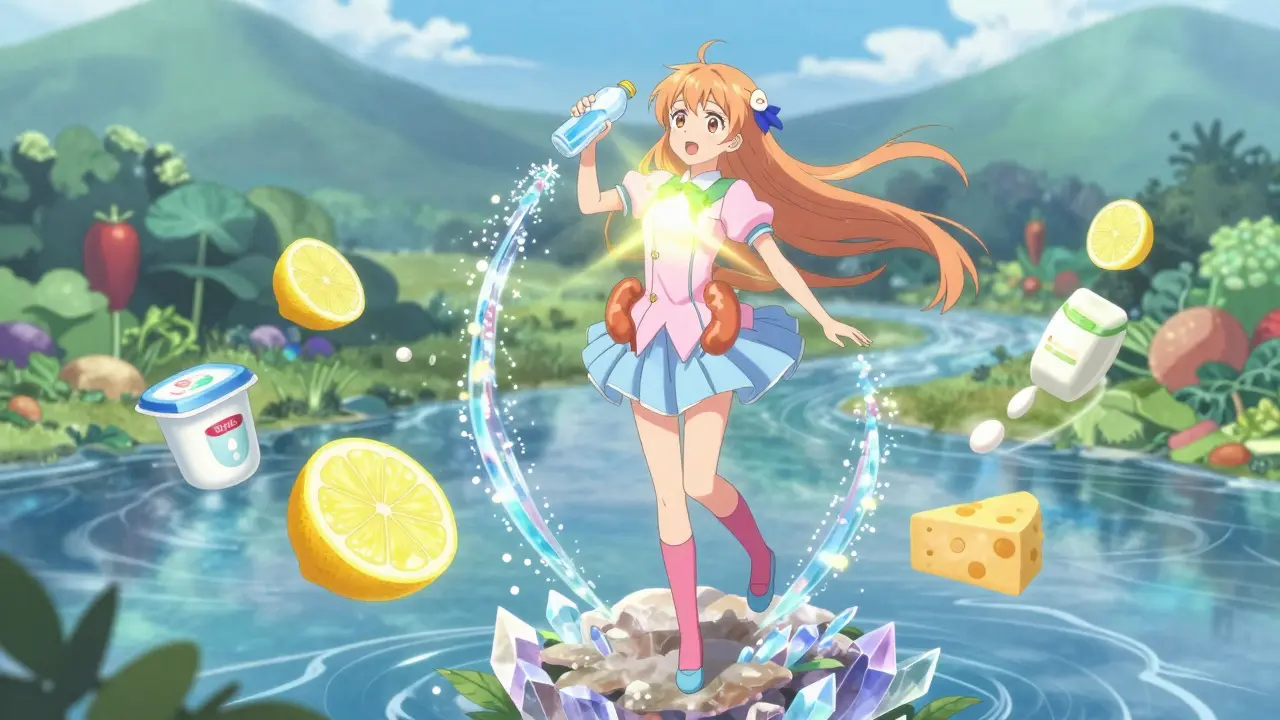
More than 1 in 10 Americans will develop a kidney stone in their lifetime, and calcium oxalate stones make up the vast majority-about 70 to 80% of all cases. If you’ve had one, you know how painful they are. But the real kicker? Without changes, you have a 40 to 50% chance of getting another one within five years. The good news? Most of these stones are preventable with simple, science-backed habits around water, food, and timing.
Hydration Isn’t Just About Drinking Water
You’ve heard it before: drink more water. But it’s not just about filling a bottle. The goal isn’t to guzzle eight glasses a day-it’s to produce at least 2.5 liters of urine every 24 hours. That’s the magic number backed by decades of research from the National Institutes of Health and the American Urological Association. Most people produce less than half that, which is why stones keep forming.
How do you get there? Start with 2.5 to 3 liters of total fluid intake daily. That includes water, coffee, tea, and even beer-in moderation. Studies show coffee drinkers have a lower risk of stones, likely because caffeine increases urine flow. Beer, surprisingly, has a similar effect. But don’t reach for soda. Fizzy drinks, especially colas with phosphoric acid, raise your risk. Grapefruit juice? Avoid it. It’s one of the worst offenders for increasing oxalate levels in urine.
Here’s a practical trick: add half a cup of fresh lemon juice concentrate to your water every day. That’s about the juice of two lemons. It boosts citrate in your urine by up to 120 mg per day. Citrate is nature’s stone blocker-it stops calcium and oxalate from sticking together. The NHS and leading urologists like Dr. Eisner at Massachusetts General swear by this. It’s cheap, easy, and works.
Calcium: The Surprising Ally
Most people think avoiding calcium will stop stones. That’s wrong-and dangerous. Your body needs calcium, and if you don’t get enough from food, it pulls it from your bones. Worse, low dietary calcium actually increases your stone risk because it lets more oxalate float around in your gut and get absorbed into your blood.
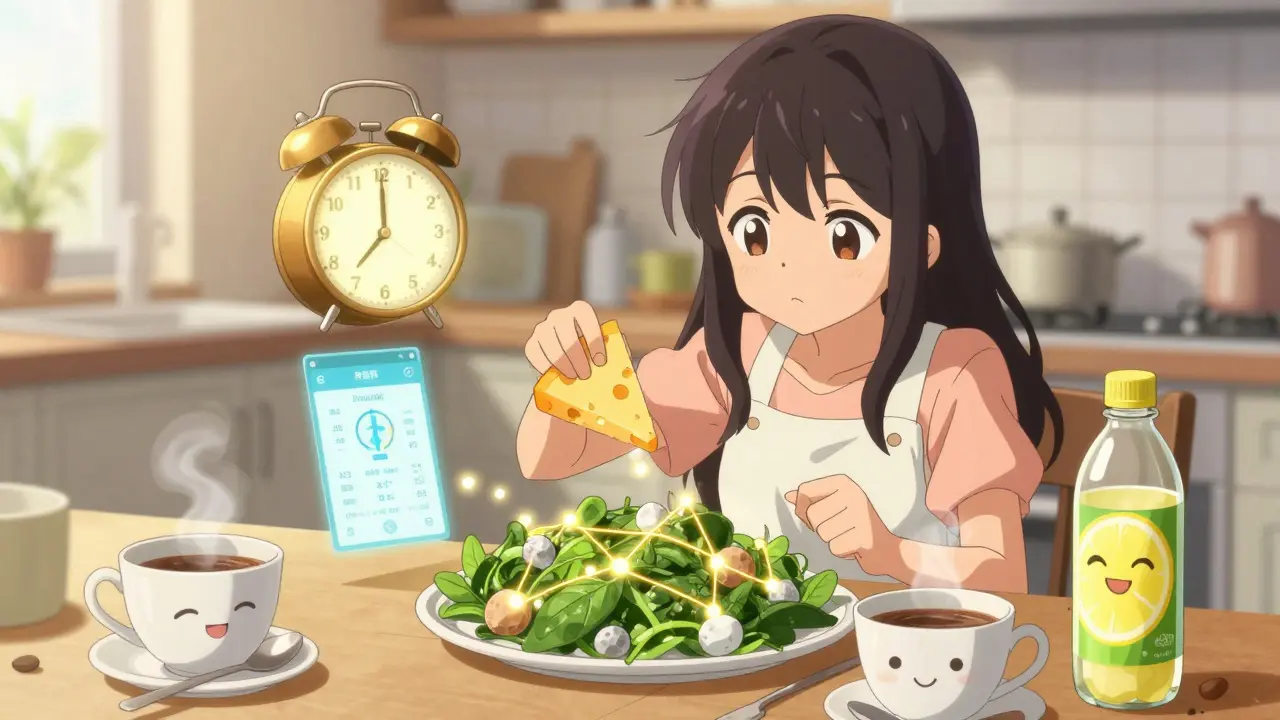
The fix? Eat 1,000 to 1,200 mg of calcium daily from food, not pills. That’s about 2 to 3 servings of dairy: one cup of milk, a small piece of cheese, or three-quarters of a cup of yogurt. Kefir works too. The key is timing: eat calcium-rich foods at the same time as high-oxalate foods. Have yogurt with your spinach salad. Eat cheese with your almonds. That way, calcium binds to oxalate in your gut before it ever reaches your kidneys.
And here’s the kicker: calcium supplements, especially calcium carbonate, can increase your risk by up to 20%. That’s from the Women’s Health Initiative study. If you absolutely need a supplement, choose calcium citrate. It’s better absorbed and adds citrate to your urine, which helps even more. But only take it with meals-never on an empty stomach.
Oxalate Foods: Don’t Fear Them-Manage Them
Spinach, rhubarb, almonds, beets, sweet potatoes, navy beans, and chocolate are all high in oxalate. You don’t need to cut them out completely. In fact, the National Institute of Diabetes and Digestive and Kidney Diseases says strict low-oxalate diets only help a small group of people-usually those with rare genetic disorders.
Instead, pair them with calcium. Eat your spinach with scrambled eggs and cheese. Have a handful of almonds with a glass of milk. Avoid eating them alone. A 2019 study found that if you eat calcium two hours before or after oxalate-rich foods, you lose up to half the protective effect. Timing matters as much as what you eat.
Also, don’t overdo vitamin C. Taking more than 1,000 mg a day in supplement form can turn into oxalate in your body. But eating oranges, broccoli, or strawberries? No problem. The body regulates dietary vitamin C just fine.
Salt Is the Silent Stone-Maker
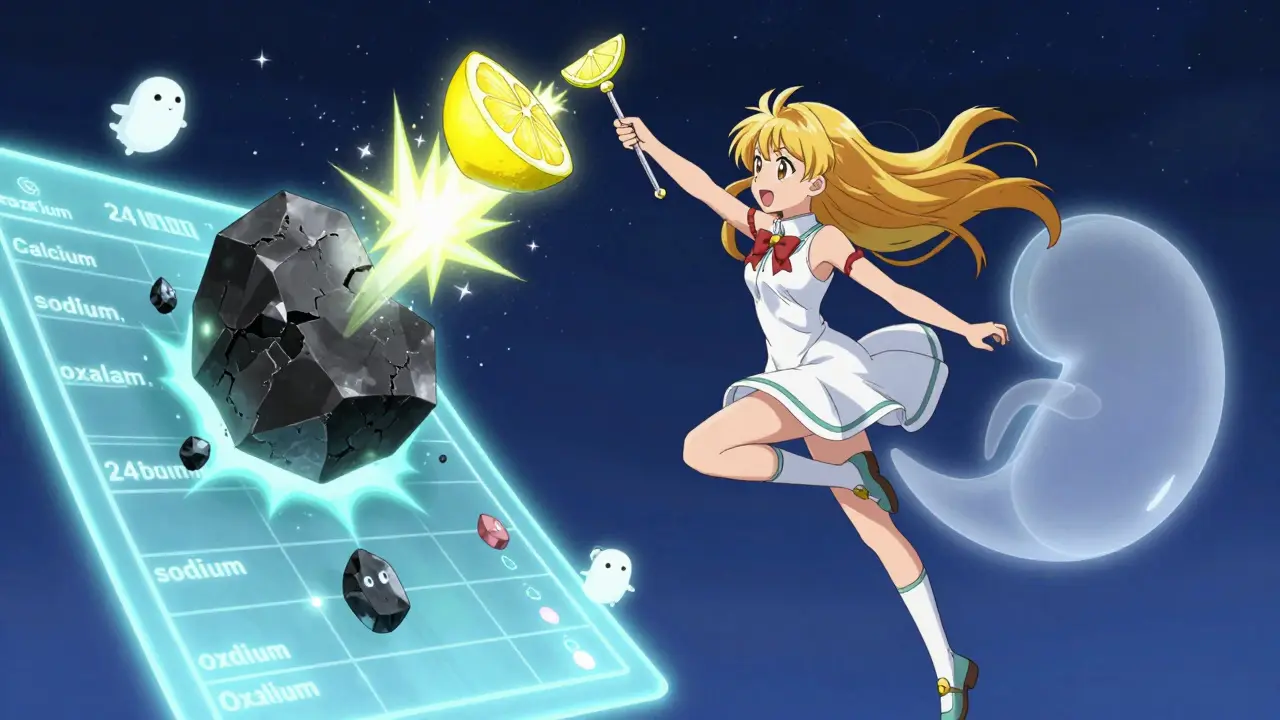
Most people don’t realize how much sodium is hiding in their food. But here’s the link: every extra 1,000 mg of sodium you eat causes your kidneys to dump 25 to 30 mg more calcium into your urine. That’s a direct path to stone formation.
The goal? Less than 2,300 mg per day. That’s about one teaspoon of salt. But most Americans eat double that. Processed foods, canned soups, bread, deli meats, and restaurant meals are the big culprits. Read labels. Cook at home. Rinse canned beans. Use herbs and lemon instead of salt. If you’re unsure, try going salt-free for a week-you’ll be shocked at how salty everything tastes.
When Medication Helps
For some people, diet and water aren’t enough. That’s where doctors step in with targeted meds.
If your urine has too much calcium (over 250 mg/day), a thiazide diuretic like hydrochlorothiazide can cut recurrence by 30 to 50%. But you must also cut salt-otherwise, it won’t work. If your citrate is low (under 320 mg/day), potassium citrate tablets are the go-to. They raise citrate levels and make your urine less acidic. Avoid sodium citrate-it raises calcium, which defeats the purpose.
If you’re making too much uric acid (over 550 mg/day), allopurinol can help. This is common in people who also get gout. And if you have a rare condition called enteric hyperoxaluria-often after weight loss surgery-new research shows a probiotic called Oxalobacter formigenes can reduce oxalate in urine by 30% in just 12 weeks. It’s not widely available yet, but it’s coming.
What Actually Works in Real Life
Here’s the hard truth: only about 35% of people stick to their prevention plan after a year. Why? It’s hard to remember to drink water all day. To track food. To avoid snacks. But tools help. Apps that log your water intake and remind you to drink can boost adherence to nearly 70%. Set a phone alarm every two hours. Keep a bottle at your desk. Drink one glass before every meal.
And don’t wait for pain to act. Get a 24-hour urine test. It’s not glamorous, but it tells you exactly what’s in your urine: calcium, oxalate, citrate, sodium, and more. That’s how your doctor knows whether you need more water, less salt, or a pill. Without it, you’re guessing.
What to Avoid
- Drinking sugary sodas or fruit punch
- Going long periods without water
- Taking calcium carbonate supplements without food
- Using salt shakers liberally
- Eating high-oxalate foods alone (no calcium pairing)
- Taking more than 1,000 mg of vitamin C daily as a supplement
Quick Daily Checklist
- Drink 2.5 to 3 liters of fluid-mostly water, lemon water, coffee, or tea
- Get 1,000-1,200 mg calcium from food (dairy, fortified plant milks, sardines)
- Pair every high-oxalate food with a calcium source
- Keep sodium under 2,300 mg (read labels, cook at home)
- Take a daily lemon juice concentrate drink (½ cup in water)
- Avoid grapefruit juice and sugary drinks
- Track your intake with an app if you struggle to remember
Preventing kidney stones isn’t about perfection. It’s about consistency. You don’t have to give up your favorite foods-you just need to eat them the right way. And you don’t need to drink a gallon of water in one sitting. Just sip it all day. Small changes, repeated daily, stop stones before they start.
 Pharmacology
Christina Bischof
December 16, 2025 AT 22:43Just started drinking lemon water like they said and honestly? My urine doesn't smell like regret anymore. Small change, big difference.
Nupur Vimal
December 17, 2025 AT 10:09Anyone else notice how this article ignores the fact that most oxalate stones come from gut dysbiosis and not diet? You can drink all the lemon water you want but if your microbiome is trash you're just wasting time. Fix the gut first.
Raj Kumar
December 19, 2025 AT 02:50Bro I'm from India and we've been doing the calcium + spinach thing for generations. Roti with saag and a side of curd? That's the real deal. No fancy apps needed. Just eat like your grandma taught you.
Cassie Henriques
December 19, 2025 AT 13:56Wait so beer helps?? 😱 I mean... I'm not mad about it. But is it the alcohol or the water content? And does it work with hard seltzers too?? 🤔
Benjamin Glover
December 20, 2025 AT 21:04Typical American oversimplification. In the UK we've known this for decades. You don't need a 2000-word article to tell you to drink water and avoid salt. Basic hygiene.
Melissa Taylor
December 22, 2025 AT 18:04This is the kind of advice that actually makes sense. No fear-mongering, no extreme diets. Just practical stuff you can do while still eating pizza on Friday night. Thank you.
Mike Nordby
December 24, 2025 AT 02:17While the hydration recommendations are sound, the citation of the NHS and Dr. Eisner without peer-reviewed references undermines the credibility of the entire piece. Evidence-based medicine requires source transparency.
Sai Nguyen
December 24, 2025 AT 19:27Americans think they invented health. We in India have been eating calcium with oxalate for centuries. Your science is just catching up to our grandma's wisdom.
John Brown
December 25, 2025 AT 13:45Just tried the lemon concentrate trick. Tastes like a sour lemonade. My wife says I'm now the weirdest person in the house but I haven't had a stone in 8 months. Worth it.
Lisa Davies
December 26, 2025 AT 12:27OMG I just realized I’ve been eating almonds at night with no dairy 😱 I’m switching to yogurt now. Thank you for saving my kidneys!! 🙏
Michelle M
December 27, 2025 AT 04:43It’s funny how we treat our bodies like machines that need perfect programming. But they’re ecosystems. Maybe the real fix isn’t just water and calcium - it’s learning to listen. What is your body telling you when it sends you pain?
Jocelyn Lachapelle
December 27, 2025 AT 19:25I used to think kidney stones were just bad luck. Now I get it - it’s like brushing your teeth. Do it every day, even when you don’t feel like it. Consistency beats perfection every time.
John Samuel
December 28, 2025 AT 17:15Imagine a world where your kidneys weren't screaming for mercy every time you skipped water. This isn't just prevention - it's rebellion against the modern diet. Drink lemon water. Eat cheese with spinach. And for the love of all that is holy - put down the soda.