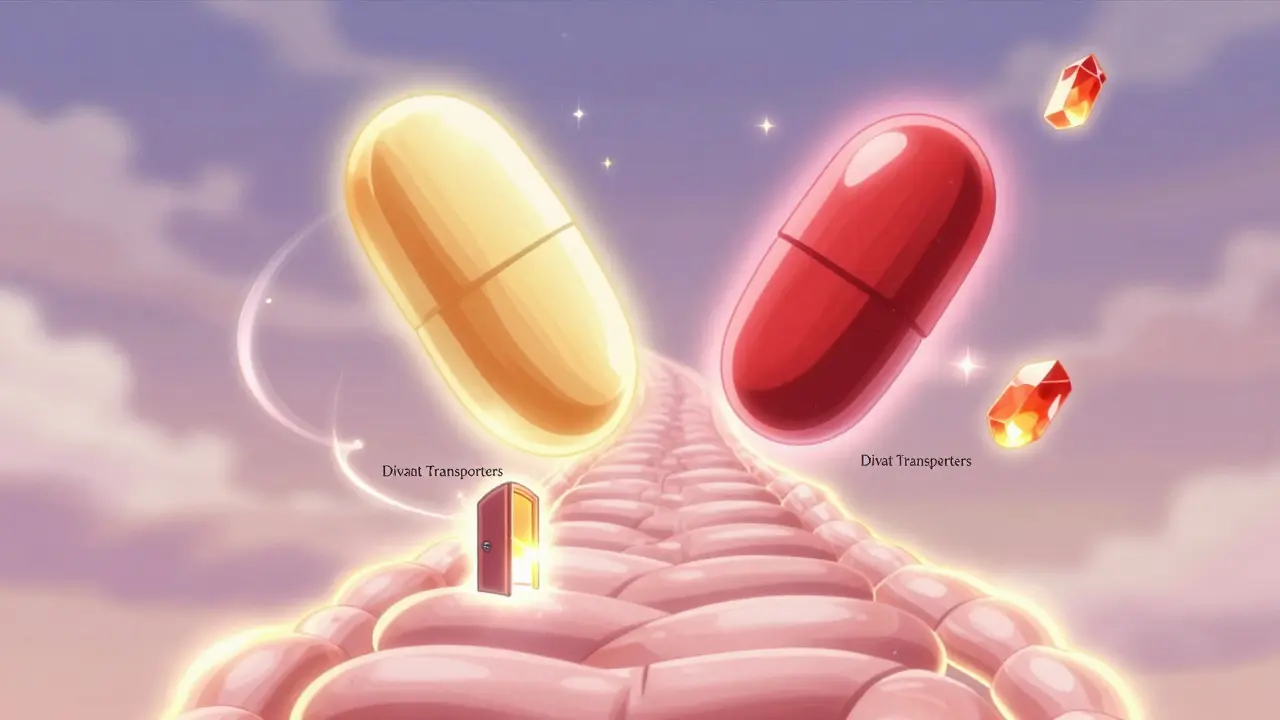
When you take calcium and iron supplements, you might think you’re doing something good for your body. But if you’re also taking medications - even common ones like antibiotics or thyroid pills - you could be making them less effective, or even blocking your own body’s ability to absorb these vital minerals. This isn’t just a myth. It’s a well-documented, clinically proven issue that affects millions of people every day.
Why Calcium and Iron Fight Each Other
Calcium and iron don’t get along inside your gut. Both are positively charged minerals (cations), and they use the same tiny doors in your small intestine to get into your bloodstream. These doors are called divalent metal transporters. When you take calcium and iron together - say, a calcium pill at breakfast and an iron pill at lunch - they compete for those doors. The one with more presence wins. Usually, that’s calcium. A 1991 study from the American Journal of Clinical Nutrition found that 600 mg of calcium reduced iron absorption by up to 62%. That’s not a small drop. For women who need 18 mg of iron a day, this means a daily calcium supplement with meals can make it nearly impossible to meet that need.
It gets worse. Calcium carbonate, the most common form in supplements like Tums, also acts like an antacid. It raises the pH in your stomach, making it less acidic. Iron needs acid to dissolve properly so your body can absorb it. No acid? No absorption. One study showed iron absorption from a single meal dropped from 10.2% to just 4.8% when calcium was added. That’s more than half your iron vanishing before it even gets started.
How Antibiotics Get Blocked
If you’re on antibiotics like ciprofloxacin (Cipro) or doxycycline, calcium and iron can turn them into useless pills. These antibiotics belong to two classes: fluoroquinolones and tetracyclines. Both bind tightly to calcium, magnesium, aluminum, and iron in your gut. When that happens, the antibiotic gets trapped in a mineral sandwich and can’t be absorbed. Your body never sees it. The infection doesn’t get treated. You might feel worse. And you could end up needing stronger drugs, longer treatment, or even hospitalization.
Pharmacists warn: if you take your antibiotic with a calcium supplement or a multivitamin that has iron, you might as well have skipped the dose. The MedlinePlus Medical Encyclopedia and GoodRx both say the same thing: wait at least 2 hours before or after taking these minerals. For tetracycline antibiotics, some experts recommend 4 hours apart. That’s not a suggestion. It’s a medical necessity.
Thyroid Medication and the Silent Saboteur
If you take levothyroxine for hypothyroidism, calcium and iron are your worst enemies. These minerals bind to the thyroid hormone in your gut and prevent it from entering your bloodstream. A 2025 blog from University Hospitals Cleveland Medical Center says this interaction is so common that many patients don’t realize their thyroid levels aren’t improving - not because the dose is wrong, but because they’re taking their calcium at breakfast with their thyroid pill.
Doctors now routinely ask patients: “When do you take your calcium?” If the answer is “with my thyroid pill,” that’s the first thing they fix. The fix? Take thyroid medication on an empty stomach, first thing in the morning. Wait at least 30 to 60 minutes before eating or taking anything else. Then take calcium and iron later - ideally at night. That 4-6 hour gap makes all the difference.

Other Medications That Get in the Way
It’s not just antibiotics and thyroid meds. Iron supplements can reduce the effectiveness of:
- Penicillin antibiotics
- Medications for Parkinson’s disease (like levodopa)
- Seizure drugs (like phenytoin)
- Bisphosphonates for osteoporosis (like alendronate)
Even heartburn meds can hurt your iron. Proton pump inhibitors (PPIs) like omeprazole (Prilosec) and pantoprazole (Protonix) reduce stomach acid. H2 blockers like famotidine (Pepcid) do the same. Less acid means less iron solubility. Less solubility means less absorption. Over time, this can lead to iron deficiency - even if you’re eating plenty of iron-rich foods or taking supplements.
Timing Is Everything
You can’t just take everything at once. You have to plan. Here’s what works based on clinical guidelines:
- Iron: Take on an empty stomach, ideally one hour before breakfast. This gives you the best absorption. If it upsets your stomach, take it with a small amount of food - but avoid dairy, calcium, or whole grains.
- Calcium: Take with food. Your body absorbs it better this way. Take it at dinner or bedtime.
- Separate them: Keep iron and calcium at least 4 hours apart. If you take iron at 7 a.m., don’t take calcium until after 11 a.m. or better yet, at night.
- Add vitamin C: Take your iron pill with a glass of orange juice or a 500 mg vitamin C supplement. Vitamin C can boost iron absorption by up to 300%.
- Antibiotics: Take them at least 2 hours before or 4 hours after any calcium, iron, or magnesium supplement.
- Thyroid meds: Take on an empty stomach, wait 30-60 minutes before eating or taking anything else. Then space out minerals.
Some people ask: “Can I take them together if I’m not taking any meds?” Even then, calcium still blocks iron absorption. If you’re trying to fix an iron deficiency, taking calcium and iron together defeats the purpose. You’re wasting money and time.
Who’s at Risk?
This isn’t just a problem for older adults. It hits women hard - especially those who are pregnant, menstruating, or vegetarian. Women need more iron. Calcium supplements are often recommended for bone health. When these two collide, iron deficiency becomes more common. One study found that women who took calcium with meals had a 28% drop in iron absorption from high-iron meals, and a 55% drop from meals already low in iron.
Children are at risk too. Iron pills look like candy. If a child swallows even one adult iron tablet, it can be deadly. Iron poisoning is the leading cause of fatal childhood poisoning in the U.S. Keep supplements locked up. If you suspect your child swallowed one, call poison control immediately.

What About Food?
Food matters. A meal high in calcium (like a bowl of fortified cereal with milk) can block iron absorption more than a calcium pill. A meal low in iron but high in calcium (like toast with cheese) can cut iron absorption by more than half. On the flip side, eating vitamin C-rich foods like bell peppers, strawberries, or broccoli with your iron-rich meal (like lentils or spinach) helps. Avoid tea, coffee, and red wine with meals if you’re trying to absorb iron - they contain tannins that block absorption too.
Side Effects and Safety
Iron supplements can cause stomach cramps, nausea, or diarrhea in 30-50% of people. That’s why some take them with food - but then they absorb less. Liquid iron can stain teeth. Use a straw, and rinse your mouth afterward. If your stool turns black, that’s normal. But if it’s tarry or has red streaks, see a doctor - it could mean bleeding.
Don’t take more than your doctor recommends. Too much iron can damage your liver. Too much calcium can lead to kidney stones or interfere with heart rhythm. Always check with your pharmacist or doctor before combining supplements and meds.
What Should You Do?
Here’s your action plan:
- Write down everything you take - supplements, meds, even over-the-counter antacids.
- Ask your doctor or pharmacist: “Which of my meds interact with calcium or iron?”
- Use a pill organizer with time slots. Label them: “Morning: Thyroid,” “Midday: Iron + Vitamin C,” “Evening: Calcium.”
- Never take calcium and iron together, even if you think you’re fine.
- If you’re taking antibiotics, skip your mineral supplement for the whole course.
There’s no shortcut. You can’t outsmart your body’s chemistry. But you can outsmart the system - by timing things right.
Can I take calcium and iron supplements at the same time if I’m not on any medication?
No. Even without medications, calcium blocks iron absorption. Studies show that when taken together, calcium reduces iron absorption by up to 62%. If you need both, take them at least 4 hours apart - iron in the morning on an empty stomach, calcium at night with food.
How long should I wait after taking iron before taking calcium?
Wait at least 4 hours. Some experts recommend 6 hours for maximum absorption. Iron is best absorbed on an empty stomach, so take it first thing in the morning. Take calcium at dinner or bedtime. This gives your body time to absorb each mineral without competition.
Does vitamin C really help iron absorption?
Yes. Vitamin C increases iron absorption by up to 300%. Taking your iron pill with orange juice or a 500 mg vitamin C supplement can make a big difference - especially if you’re vegetarian or have low iron stores. Avoid taking it with tea, coffee, or milk - they block absorption.
Can antacids like Tums affect iron levels?
Yes. Tums contains calcium carbonate, which reduces stomach acid. Iron needs acid to dissolve and be absorbed. Long-term use of antacids can lead to iron deficiency. If you take antacids regularly and feel tired or dizzy, ask your doctor to check your iron levels.
What should I do if I accidentally took iron with my antibiotic?
If you took them together once, don’t panic. One mistake won’t ruin your treatment. But don’t do it again. For the rest of your antibiotic course, take them at least 2 hours apart. If you’re not sure, call your pharmacist. They can tell you the safest timing for your specific meds.
Why do some people say iron should be taken with food?
Iron on an empty stomach causes nausea and cramps in 30-50% of people. If you can’t tolerate it, take it with a small amount of food - but avoid calcium-rich foods like milk, cheese, or fortified cereals. Stick to foods high in vitamin C, like potatoes or tomatoes. It’s a trade-off: less absorption, but better tolerance.
Can I take calcium and iron from different brands together?
Brand doesn’t matter. What matters is the chemical form. Whether it’s Nature Made, CVS, or GNC, if it contains calcium or iron, they’ll still compete in your gut. The interaction happens at the molecular level - not because of the brand. Always space them out, no matter the label.
 Pharmacology