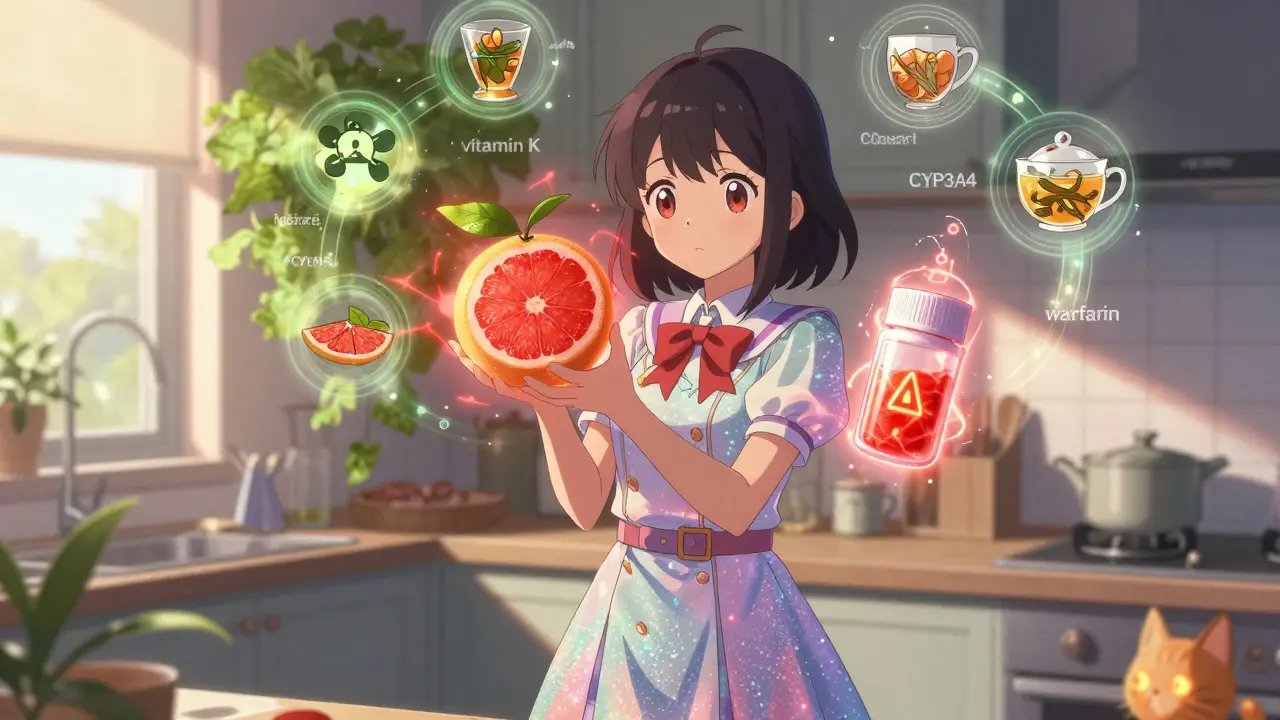
Every year, thousands of people end up in the hospital not because they took too much medicine, but because they took the right medicine with the wrong thing. A grapefruit at breakfast. A daily garlic pill. A herbal tea before bed. These aren’t dangerous by themselves-but when paired with common medications, they can turn harmless habits into life-threatening mistakes.
Drug interactions aren’t rare oddities. They’re a routine part of modern healthcare. According to the FDA, about 40% of American adults take dietary supplements. And nearly one in five hospital admissions for medication problems can be traced back to food or supplement interactions. The problem isn’t that people are careless. It’s that most don’t even realize they’re at risk.
How Interactions Actually Work
Not all drug interactions are the same. There are two main ways they happen: through your body’s chemistry (pharmacodynamic) or through how your body processes the drug (pharmacokinetic).
Pharmacodynamic interactions happen when two substances affect your body in similar or opposite ways. For example, if you take a blood thinner like warfarin and then eat a big bowl of spinach, the vitamin K in the spinach fights against the drug’s effect. Your blood starts clotting again-exactly what the medication was supposed to stop. On the flip side, taking hawthorn (a herb sometimes used for heart health) with digoxin (a heart medication) can over-stimulate your heart, leading to dangerous irregular rhythms.
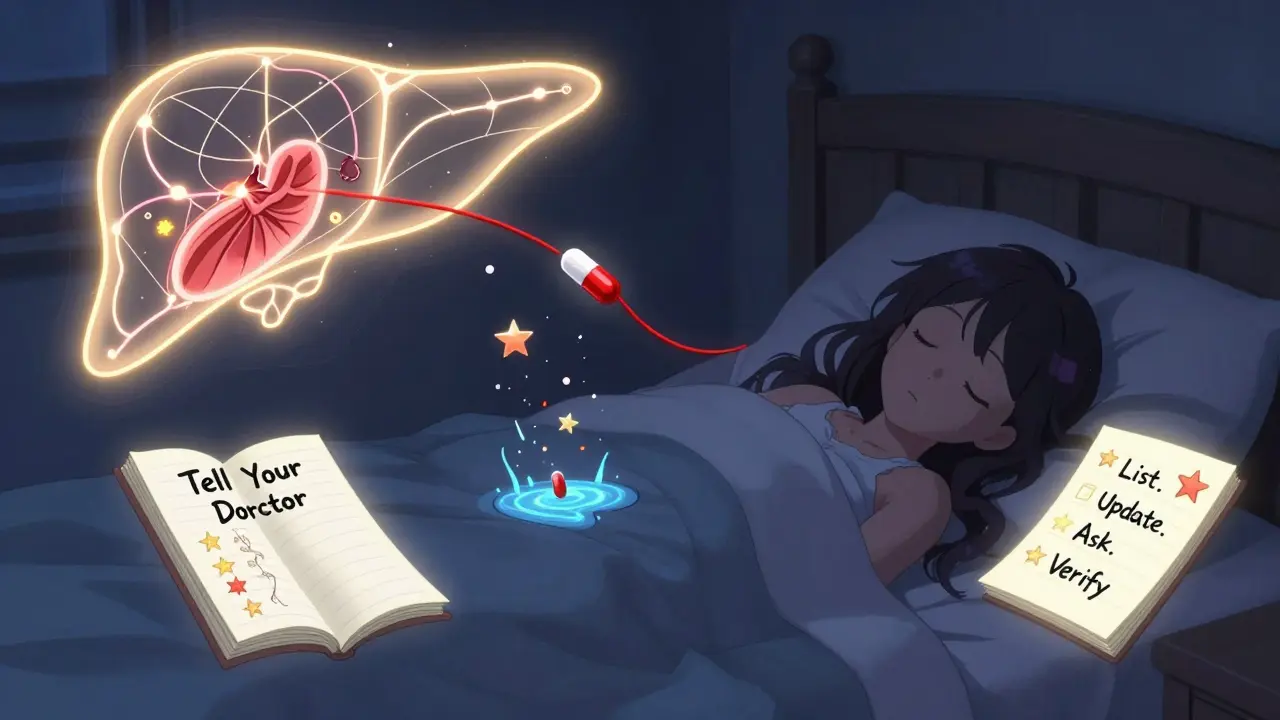
But the bigger threat comes from pharmacokinetic interactions. These involve your liver-the body’s main drug-processing center. A group of enzymes called cytochrome P450 (CYP) handles about half of all prescription drugs. Some foods and supplements can turn these enzymes on or off like a light switch.
St. John’s wort is the most notorious offender. It cranks up CYP3A4 activity so much that drugs like cyclosporine (used after organ transplants) or birth control pills get broken down too fast. Studies show cyclosporine levels can drop by 70% in just two weeks. That’s not a small drop-it can lead to organ rejection. Birth control failure? That’s a real risk too.
Food That Can Break Your Medication
Grapefruit is the classic example, but it’s not alone. The furanocoumarins in grapefruit (and similar citrus like Seville oranges and pomelos) block the CYP3A4 enzyme in your gut. This means drugs that should be partially broken down before entering your bloodstream get absorbed fully-like pouring gasoline into a car that only needs a cup of oil.
For statins like simvastatin, this can raise blood levels by up to 15 times. That’s not just a side effect-it’s a direct path to rhabdomyolysis, a condition where muscle tissue breaks down and floods your kidneys with toxic debris. One study found that people who ate grapefruit while on simvastatin had a 10x higher risk of this rare but deadly complication.
Then there’s warfarin. It’s a blood thinner taken by millions, and its effectiveness depends on consistent vitamin K intake. Vitamin K is in spinach, kale, broccoli, Brussels sprouts-even green tea. If you normally eat a cup of kale daily and suddenly switch to a salad with five cups, your INR (a blood clotting test) can plunge. A 2018 study showed 150g of cooked spinach cut warfarin’s effect by 30-40% in just 24 hours. That’s enough to trigger a stroke or pulmonary embolism.
Cranberry juice? It’s not just for UTIs. Between 2003 and 2015, at least 28 cases were documented where cranberry juice pushed INR levels above 8.0 (normal is 2.0-3.0). One man nearly bled to death after drinking a liter a day while on warfarin. He didn’t think juice counted as a “drug interaction.”
Supplements That Should Raise Red Flags
Supplements aren’t regulated like drugs. That means companies don’t have to prove they’re safe before selling them. And they don’t have to warn you about interactions.
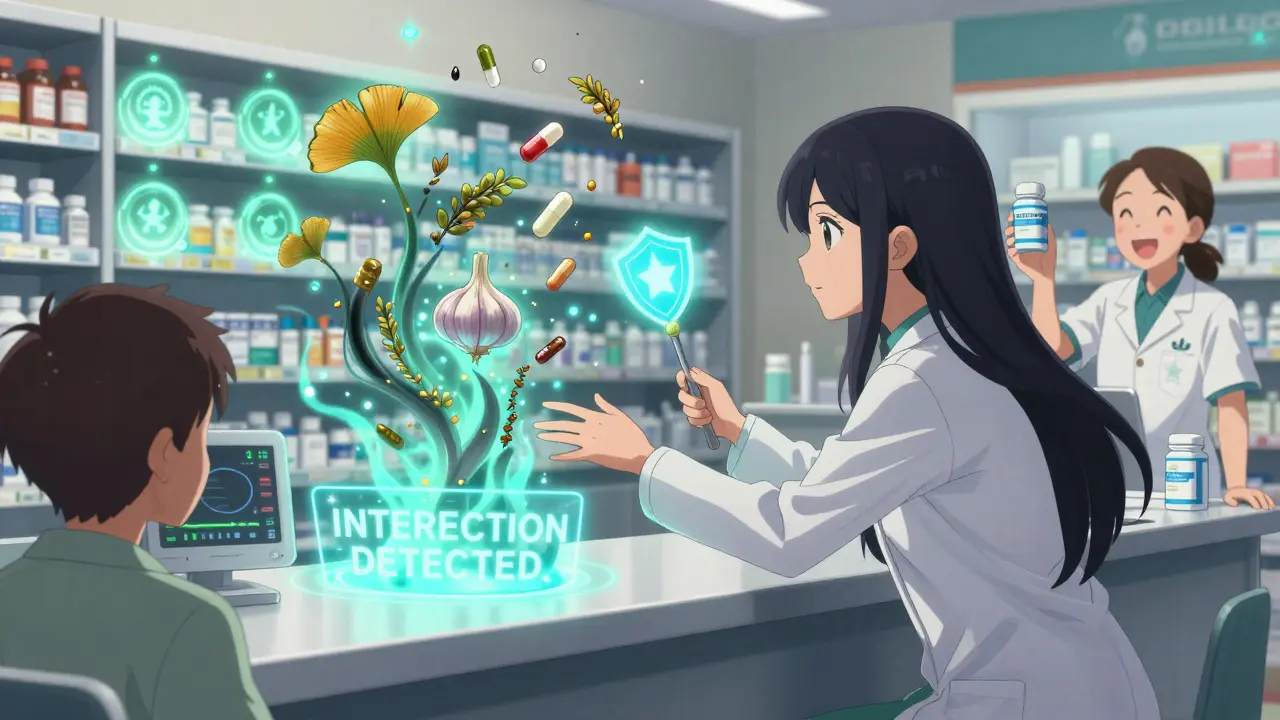
Ginkgo biloba is sold as a memory booster, but it also thins the blood. When combined with aspirin, clopidogrel, or warfarin, it can double your bleeding risk. Studies show it increases bleeding time by 30-50%. That’s not theoretical-there are documented cases of brain bleeds after people took ginkgo with blood thinners.
Garlic supplements? They’re popular for heart health. But a 2001 study found 32 cases of abnormal bleeding linked to garlic combined with warfarin, heparin, or aspirin. One patient had to have emergency surgery after a nosebleed wouldn’t stop. He’d been taking garlic pills daily for months and never told his doctor.
Red yeast rice is another sneaky one. It contains monacolin K-the same active ingredient as the statin drug lovastatin. If you’re already taking a statin like atorvastatin, adding red yeast rice is like doubling your dose. A 2017 study found this combo increased muscle damage risk by 2.3 times. And because it’s sold as a “natural supplement,” many people assume it’s safe.
Coenzyme Q10? Some people take it to reduce statin side effects. But research suggests it might actually make statins less effective. It’s a double-edged sword: you think you’re helping, but you might be undoing the treatment.
Why People Don’t Tell Their Doctors
Here’s the scary part: 70% of people who take supplements never mention it to their doctor. Why? Because they don’t think it matters. “It’s just a vitamin.” “It’s natural.” “My pharmacist didn’t ask.”
But your doctor needs to know everything. Not just prescriptions, not just over-the-counter pills-but herbal teas, protein powders, CBD oils, and fish oil capsules. A 2022 study in JAMA Internal Medicine found that patients who didn’t disclose supplement use were far more likely to have a serious interaction.
Pharmacists are your second line of defense. The American Pharmacists Association says pharmacist-led medication reviews reduce adverse events by 22%. That means if you walk into the pharmacy and say, “I’m on blood pressure meds and I take turmeric every morning,” they can flag the risk before you even leave.
What You Can Do Right Now
Don’t wait for a crisis. Start today.
- Make a full list. Write down every medication, supplement, vitamin, and herb you take-even if you only take it once a week. Include dosages and how often.
- Update it at every visit. Don’t wait for your annual checkup. Bring it to every appointment-even for a cold or a rash.
- Use trusted tools. The FDA’s MedlinePlus drug interaction checker is free and covers over 3,500 drugs and supplements. The LiverTox database from the NIH has detailed evidence ratings for 1,200+ interactions.
- Be consistent with vitamin K. If you’re on warfarin, you don’t need to avoid leafy greens. You just need to eat about the same amount every day. Aim for 90mcg for women, 120mcg for men. That’s roughly one cup of cooked spinach, kale, or broccoli.
- Ask your pharmacist. They’re trained to catch these interactions. Ask: “Is this safe with my other meds?” Don’t assume they know what you’re taking.
What’s Changing
There’s progress. The FDA now recommends that new drugs be tested for interactions with common supplements. The National Institutes of Health spent $15.7 million in 2022 just to study herb-drug interactions. And electronic health records now include automated interaction alerts-some systems have cut dangerous prescriptions by 37%.
But the system still fails patients. Only 29% of supplement labels carry any interaction warning. Compare that to prescription drugs, where it’s mandatory. Until that changes, the burden falls on you.
The future might include AI tools that scan your medication list and flag risks before you even take a pill. IBM Watson Health’s pilot program predicted 87% of unknown interactions by analyzing millions of medical notes. That’s promising. But it’s not here yet.
Right now, your best protection is simple: know what you’re taking. Tell your care team. Double-check before you combine anything.
Can I still eat grapefruit if I take medication?
It depends on the medication. Grapefruit can dangerously increase levels of certain statins (like simvastatin), some blood pressure drugs (like felodipine), and immunosuppressants (like cyclosporine). If you take any of these, avoid grapefruit entirely. For other drugs, like sertraline or lisinopril, it’s generally safe. Always check with your pharmacist or doctor-don’t assume.
Are herbal supplements safer than prescription drugs?
No. Just because something is labeled "natural" doesn’t mean it’s safe. Herbs like St. John’s wort, ginkgo, and garlic have powerful effects on your body and can interfere with medications in dangerous ways. The FDA doesn’t test supplements for safety or interactions before they’re sold. You’re on your own to research the risks.
I take a multivitamin every day. Should I be worried?
Most multivitamins are low-risk, but not all. Some contain high doses of vitamin K (which affects warfarin), vitamin E (which can thin blood), or minerals like calcium and magnesium that interfere with thyroid or antibiotic absorption. Check the label. If you’re on any prescription medication, talk to your pharmacist before continuing.
Can I stop my medication if I experience side effects from a supplement?
Never stop a prescribed medication without talking to your doctor. Side effects could be from the supplement, the drug, or both. Stopping suddenly can be dangerous-especially for blood pressure, heart, or mental health meds. Contact your provider immediately, bring your supplement list, and let them guide you.
Why don’t supplement labels have interaction warnings like drugs do?
Under current U.S. law, supplements are classified as food, not drugs. That means manufacturers aren’t required to prove safety, effectiveness, or interaction risks before selling them. Only 29% of labels include warnings, compared to 100% for prescriptions. Advocates are pushing for change, but until laws update, you need to be your own advocate.
 Pharmacology
Jessica Klaar
February 7, 2026 AT 21:01I used to take St. John’s Wort for my mood swings and never thought twice about it. Then I got put on birth control and ended up with a surprise pregnancy. My OB literally screamed at me in the office. I thought it was ‘just a herb.’ Turns out, it’s basically a drug that your body treats like a demolition crew for your hormones. Now I tell every doctor, pharmacist, and even my hairdresser what I’m taking. Don’t be like me.