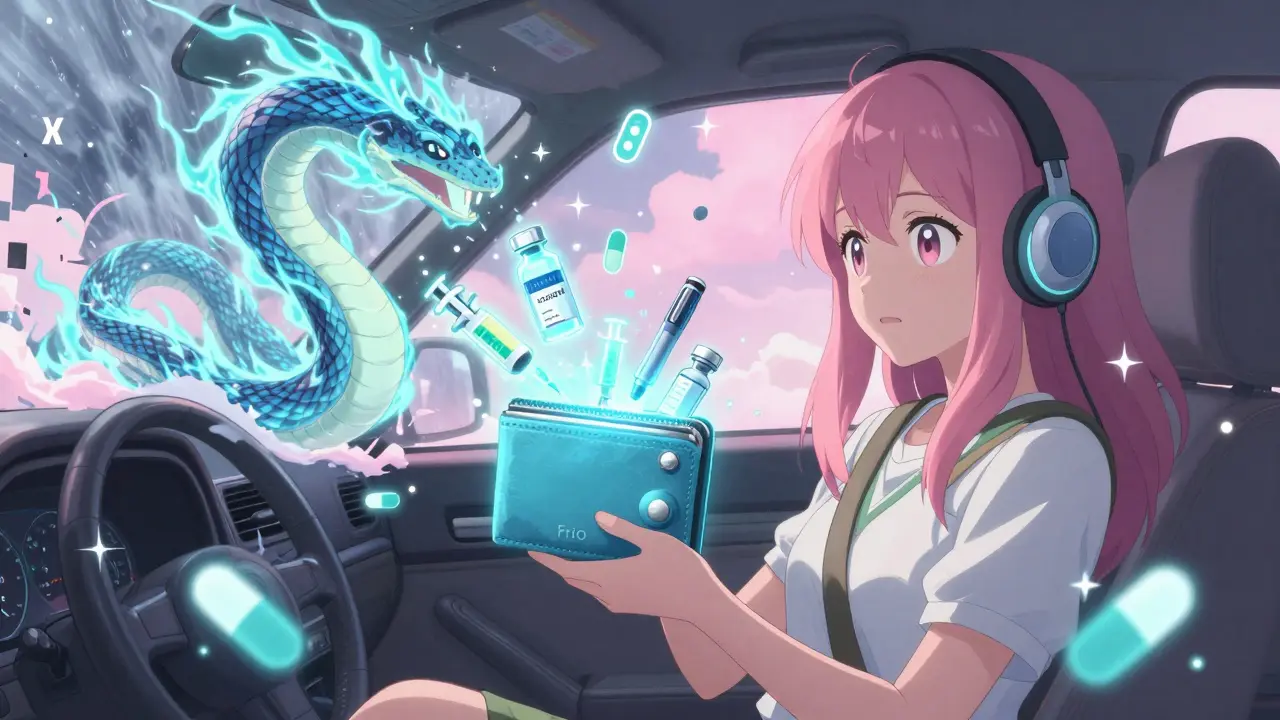
When you're traveling in a hot climate, your medications aren't just sitting in your bag-they're fighting for their life. A car seat in 90°F weather can hit 140°F in under 30 minutes. That’s not just uncomfortable-it’s dangerous for your pills, insulin, inhalers, and EpiPens. Many people assume if it’s still in the bottle, it’s still good. But heat doesn’t care about packaging. It breaks down the chemistry inside, and once that happens, your medication might not work when you need it most.
Why Heat Destroys Medications
Most medications are designed to stay stable between 68°F and 77°F (20°C to 25°C). That’s the official "room temperature" range for drugs, not the 85°F your hotel room might be. When temperatures climb above 86°F (30°C), the molecular structure of many drugs starts to degrade. Insulin, for example, can lose up to 32% of its potency after just 24 hours at 104°F. EpiPens? Their epinephrine can become ineffective. Birth control pills? Studies show failure rates rise sharply after heat exposure. Even your asthma inhaler might stop spraying properly if it’s been sitting in a glove compartment.This isn’t theoretical. Nurses on Reddit have shared stories of patients getting pregnant after leaving birth control in a hot car for two days. A Drugs.com user had an asthma attack because their albuterol inhaler stopped working after a beach day. These aren’t rare cases-they’re predictable outcomes of ignoring basic storage rules.
What Medications Are Most at Risk?
Not all meds are created equal when it comes to heat. Some are extremely sensitive. Here’s the short list you need to watch:- Insulin - Begins degrading above 86°F. Can become cloudy or clumpy. Never freeze it.
- EpiPens - Epinephrine breaks down fast in heat. A degraded pen might not deliver a life-saving dose.
- Hormonal contraceptives - Pills, patches, rings. Heat can reduce effectiveness, leading to unintended pregnancy.
- Anti-seizure medications - Even small changes in potency can trigger seizures.
- Antibiotics - Some, like tetracycline, can become toxic when heated.
- Inhalers - Propellant pressure changes can make them unusable.
- Thyroid meds - Levothyroxine loses potency quickly in heat, leading to fatigue, weight gain, or depression.
If you take any of these, you need a plan. Don’t assume your doctor told you everything. Most don’t. It’s up to you to ask: "Is this sensitive to heat?"
What Not to Do
There are three deadly mistakes travelers make:- Leaving meds in the car - Glove compartments and center consoles are ovens. Even on a mild 85°F day, the inside of a car can hit 120°F in 20 minutes.
- Storing meds in checked luggage - Airplane cargo holds can drop below freezing or soar above 100°F. Insulin in checked bags has been reported to freeze solid or turn to sludge.
- Assuming "room temperature" means your hotel - If your room hits 82°F with no AC, that’s too hot for most meds.
One nurse shared that her patient’s insulin became useless after being left in a rental car trunk for six hours in Arizona. The patient didn’t realize until they had high blood sugar and no effect from their dose. That’s preventable.
How to Pack Medications for Hot Climates
You need a system. Here’s how to do it right:- Keep meds with you - Always carry them in your carry-on. Never check them.
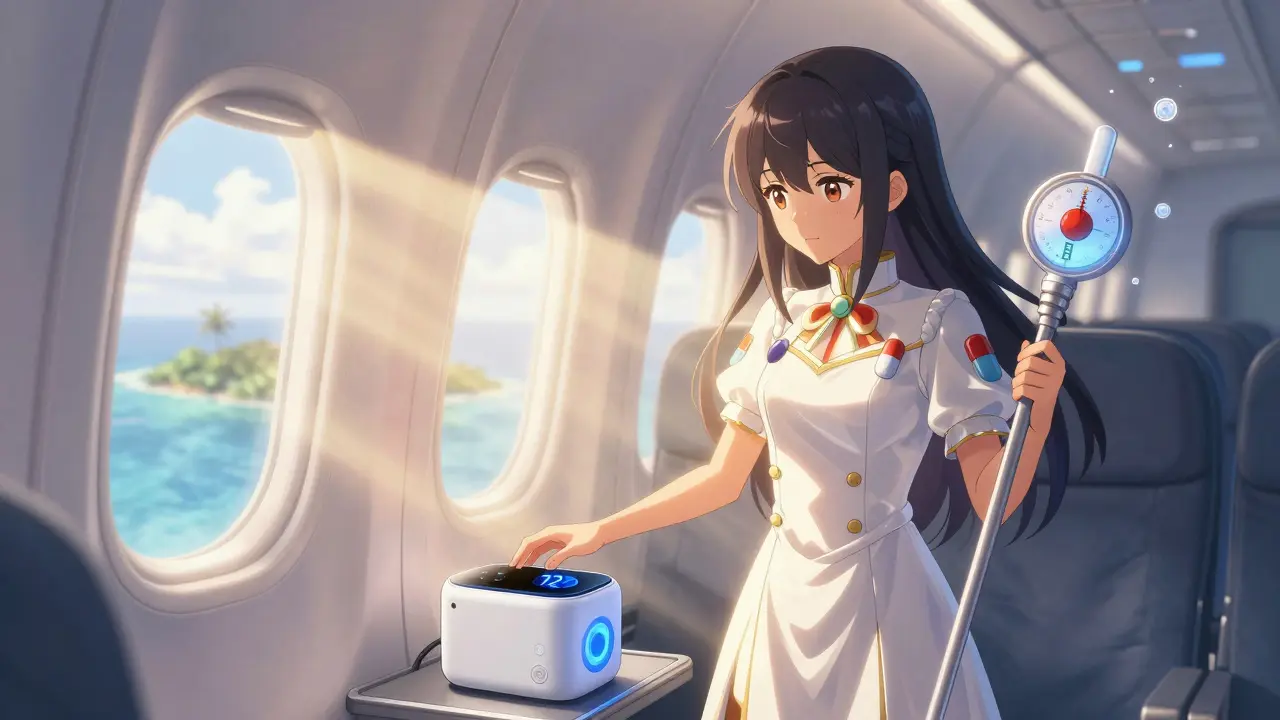
- Use an insulated cooler bag - Look for one designed for medications. The MedActiv Travel Case or Frio Insulated Wallet use phase-change materials to keep things between 59°F and 77°F for up to 72 hours.
- Use cold packs the right way - Freeze two ice packs for at least 24 hours. Wrap them in a towel before placing them next to your meds. Direct contact can freeze insulin or damage pills.
- Use a thermometer - The American Society of Health-System Pharmacists now recommends carrying a small digital thermometer. Stick it in your bag. If it reads above 86°F, take action.
- Use smart coolers if you can - Devices like the TempSure Medication Cooler or MyMediCarrier have Bluetooth sensors that send temperature alerts to your phone. One user in Arizona kept insulin at exactly 42°F during a 102°F road trip thanks to this.
- Don’t overpack - Too many cold packs can cause freezing. Two wrapped ones are enough for a 24-hour trip.
For long flights, keep your meds in your jacket pocket or under your seat where temperatures stay stable. Cabin air is usually 68°F-75°F-perfect. Just don’t let them get near the window where the sun hits.
What to Do If Your Meds Get Too Hot
If you realize your insulin, EpiPen, or birth control was exposed to extreme heat:- Don’t use it - If it looks cloudy, smells odd, or the packaging is warped, toss it.
- Call your pharmacist - The FDA says if meds were above recommended temps for more than 24 hours, consult a professional before using.
- Ask for a replacement - Some travel insurance companies (like Allianz) now cover replacement meds due to heat damage. Check your policy.
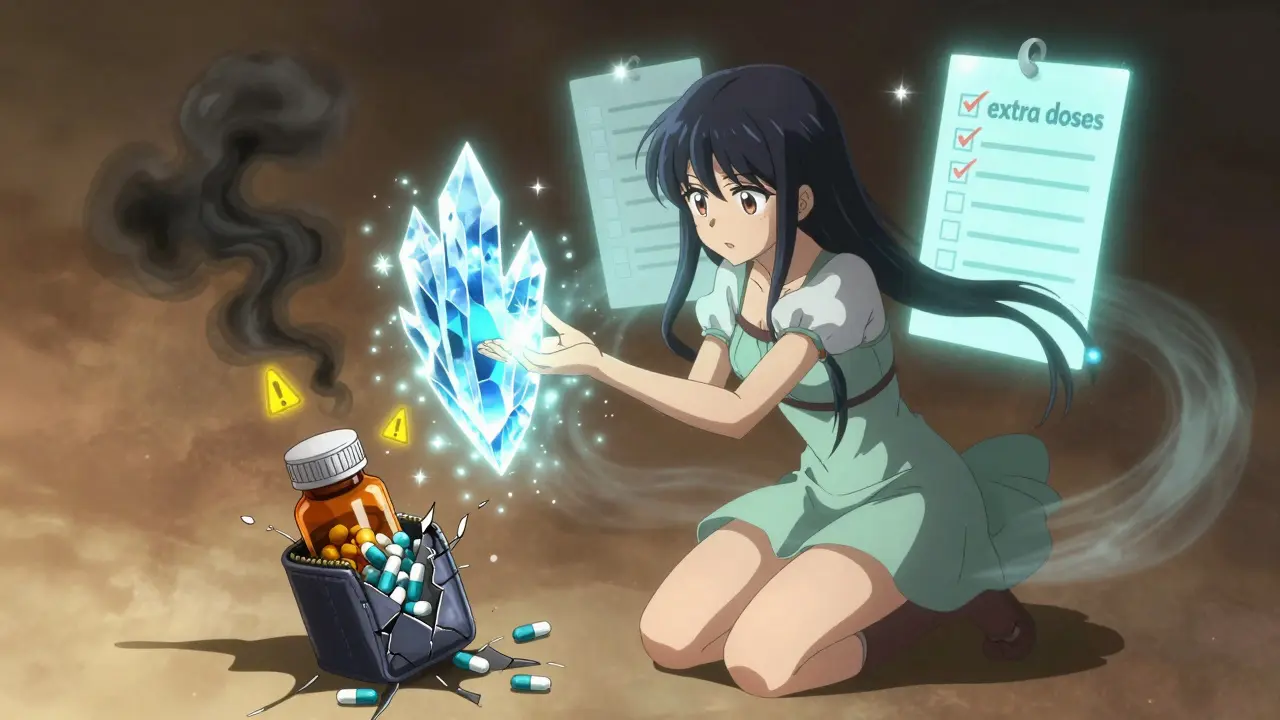
- Carry extra - Always bring 2-3 days’ worth extra, especially for critical meds. Store it in a separate bag.
One traveler in Thailand lost her insulin after a power outage. She had a backup in her carry-on, kept cool with a Frio wallet. She used it, stayed safe, and got a new prescription the next day.
What’s Changing in the Industry
The problem is getting worse. Global temperatures are rising, and so is the number of people taking temperature-sensitive meds. The global market for medication storage solutions is growing at 8.3% per year. Companies are responding.By late 2024, airlines plan to install temperature-controlled compartments for medications in passenger cabins. The FDA is pushing for new labeling-color-coded heat indicators will soon appear on sensitive drug packaging. And pharmacists are now required to give storage instructions with prescriptions in 68% of U.S. cases, up from 42% in 2020.
These changes help-but they’re not magic. You still have to be the one checking the temperature, packing the bag, and refusing to leave your meds in the car.
Final Checklist Before You Leave
Before you head out on your trip, run through this:- Are you carrying all meds in your carry-on?
- Do you have an insulated cooler bag with cold packs (wrapped in towels)?
- Do you have a thermometer to check the bag’s internal temp?
- Do you have extra doses of critical meds?
- Do you know the storage temp for each of your medications?
- Have you called your pharmacy to confirm your meds aren’t heat-sensitive?
- Do you have your pharmacist’s number saved on your phone?
It takes 15 minutes to pack right. It could save your life.
Can I leave my EpiPen in the car for a few minutes?
No. Even 10 minutes in a hot car can degrade epinephrine. EpiPens are designed to work in emergencies-when you need them most. If they’ve been exposed to heat above 86°F, they may not deliver the full dose. Always carry them with you, in a cool, insulated bag, and never leave them unattended in a vehicle.
Is it safe to store insulin in a regular cooler with ice?
Not unless you take precautions. Direct contact with ice can freeze insulin, which ruins it. Always wrap ice packs in a towel or cloth before placing them next to your insulin. Use a dedicated medication cooler instead-it keeps things cool without freezing. Devices like the MyMediCarrier maintain safe temps without ice, making them safer for long trips.
What if my medication looks normal after heat exposure?
Appearance doesn’t guarantee safety. Insulin might look clear, but its potency could be cut in half. Birth control pills might not change color, but their hormones could be broken down. Heat damage is often invisible. If your meds were exposed to temperatures above 86°F for more than a few hours, don’t risk it. Replace them or consult your pharmacist.
Can I use a regular lunchbox as a medication cooler?
No. Regular lunchboxes don’t insulate well enough to maintain safe temperatures in hot climates. They might keep things cool for an hour or two, but in 100°F weather, they’ll fail fast. Use a purpose-built medication cooler with phase-change materials or a tested insulated bag. The difference is life-or-death for some medications.
Do I need to carry prescriptions when traveling with meds?
Yes. TSA and international customs require medications to be in original containers with pharmacy labels. Carry a copy of your prescription, especially for controlled substances or large quantities. It helps avoid delays and proves the meds are yours. If you’re flying internationally, check the destination country’s rules-they vary widely.
Are there any apps or tools to track medication temperature?
Yes. Devices like the TempTraq Medication Monitor connect to your phone via Bluetooth and alert you if temps go outside safe ranges. Some smart coolers, like the TempSure, do the same. These aren’t just gadgets-they’re safety nets. Sales of these devices jumped 220% in 2023, and for good reason: they prevent costly, dangerous mistakes.
What to Do Next
Start today. Don’t wait until you’re on a plane in Dubai or hiking in Thailand. Take 15 minutes now:- Check your meds. Are any on the high-risk list?
- Call your pharmacy. Ask: "Are any of these sensitive to heat?"
- Buy a simple insulated bag. You don’t need the most expensive one-just one that’s been tested.
- Put a thermometer inside it.
- Practice packing it before your trip.
Medications are part of your health. You wouldn’t leave your heart monitor in a hot car. Don’t leave your insulin, EpiPen, or birth control there either. Your body doesn’t care if you’re on vacation. It just needs you to protect what keeps you alive.
 Pharmacology
Jenna Allison
January 23, 2026 AT 12:53Just got back from a trip to Arizona and learned this the hard way. My insulin got left in the car for a few hours during a quick stop. It looked fine, but my BG spiked for no reason. Ended up using a backup I had in my Frio wallet-thank god I packed extra. Never again. If you’re on anything critical, treat your meds like a baby’s bottle: keep it cool, keep it close, and never assume it’s fine.
Vatsal Patel
January 24, 2026 AT 21:01Oh wow, so the real tragedy here isn’t the heat-it’s that people still think their body is a fridge. You don’t leave your phone in the sun, why leave your life-saving chemicals there? We’ve got climate change, capitalism, and now we’re out here treating EpiPens like forgotten snacks in a glovebox. The real question isn’t how to store meds-it’s how we became this careless as a species. 🤦♂️
Sharon Biggins
January 25, 2026 AT 00:17i just bought one of those little insulated bags and it’s been a game changer. i used to just toss my pills in my purse and hope for the best. now i keep my insulin and inhaler in there with a wrapped ice pack and a tiny thermometer. it’s not fancy but it works. you don’t need to spend a fortune-just be a little intentional. you got this 💪
Michael Camilleri
January 25, 2026 AT 23:27People think they’re safe because their meds are in a bottle. That’s like saying your car is safe because the hood is closed. Heat doesn’t care about your prescription label. It doesn’t care if you’re ‘just going in for 5 minutes.’ You think you’re being smart? You’re just lucky. And if you think your hotel AC is enough, you’re one heat wave away from a hospital visit. Wake up.
lorraine england
January 27, 2026 AT 10:05So true about the checked luggage thing! I had a friend whose thyroid meds froze solid in cargo last winter. She didn’t realize until she was exhausted and depressed for two weeks. Now she carries everything in her backpack and even has a backup in her coat pocket. Always good to have a plan B. Also, don’t forget to check your airline’s policy-some let you put meds in the overhead bin with the flight crew’s approval.
Himanshu Singh
January 28, 2026 AT 00:43It’s funny how we’ll go out of our way to protect our phones, cameras, and laptops from heat… but our lives? Meh. 😅 A little effort goes a long way. I use a TempSure cooler now-it’s a bit pricey but worth every penny. Got a text alert when my bag hit 90°F on a beach day. Saved my insulin. You don’t need to be a scientist to be safe. Just care enough to check.
Husain Atther
January 28, 2026 AT 11:34This is one of the most practical and well-researched pieces of travel health advice I’ve read in years. The emphasis on phase-change materials and temperature monitoring is spot-on. Many travelers assume medical advice is one-size-fits-all, but heat sensitivity varies dramatically by drug class. Thank you for highlighting the systemic changes underway-pharmacists being required to provide storage info is a significant step forward. A thoughtful, necessary guide.
Helen Leite
January 29, 2026 AT 00:41EVERY SINGLE PHARMA COMPANY IS LYING TO US. 🚨 They know heat ruins meds. They know people leave them in cars. They don’t put warning stickers on EVERY bottle because they don’t want to scare people away from buying. I saw a video of a woman’s birth control pills melting in her purse. She got pregnant. Then the company said ‘it’s your fault.’ NO. IT’S THEIRS. THEY KNOW. THEY JUST DON’T CARE. 💊🔥
Marlon Mentolaroc
January 29, 2026 AT 21:38Let’s be real-this whole post is just a fancy ad for MedActiv and TempSure. I’ve used a regular insulated lunchbox for years. My insulin’s been fine. People panic over nothing. The FDA doesn’t say ‘replace immediately’ for every 86°F exposure. It says ‘consult your pharmacist.’ And guess what? Most pharmacists will say ‘it’s probably fine.’ Stop buying $80 coolers. Just keep your meds in your pocket. Done.
Luke Davidson
January 30, 2026 AT 11:47I’m a nurse and I’ve seen too many people show up in the ER because they thought their meds were ‘fine’ after being in a hot car. One guy left his seizure meds in the trunk for a whole day in Florida. He had a grand mal right after getting home. His wife didn’t know the pills could go bad. That’s why I tell every patient: if it’s life-saving, treat it like a newborn. Keep it cool, keep it close, and when in doubt-replace it. You’re not being paranoid, you’re being smart. And if you’re reading this and you’ve never checked your meds’ heat tolerance? Do it today. Your future self will thank you. 🙏