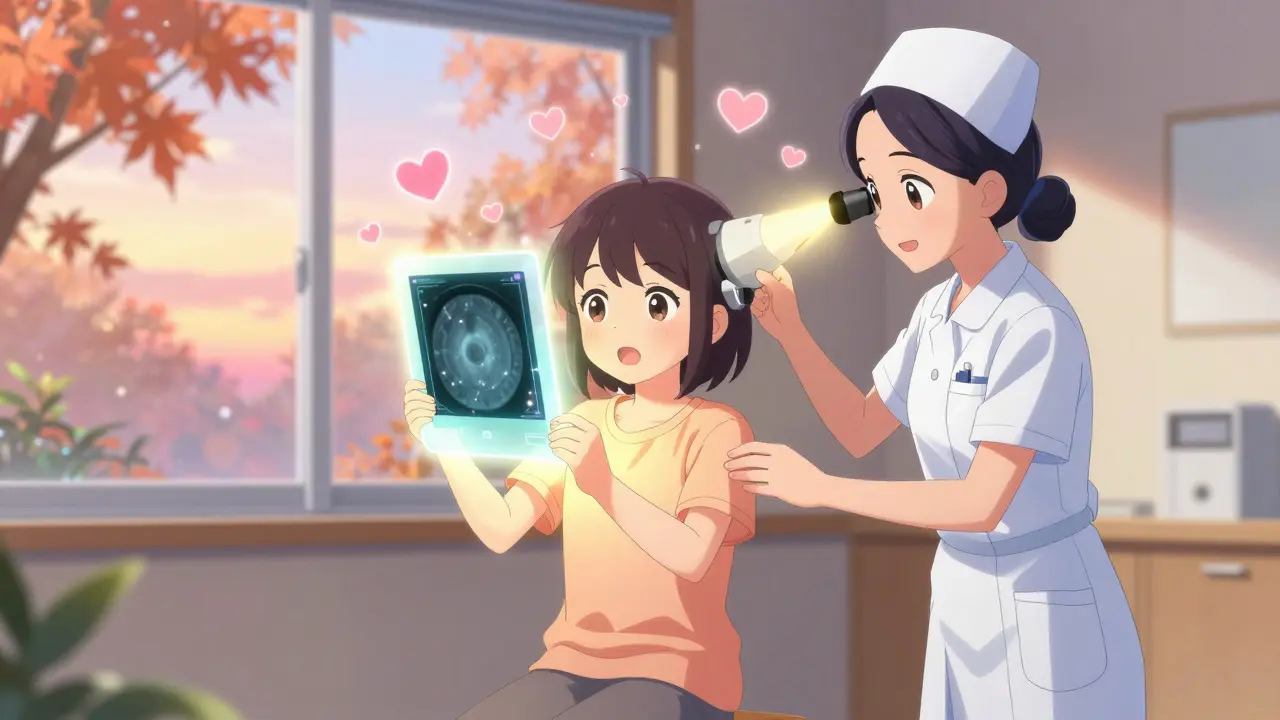
When you have diabetes, your eyes are at risk - not from what you see, but from what’s happening inside them. High blood sugar slowly damages the tiny blood vessels in the retina, leading to diabetic retinopathy, macular edema, and potentially blindness. The good news? More than 90% of this vision loss is preventable. The bad news? Most people with diabetes don’t get screened often enough. Only about 60% of patients stick to their annual eye exams, even though skipping one can raise your risk of severe vision loss by 23 times. That’s not just a statistic - it’s a real danger for millions.
When Should You Get Your First Diabetic Eye Screening?
If you have type 1 diabetes, your first eye exam should happen within five years after diagnosis. This isn’t arbitrary - it’s based on decades of research showing that retinopathy rarely develops before then, but can start quickly after. For type 2 diabetes, the timeline is different. Because many people have undiagnosed diabetes for years before being diagnosed, you should get your first eye exam right away, at the time of diagnosis. By then, damage may already be starting.
These aren’t suggestions. They’re guidelines backed by the American Diabetes Association (ADA) 2025 Standards of Care, which are updated every year based on the latest clinical evidence. The goal isn’t to scare you - it’s to catch problems early, when treatment is most effective.
How Often Should You Be Screened After That?
Once you’ve had your first exam, the frequency depends on what the doctor finds. If your eyes are completely healthy - no signs of retinopathy or swelling - and your blood sugar is well-controlled (HbA1c under 7%), you might be able to wait two years before your next exam. But that’s only if you’ve had two or more clean screenings in a row. Don’t assume you’re safe just because your numbers look good.
If you have mild retinopathy, you’ll need to be checked every year. Moderate retinopathy? Every 3 to 6 months. Severe retinopathy or diabetic macular edema? You’ll need to be seen every 1 to 3 months. And if you’re already getting treatment - like laser therapy or injections - you may need to go even more often. These aren’t guesses. They’re based on hard data from studies tracking how fast damage progresses in different patients.
Here’s the catch: many people don’t realize how fast things can change. A 2023 study showed that African American patients develop sight-threatening retinopathy nearly two and a half years earlier than white patients, even when their blood sugar levels are identical. That’s why one-size-fits-all rules don’t work. Your risk isn’t just about your HbA1c - it’s about your genetics, how long you’ve had diabetes, your blood pressure, and more.
What Happens During a Diabetic Eye Screening?
A traditional diabetic eye screening starts with drops that widen your pupils. That part can be annoying - your vision gets blurry, you’re sensitive to light, and you can’t drive for a few hours. Some people skip their appointments because of this. One Reddit user said the dilation ruined his kid’s birthday party. He’s not alone.
After dilation, the doctor uses a special camera to take pictures of the back of your eye. They look for leaking blood vessels, swelling in the macula, abnormal new blood vessels, and other signs of damage. Sometimes, they’ll also check your eye pressure and do a full vision test. It’s not just about the retina - they’re checking for glaucoma and cataracts too, since diabetes raises your risk for those as well.
But here’s the shift happening right now: you don’t always need dilation anymore.
Teleophthalmology: Screening Without the Trip to the Eye Doctor
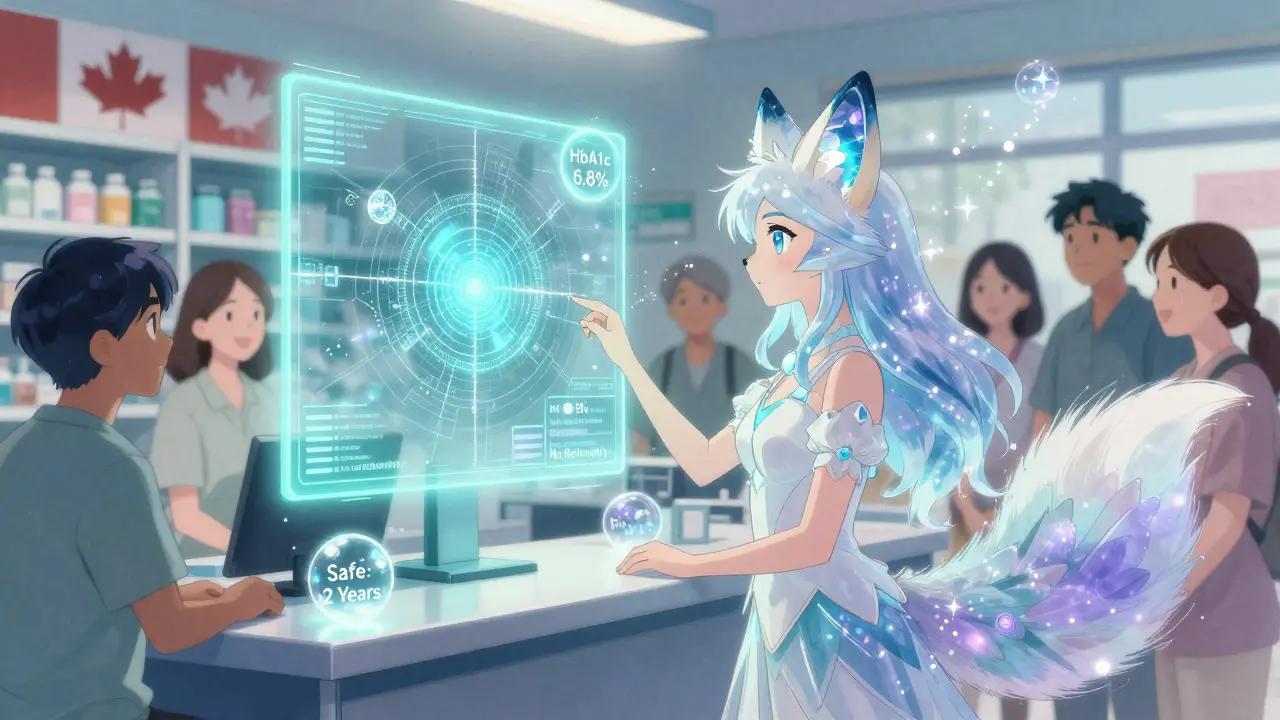
Teleophthalmology is changing everything. Instead of driving to a specialist, you can get your eye photos taken right in your primary care office, pharmacy, or even a community clinic. A non-dilation camera takes high-resolution images of your retina in under a minute. Those images are sent to a specialist - sometimes an AI system - who reviews them and sends back a report within 24 to 48 hours.
The technology isn’t new. The FDA approved IDx-DR (now called LumineticsCore) in 2018. It’s an AI system that detects diabetic retinopathy with 87% accuracy - better than some human graders. In rural areas of India, a teleophthalmology program screened 15,000 people and matched in-person specialists 98.5% of the time. In the U.S., the Veterans Health Administration saw a 32% jump in screening rates after rolling out teleophthalmology across 136 clinics.
It’s not perfect. Retinal photos can’t catch everything. They won’t detect cataracts, glaucoma, or neurological issues affecting vision. That’s why the ADA still says the first exam should be done by an eye specialist. But after that? For many people, teleophthalmology is a safe, reliable alternative.
Why So Many People Still Miss Their Screenings
It’s not just about forgetting. The biggest barriers are practical. A 2023 survey found 68% of people with diabetes said transportation was the main reason they missed appointments. Another 42% said they hated the blurry vision after dilation. For people living in rural areas, the nearest eye doctor might be over 75 miles away. One patient from Maine told her doctor, “I’d rather go blind than drive that far.”
Even when care is available, it’s not always accessible. A 2024 Health Affairs study found clinics serving mostly Medicaid patients were 47% less likely to offer teleophthalmology than those serving privately insured patients. That’s not just a gap - it’s a health inequality. People who need screening the most are often the ones least able to get it.
Insurance coverage is another problem. Only 63% of private insurers in the U.S. cover teleophthalmology screenings in 2024. Medicare does - and so do most Medicaid programs - but if you’re caught in between, you might pay out of pocket. That’s $100 to $200 per screening, depending on your location.
How Clinics Are Making Screening Easier
Some places are fixing these problems. Kaiser Permanente started sending automated SMS reminders 21, 14, and 7 days before a scheduled eye exam. Result? Missed appointments dropped by 27%. In rural clinics in Nova Scotia and Maine, nurses now use portable retinal cameras during routine diabetes checkups. No referral needed. No long wait. No dilation if the patient doesn’t want it.
And it’s working. In one clinic in New Brunswick, screening rates jumped from 51% to 89% in 18 months after adding a teleophthalmology station. The cost? About $28,500 to set up - a one-time investment that pays for itself in avoided blindness and hospital visits.
Doctors are also learning to communicate better. A University of Michigan study found 58% of patients thought controlling blood sugar alone would protect their eyes. That’s dangerously wrong. You need the screening - even if your numbers are perfect. Now, clinics are putting simple infographics in waiting rooms: “Your blood sugar helps. Your eye exam saves your sight.”
The Future: Personalized Screening Intervals
The next big step? Moving away from annual checkups for everyone. Researchers at the T1D Exchange are building a risk calculator that uses 17 different factors - not just HbA1c - to predict who’s at low, medium, or high risk for retinopathy. For someone with 10 years of well-controlled type 1 diabetes, no family history, normal blood pressure, and no signs of damage, they might safely extend screening to every three years. For someone with type 2 diabetes, poor control, high blood pressure, and a history of kidney disease? Every six months.
This isn’t science fiction. Early trials show it’s safe. And it could save billions in healthcare costs. But it also needs to be done right. If we make screening less frequent for low-risk patients, we can’t make it harder for high-risk ones. That’s the tightrope.

What You Can Do Right Now
Here’s your action plan:
- If you have diabetes and haven’t had an eye exam in over a year - call your doctor today.
- Ask: “Can I get a retinal photo here without dilation?” If they say no, ask for a referral to a teleophthalmology program.
- If you’re in a rural area, check with your local health center or pharmacy. Many now offer screening.
- Don’t wait for symptoms. Diabetic retinopathy doesn’t hurt until it’s too late.
- Keep your HbA1c under 7%, your blood pressure under 130/80, and your cholesterol in check. It all matters.
Screening isn’t optional. It’s as important as taking your insulin or metformin. And with teleophthalmology, it’s becoming easier than ever to stick with it - no long drives, no blurry days, no excuses.
How AI Is Making Screening More Accurate
AI isn’t replacing doctors - it’s helping them see more. Systems like LumineticsCore don’t just detect retinopathy. They measure subtle changes over time. One study found AI could spot early signs of swelling in the retina months before a human grader noticed them. That’s huge. Early detection means earlier treatment - and better outcomes.
Right now, AI-assisted screenings make up 22% of all Medicare diabetes eye exams, up from just 8% in 2022. That growth isn’t accidental. It’s because the data proves it works. In a 2024 study of 200,000 Medicare patients, AI screening had the same accuracy as human specialists - but was faster and cheaper. And because it’s automated, it doesn’t get tired. It doesn’t miss a detail because it’s rushing.
But here’s what most people don’t realize: AI needs human oversight. The system flags cases that need a specialist’s review. It doesn’t make the final call. That’s still up to the doctor. The AI is just a powerful tool - like a stethoscope, but for the retina.
What’s Next for Diabetic Eye Care?
The future of diabetic eye screening is smart, fast, and personalized. We’re moving toward a system where:
- Your primary care doctor takes a retinal photo during your regular visit.
- An AI gives a preliminary read within hours.
- If it’s clear, you’re told to come back in a year - or maybe two.
- If it’s not, you’re connected to a specialist the same day.
- Your risk level updates automatically based on your blood sugar, weight, and lab results.
That’s not a dream. It’s happening in clinics right now - from rural Maine to urban Halifax. The pieces are in place. What’s missing is awareness. Too many people still think, “I feel fine, so I don’t need to go.” But your eyes don’t feel pain until it’s too late. That’s why screening isn’t just medical advice - it’s your best defense.
 Pharmacology
Lindsey Wellmann
January 10, 2026 AT 12:23OMG I just had my first teleophthalmology scan last week and I cried 😭 No dilation?! No blurry birthday party?! I felt like I won the lottery. My primary care doc had the machine right in the back and it took 45 seconds. I was in and out before my coffee got cold. Why isn’t this everywhere???
Ian Long
January 12, 2026 AT 09:16Let’s be real - if you’re not getting screened every year, you’re gambling with your vision. I had mild retinopathy caught early because I didn’t skip. I didn’t wait for ‘symptoms.’ You don’t get to say ‘I felt fine’ when your retina is literally melting from sugar. This isn’t optional. It’s survival. Stop making excuses.
Pooja Kumari
January 13, 2026 AT 21:39Oh my god I am from India and I can tell you - in rural Tamil Nadu, we have mobile vans with these cameras now! My aunt, who is 62 and has had type 2 for 18 years, got screened at the village fair last month. No doctor visit, no travel, no cost. The AI flagged something - turned out it was early macular edema. She got treated in three days. The government rolled this out last year and already 12,000 people in our district were screened. People are crying because they can finally see their grandchildren clearly again. This is not just tech - this is justice. Why does America still make people drive 80 miles for a photo? Why? Why? Why? I am so emotional right now.
Johanna Baxter
January 14, 2026 AT 01:04I skipped my screening for 3 years because dilation ruined my day. Then I went blind in one eye for 2 weeks. It wasn’t permanent. But it was terrifying. Now I get the photo scan every 6 months. No drops. No drama. No excuses. If you’re still skipping, you’re not lazy - you’re just not scared enough yet.
Jerian Lewis
January 15, 2026 AT 03:36AI screening is fine, but it’s not a replacement for a real ophthalmologist. I’ve seen too many cases where the algorithm missed subtle nerve changes that only a trained eye catches. The ADA says the first exam must be in-person for a reason. Don’t let convenience make you complacent. This isn’t a Netflix recommendation - it’s your retina.
tali murah
January 16, 2026 AT 21:40Oh wow. So let me get this straight - we’ve got AI diagnosing retinopathy faster than a human, but insurance companies still won’t cover it unless you’re on Medicare? And rural clinics serving low-income patients are 47% less likely to have the tech? Wow. Just wow. We’re literally letting people go blind because of billing codes. This isn’t healthcare. It’s a capitalist horror show with a stethoscope.
Chris Kauwe
January 17, 2026 AT 04:32The paradigm shift here is non-trivial. The convergence of federated learning models, retinal biomarker quantification, and decentralized diagnostic infrastructure represents a fundamental reconfiguration of preventive care delivery vectors. The traditional fee-for-service model is being disrupted by predictive analytics-driven, population-scale screening protocols that optimize for early-stage phenotypic divergence. We are transitioning from reactive ophthalmology to proactive retinal telemetry - and the cost-benefit calculus is unequivocally favorable. The institutional inertia, however, remains pathologically entrenched.
Angela Stanton
January 18, 2026 AT 18:17My mom’s diabetic. She got the scan at her pharmacy. AI flagged something. Then a human specialist reviewed it. Turned out it was just a weird reflection. But the system caught it. No drama. No waiting. No $200 bill. And guess what? She’s now telling everyone. That’s how change happens - not with legislation, but with a photo and a ping. 📸✨